
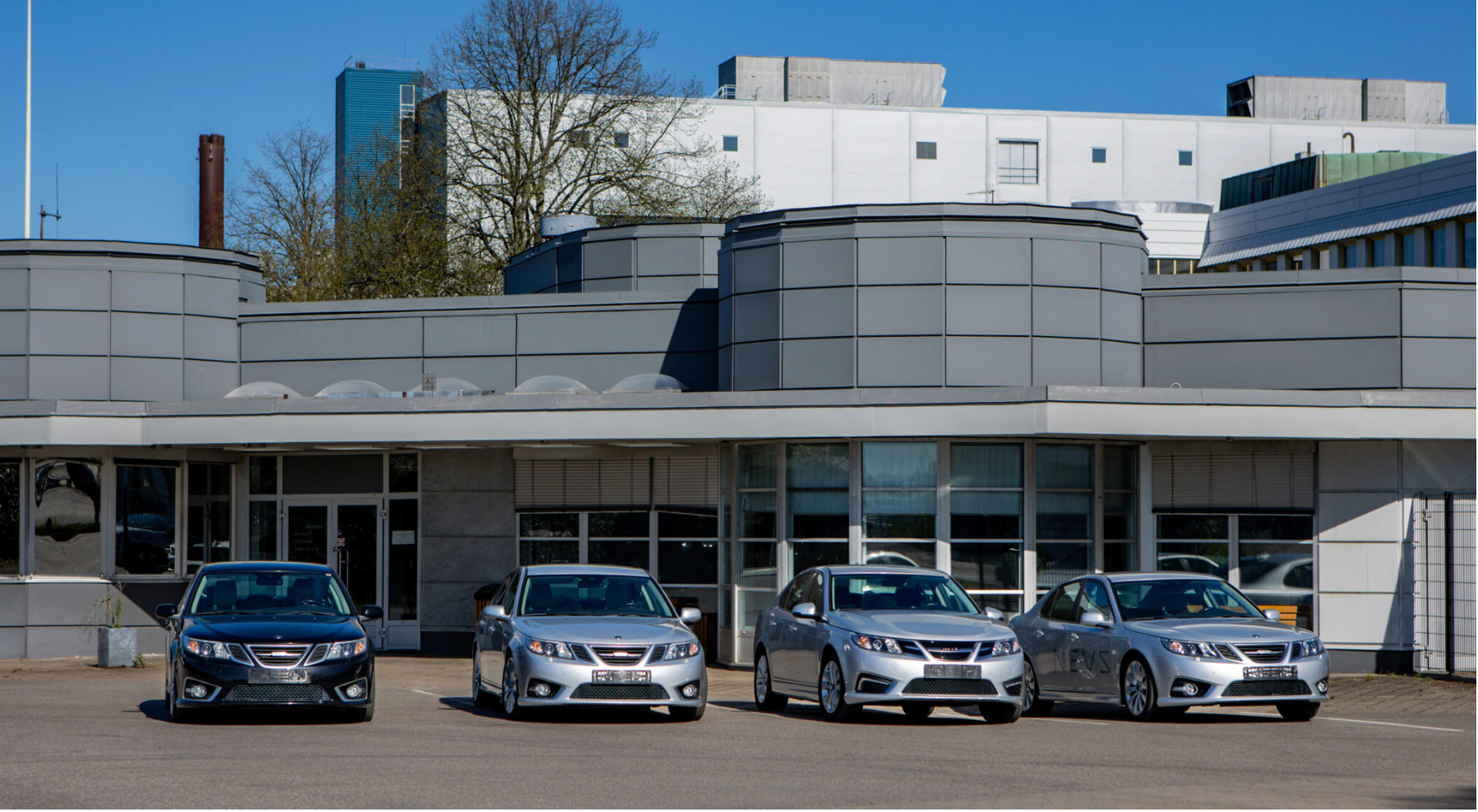


Eight vehicles pulled from the Trollhättan factory where Saab was born in 1947 will be sold to the highest bidder later this month. No reserves. No safety net. Just the final artifacts of a brand that spent its last decade being passed around like a distressed asset at a bankruptcy fire sale.
Swedish auctioneer Klaravik is handling the sale, which opens May 21 and closes May 30. The lot includes gas-powered 2014 Saab 9-3 Aero prototypes, battery-electric NEVS 9-3 models, and one particularly strange orphan: the only Hengchi 5 in Sweden, sitting with just 28 miles on its odometer.
That Hengchi 5 tells you everything about how far Saab’s DNA drifted from its origins. The vehicle is a product of Evergrande, the imploded Chinese real estate conglomerate that bought into NEVS as part of its doomed electric vehicle ambitions. A Swedish factory that once built turbocharged rally legends ended up storing a Chinese EV that almost nobody wanted.
The 2014 Saab 9-3 Aero prototype with 11,000 miles is the collector’s pick. It represents the last gasp of what most enthusiasts would recognize as a real Saab, a car wearing the Griffin badge that still shared some philosophical connection to the quirky, driver-focused machines that came out of Trollhättan for decades. The other 9-3 Aeros, with higher mileage, are still rare enough to draw serious interest from a community that has been hoarding parts and low-mile examples for years.
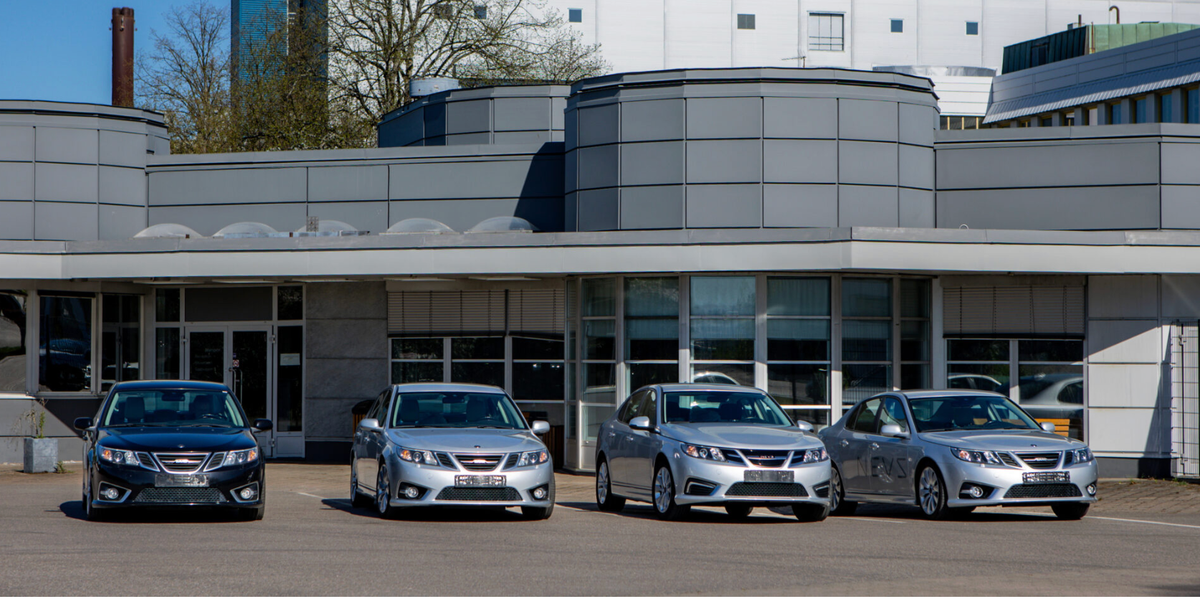
The electric NEVS 9-3 models are a different proposition entirely. These were the vehicles that were supposed to justify the entire post-GM experiment. National Electric Vehicle Sweden acquired Saab’s remains in 2013, backed by Hong Kong money, and set about grafting battery-electric powertrains into the 9-3’s aging body.
One prototype in the auction features early autonomous driving technology. Another carries a fuel-powered range extender. They are curiosities, museum pieces from a future that never arrived.
NEVS never came close to volume production. The company laid off most of its workforce in 2023, and a chunk of the Trollhättan plant was handed to Polestar. By September 2025, NEVS was already auctioning off factory equipment, rare Saab parts, and scale models. These eight vehicles are the last physical evidence that anyone ever tried to keep Saab alive.
The timeline of Saab’s collapse remains one of the most convoluted in automotive history. GM washed its hands of it in 2010. Spyker Cars swooped in with grand plans and shallow pockets. Investors circled, sniffed, and walked away. NEVS picked up what was left and spent six years trying to build an electric car company on the bones of a dead brand. It didn’t work.
Klaravik is staging a public event at the factory after bidding closes, giving enthusiasts one last chance to walk through the facility where Saab 96s, 900 Turbos, and 9-5 Aeros once rolled off the line. The company is framing it as a celebration. It feels more like a wake.
The no-reserve format means these cars will sell for whatever the market decides they’re worth. For the electric prototypes, that could be shockingly little. For the 9-3 Aero with 11,000 miles, it could be a small fortune. Saab’s faithful have always been disproportionately loyal relative to the brand’s market share, and scarcity has a way of inflating sentiment into real dollars.
Seventy-eight years of history at Trollhättan, and it comes down to eight cars on an auction website. The Griffin badge deserved a longer runway. It got a liquidation sale instead.

Share this Story