
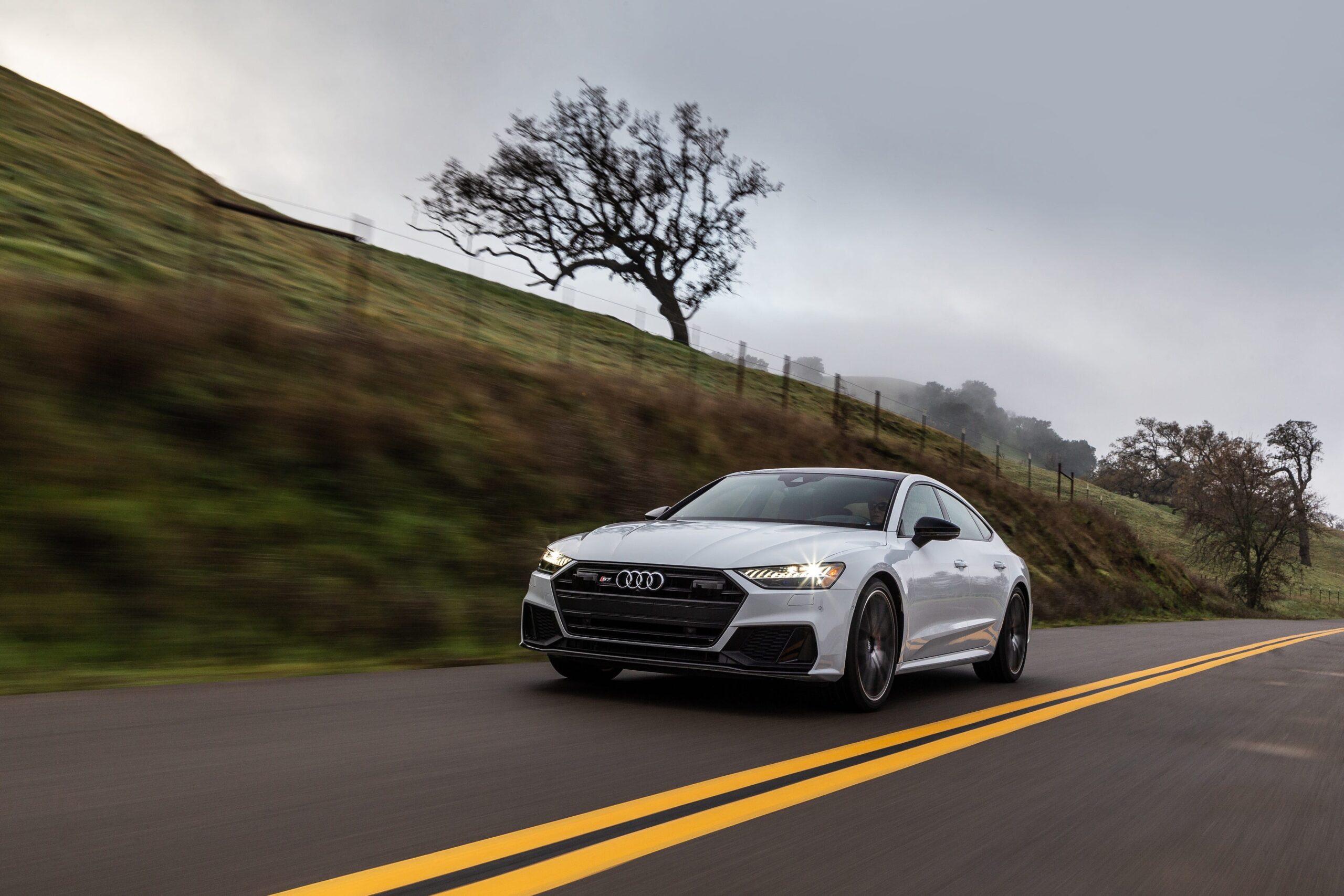


A pair of Audi owners are dragging Volkswagen Group of America into federal court over water pump failures they say the automaker has known about since at least 2018. The class-action lawsuit, filed in the U.S. District Court for the District of New Jersey, targets the EA839 V-6 engine family. That powerplant touched nearly every model in Audi’s U.S. lineup across seven model years.
The scope is staggering. The complaint names more than 20 Audi models spanning 2018 through 2024, from the A4 to the Q8, the S6 to the RS 5. If you bought an Audi with a 2.9-liter or 3.0-liter V-6 in that window, your car is potentially on the list.
Plaintiff Doug Larr bought a 2019 A6 in August 2021. By March 2026, his independent mechanic found coolant leaking from the water pump, requiring replacement of the pump, PCV valve, and vacuum hose system. The bill approached $6,000, and his warranty had long expired.
Kaelin Crawford’s timeline was even tighter. He purchased a new 2021 SQ5 in April 2021, and by June 2024 his low coolant light came on. A leaking water pump around the PCV valve was the diagnosis, and the dealer quoted $2,800 for the fix with 62,000 miles on the odometer — just past the 4-year/50,000-mile warranty threshold.
That warranty gap is where the real friction lives. The lawsuit alleges the water pump defect allows coolant to infiltrate the vacuum system and other components never designed to handle fluid contamination. That contamination can cascade into overheating, vacuum system damage, and turbocharger failure — problems that multiply repair costs and can silently wreck an engine before the owner sees a warning light.
The plaintiffs contend Audi had internal knowledge of the defect dating back to November 2018. If true, it means the automaker sold millions of dollars’ worth of vehicles equipped with these engines for years after identifying the problem. Owners absorbed the repair costs once their warranties lapsed.
This is a pattern the industry knows well. An automaker identifies a component issue internally, declines to issue a recall or extend warranty coverage, and waits for the complaints to pile up. Owners who catch the failure early enough eat a repair bill. Owners who don’t catch it end up with catastrophic engine damage and a much larger tab.
The EA839 is not some obscure engine shoved into a low-volume niche product. It was Audi’s workhorse V-6, the backbone of its sedan, SUV, and performance lineup for the better part of a decade. The number of potentially affected vehicles in the United States alone is enormous.
Audi has not publicly commented on the lawsuit. The case, Larr, et al., v. Volkswagen Group of America, Inc., et al., is in its earliest stages. Class certification has yet to be determined.
For now, the question hanging over Ingolstadt is simple: if the water pump defect was real and known, why did owners have to find out the hard way? A $6,000 repair on a five-year-old sedan is not a maintenance item. It’s a design failure someone chose not to address. Whether a federal court agrees will depend on what Audi’s internal documents reveal — and how many more owners come forward with the same story.






Share this Story