
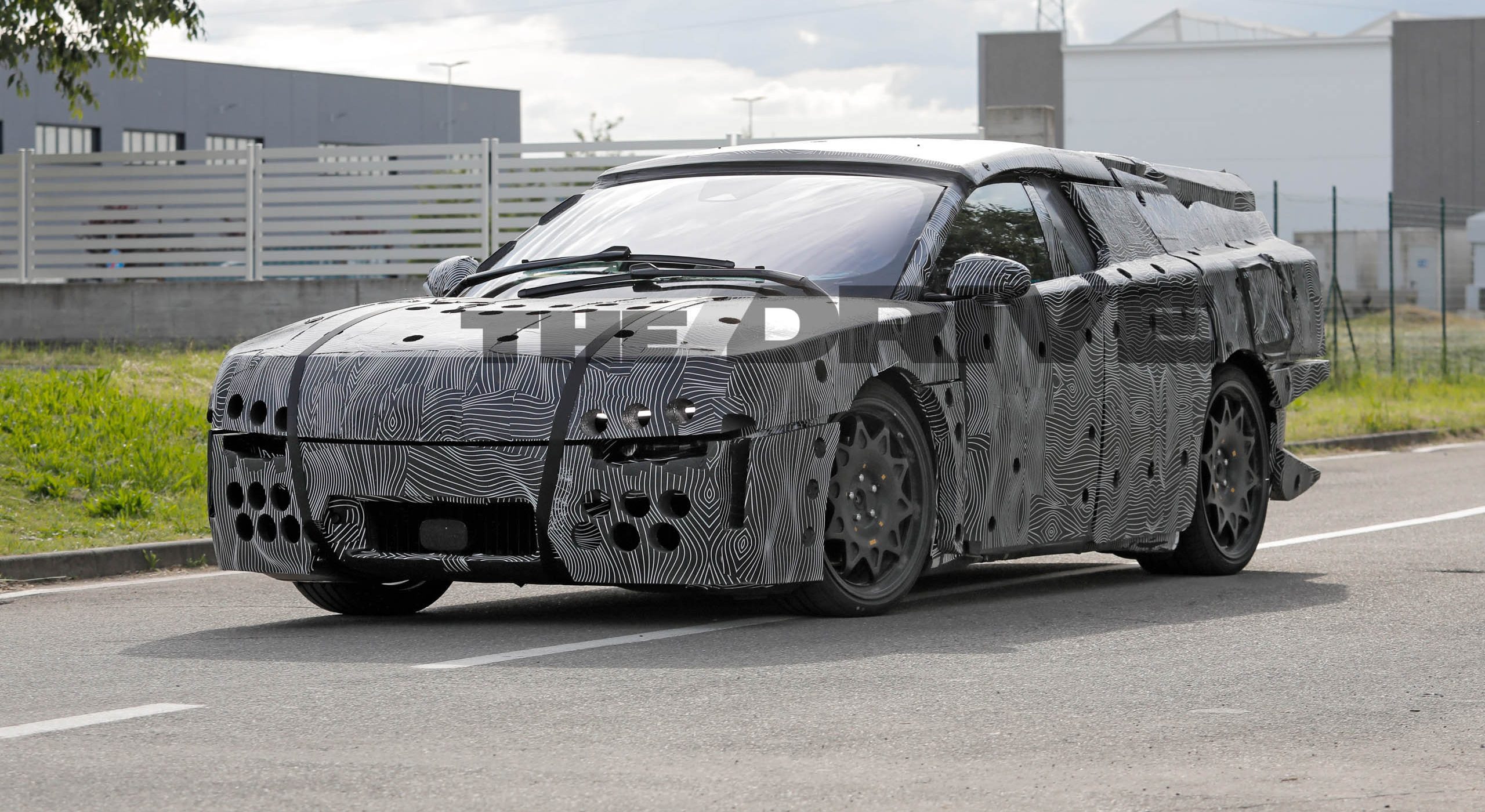


A Ferrari Luce prototype just rolled through the streets of Maranello wearing enough camouflage to make a military convoy jealous. The company’s first electric car is no longer a concept or a rumor. It’s out there, on public roads, getting closer to reality.
Spy photographer Stefan Baldauf captured the test mule in motion, and while the disguise is thick, it can’t hide everything. The front end sits low and aggressive, with a character line sweeping around into the front fenders in a way that has people squinting and muttering two words nobody expected: F40.
That’s either brilliant or the camouflage playing tricks. The front fender shapes and lower bumper air intake layout carry echoes of Ferrari’s most legendary supercar, a machine powered by a twin-turbocharged V8 that practically defined analog driving fury. If Maranello is deliberately quoting the F40 on its first battery-electric vehicle, that’s a statement dripping with irony and ambition in equal measure.
The headlights appear to sit low in the bumper, tucked beneath LED daytime running lights. It’s a departure from the slim, angular lighting signatures Ferrari has used on recent models like the Roma and 296 GTB. Whether this signals a broader design language shift for the brand’s electric future remains unclear.
From the side, the camouflage team earned its paycheck. The prototype clearly shows four doors, confirming the Luce will be Ferrari’s first four-door production car. The front sits low, the side mirrors are oversized — likely production-spec given current regulation requirements — and the roofline flows into a rear that’s been completely obscured.
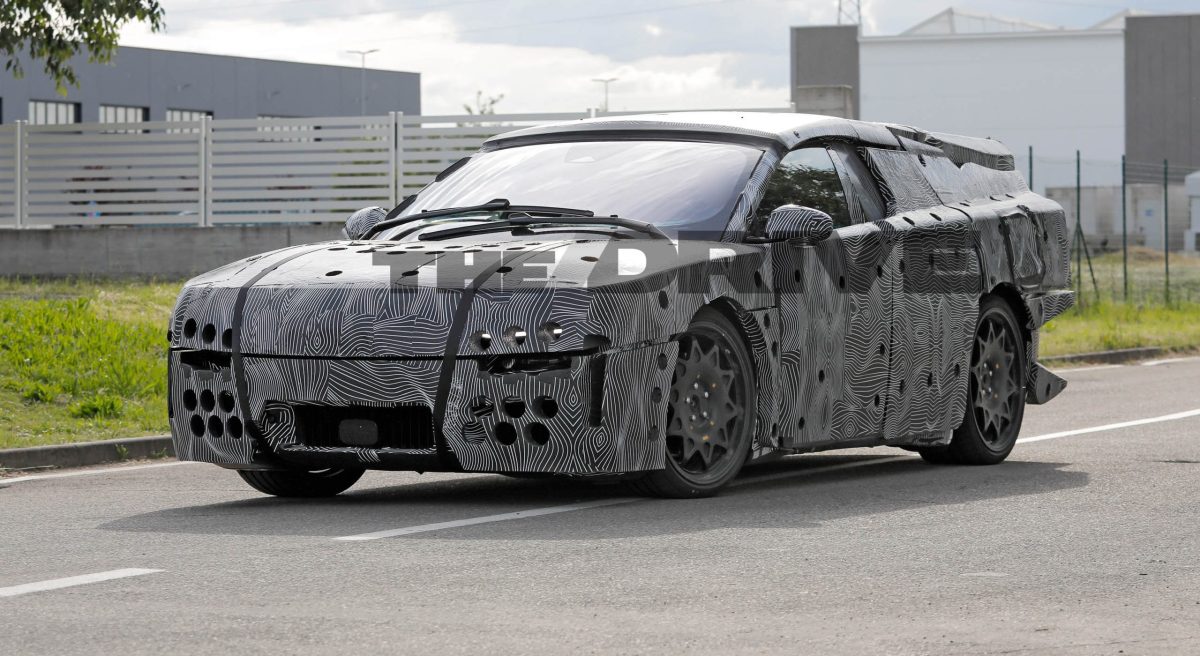
There are hints of round LED taillights beneath the wrap. A large rear diffuser dominates the lower section, though its function on an EV is debatable. Aerodynamic efficiency matters for range, but a diffuser that size on a battery-powered car serves design theater as much as physics.
The wheels are clearly stand-ins, but their size and the width of the rubber suggest the Luce will have a planted, performance-oriented stance. Ferrari has already teased the interior, which reportedly leans into retro design cues. If the exterior follows the same playbook, the Luce could end up as something more interesting than the clinical, screen-laden electric luxury sedans flooding the market.
The timing matters. Ferrari CEO Benedetto Vigna has repeatedly insisted the company’s first EV would sound like a Ferrari and feel like a Ferrari, even without combustion. The car is expected to debut as a 2028 model, which means a reveal is likely within the next 12 to 18 months. Pricing will almost certainly push past $300,000, placing the Luce well above the Porsche Taycan Turbo GT and into territory where the Rolls-Royce Spectre currently sits alone.
Maranello is walking a razor’s edge. Build an EV that’s too conventional and it disappears into a crowded luxury segment. Build one that’s too radical and the faithful revolt. Wrapping it in F40 nostalgia — if that’s truly what’s happening beneath the camo — would be the most Ferrari move possible: using the past to make the future feel less threatening.
The electric Ferrari is no longer theoretical. It’s wearing camouflage, rolling on wide tires, and prowling the same streets where Enzo once tested cars that changed the world. Whether the Luce changes anything remains to be seen. But it’s real now, and that alone shifts the conversation.
Share this Story