
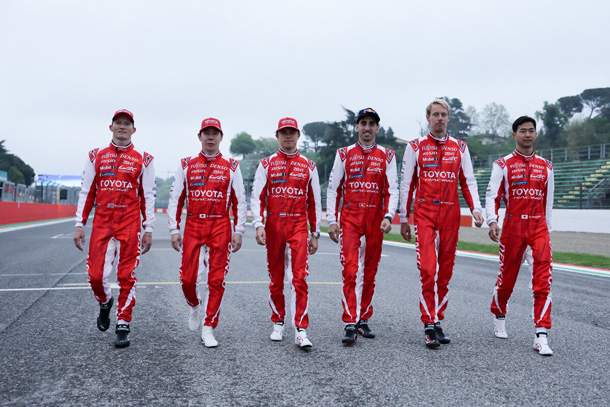


Three weeks after winning its 100th FIA World Endurance Championship start at Imola, Toyota Racing rolls into the Ardennes forest this weekend holding both championship leads and carrying the kind of quiet confidence that makes rivals nervous. The 6 Hours of Spa-Francorchamps on Saturday is round two of eight, but it functions as something far more consequential than early-season filler. Spa is the last real dress rehearsal before Le Mans.
The TR010 HYBRID, Toyota’s new weapon for 2026, announced itself emphatically in Italy. The No. 8 car of Sébastien Buemi, Brendon Hartley, and Ryō Hirakawa took victory while the No. 7 of Mike Conway, Kamui Kobayashi, and Nyck de Vries completed a double podium in third. Toyota led both title fights before anyone else had properly unpacked their toolboxes.
Ferrari, though, is not the kind of operation that stays quiet for long. The Scuderia won at Spa last year with the No. 51 crew of Antonio Giovinazzi, James Calado, and Alessandro Pier Guidi, a result that proved pivotal in their eventual title-winning campaign. The No. 50 Ferrari finished second that day. Belgium is comfortable territory for Maranello, and showing up at a circuit where you went one-two twelve months ago tends to sharpen the mind.
That tension between Toyota’s early momentum and Ferrari’s proven strength on this exact seven-kilometer ribbon of asphalt is the story heading into the weekend.
Spa-Francorchamps rewards a particular kind of car. The high-speed plunges through Eau Rouge-Raidillon, the commitment corners at Pouhon and Blanchimont, and the long Kemmel Straight demand a setup that balances raw top speed with enough downforce to survive the tighter, more technical middle sector. As Hirakawa pointed out, that compromise mirrors exactly what teams face at Le Mans. Get it right here, and you carry that knowledge straight to the Circuit de la Sarthe on June 13.
Toyota’s operational base in Cologne sits just 120 kilometers from the track. This is a home race in every meaningful sense, with employees from the team’s German headquarters and Toyota Motor Europe’s Brussels offices packing the paddock. That proximity breeds familiarity. In 13 previous races at Spa, Toyota has recorded eight wins, four poles, and 14 podiums.
The field they face has never been deeper. Fourteen manufacturers and 17 Hypercars will take the grid, a staggering density of factory-level competition that Conway alluded to when he warned against leaving “any performance on the table.” The margins at Imola were razor-thin despite Toyota’s commanding result. Nobody in the garage expects Spa to be any easier.
Beyond the Hypercar battle, Toyota plans to run a hydrogen-powered GR Yaris in parade laps before the 2 p.m. race start. It is a quiet but deliberate showcase of combustion-engine sound and sensation with near-zero tailpipe emissions. The kind of technology demonstration that gets buried in race-weekend noise but speaks to where Toyota believes the road-car future is heading.
The rebranding from Toyota Gazoo Racing to simply Toyota Racing, finalized in January, stripped away a layer of corporate complexity. The cars look different and the name is cleaner. But the objective has not changed: win races, win championships, and use the most punishing circuits in the world to prove your engineering.
Spa will tell us whether Imola was a statement or a fluke. Ferrari’s record here says this fight is far from settled. With Le Mans looming five weeks out, every setup choice, every pit-stop rep, every lap in mixed traffic carries weight that extends well beyond Saturday’s checkered flag.
The Ardennes has a habit of sorting pretenders from contenders. By Saturday evening, we will know a good deal more about both.
Share this Story