
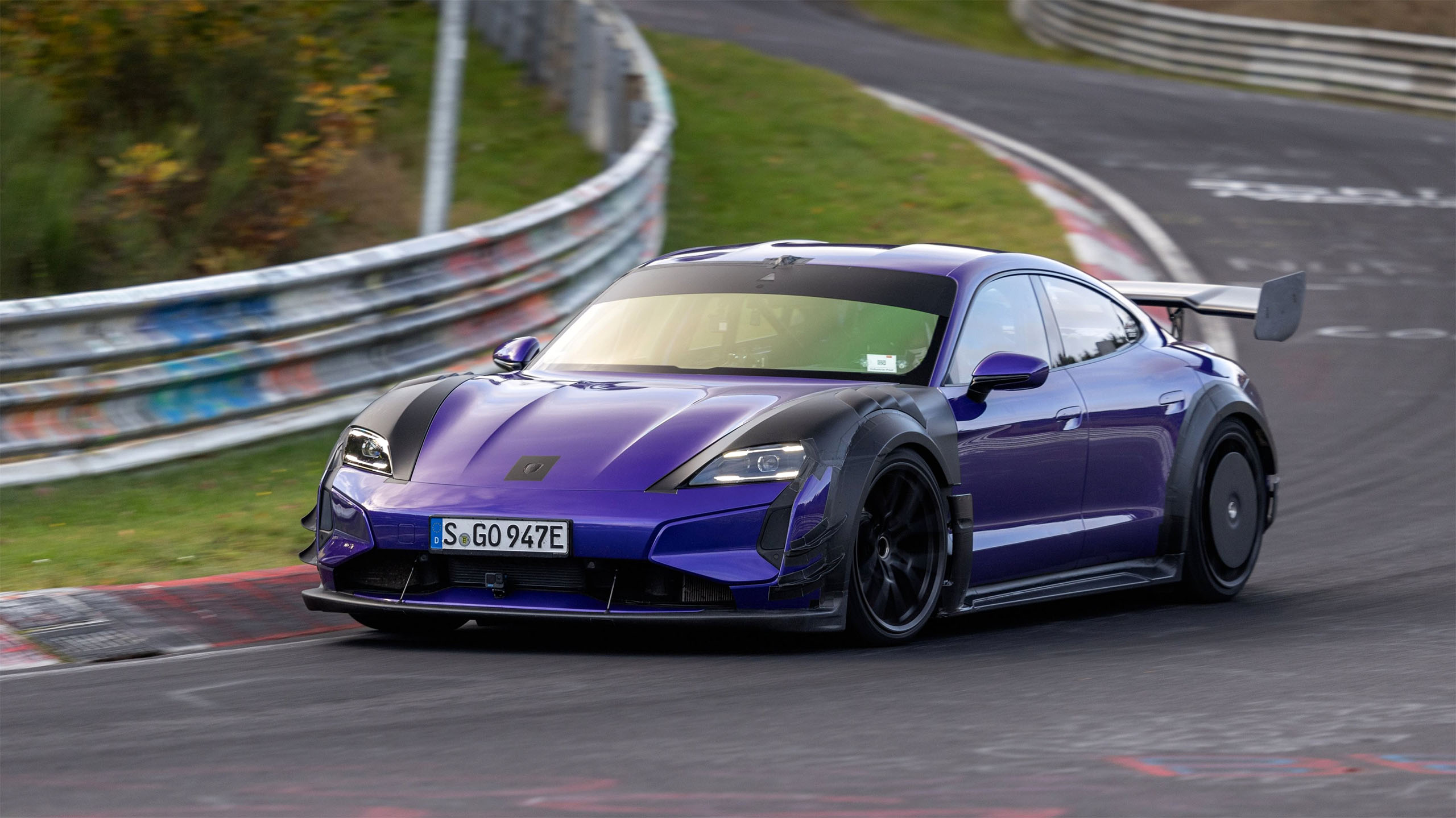


The Porsche Taycan Turbo GT just demolished the Nürburgring’s production EV record with a 6:55.553 lap, nearly four seconds quicker than BYD’s 3,000-horsepower Yangwang U9 Xtreme. It did it with roughly a third of the power.
Let that sink in. A sedan with 1,019 horsepower in Launch mode just embarrassed a purpose-built hypercar with triple its output. The secret weapon wasn’t more brute force — it was a Manthey kit that tripled available downforce and turned an already savage electric sedan into something the Nordschleife has never quite seen before.
Porsche development driver Lars Kern was behind the wheel, shaving 12 full seconds off the Taycan Turbo GT’s previous best with the Weissach package alone. The prior time of 7:07.55 was already impressive. Now it looks quaint.
The Manthey kit is an obsessive rework, not a sticker package. A larger one-piece front lip, carbon-fiber fender flares, wider side skirts, revised front and rear diffusers, underbody upgrades, and an enormous rear wing combine to produce 1,631 pounds of downforce at the car’s 192-mph top speed. The forged 21-inch wheels are both wider and lighter than stock, and the brakes get bigger front rotors with upgraded pads.
Porsche retuned the Active Ride suspension, the steering, and the all-wheel-drive system. Street-legal track tires are optional.
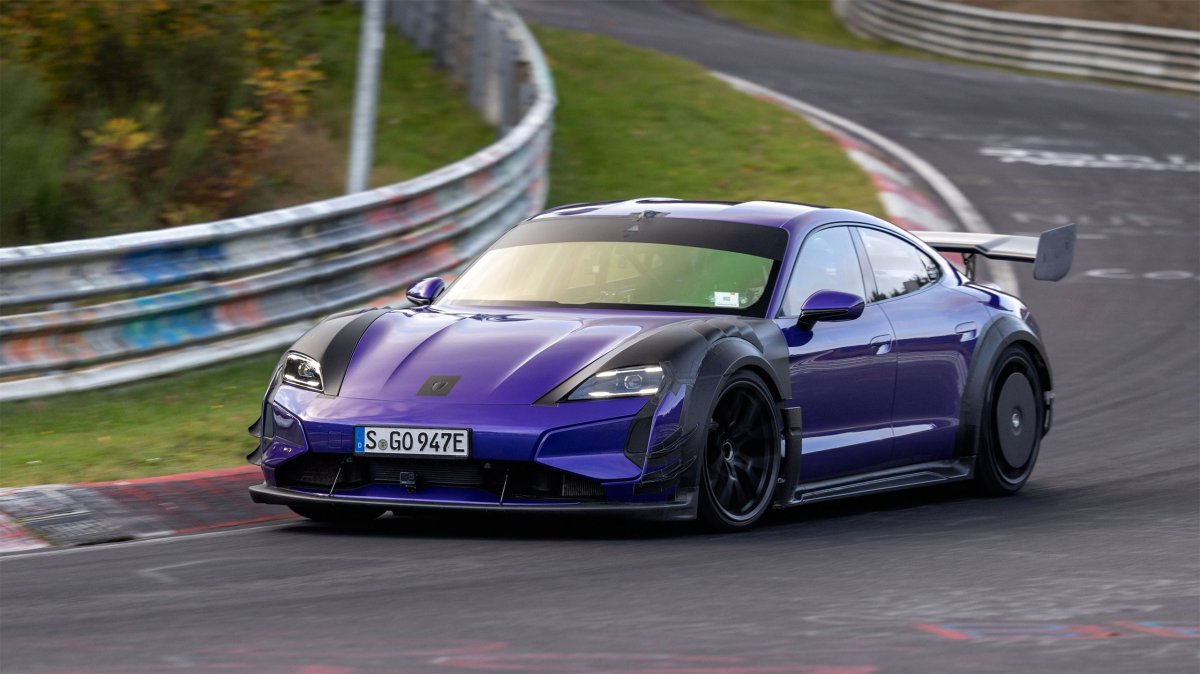
Under the skin, the pulse inverter’s maximum current climbs from 1,100 to 1,300 amps. Peak horsepower stays at 1,019, but torque rises 22 pound-feet to 936 in Launch mode. Standard and Attack modes see bumps to 804 and 978 horsepower, respectively.
Incremental gains, not a revolution — but incremental gains applied surgically across every dynamic system add up to 12 seconds around 12.9 miles of the most punishing asphalt on the planet.
Porsche hasn’t announced pricing for the Manthey kit. The 2026 Taycan Turbo GT with the Weissach package already starts at $245,950, so expect a serious premium on top of that. This is a car built for buyers who consider a quarter-million-dollar sedan a starting point.
The previous production EV record holder, the Xiaomi SU7 Ultra with its Track package, now sits in second with a 7:04.957. That’s nearly ten seconds off the pace. The Chinese competitor brought serious engineering to the table and held the crown briefly, but Porsche’s response was emphatic and characteristically German in its precision.
This wasn’t the only Volkswagen Group triumph at the Nordschleife this week. The Golf GTI Edition 50 also claimed the front-wheel-drive production car record with a 7:44.523, further padding the group’s résumé at the track it has long treated as a second home.
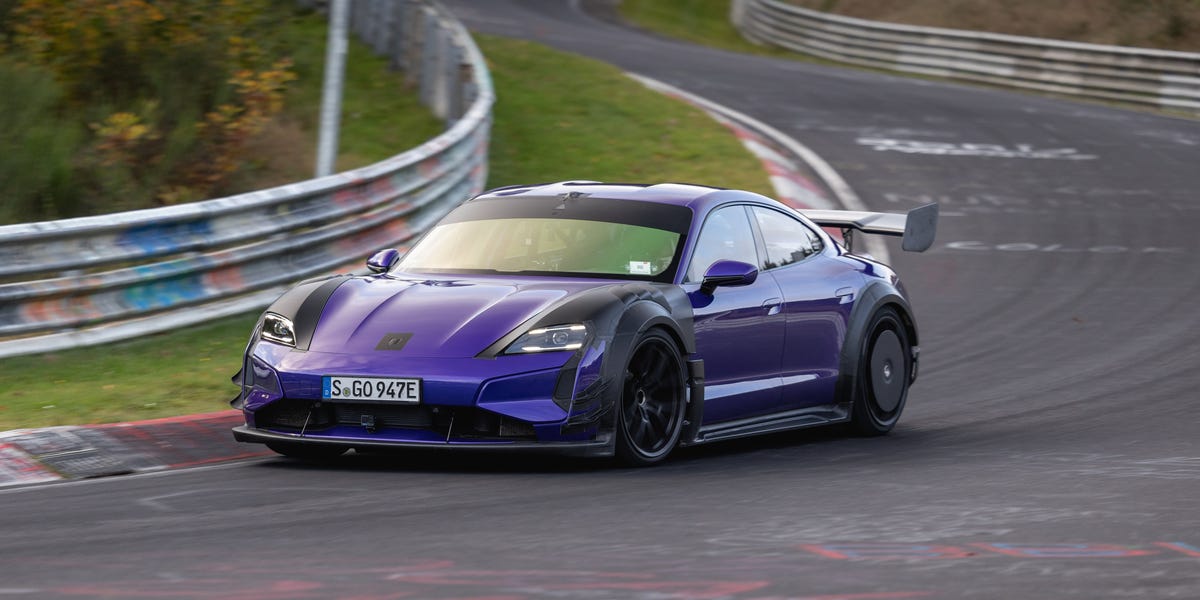
The Taycan’s lap matters beyond bragging rights because it dismantles a persistent narrative: that the EV record chase is simply a horsepower arms race where whoever bolts on the most motors wins. BYD threw 3,000 horsepower at the problem. Porsche threw aerodynamics, chassis engineering, and tire contact patches. The stopwatch doesn’t care about spec sheets.
Kern’s lap also reinforces something Porsche has understood since the 956 dominated Le Mans in the 1980s — downforce is the great equalizer. At the Nürburgring, where elevation changes, blind crests, and high-speed compressions punish anything that isn’t planted, the ability to push a car into the pavement at speed matters more than peak power numbers ever will.
The Taycan Turbo GT with Weissach and Manthey packages is the most focused electric production car Porsche has ever built. It’s also the fastest EV to ever lap the Nordschleife. Those two facts aren’t a coincidence. They’re an argument.
Share this Story