
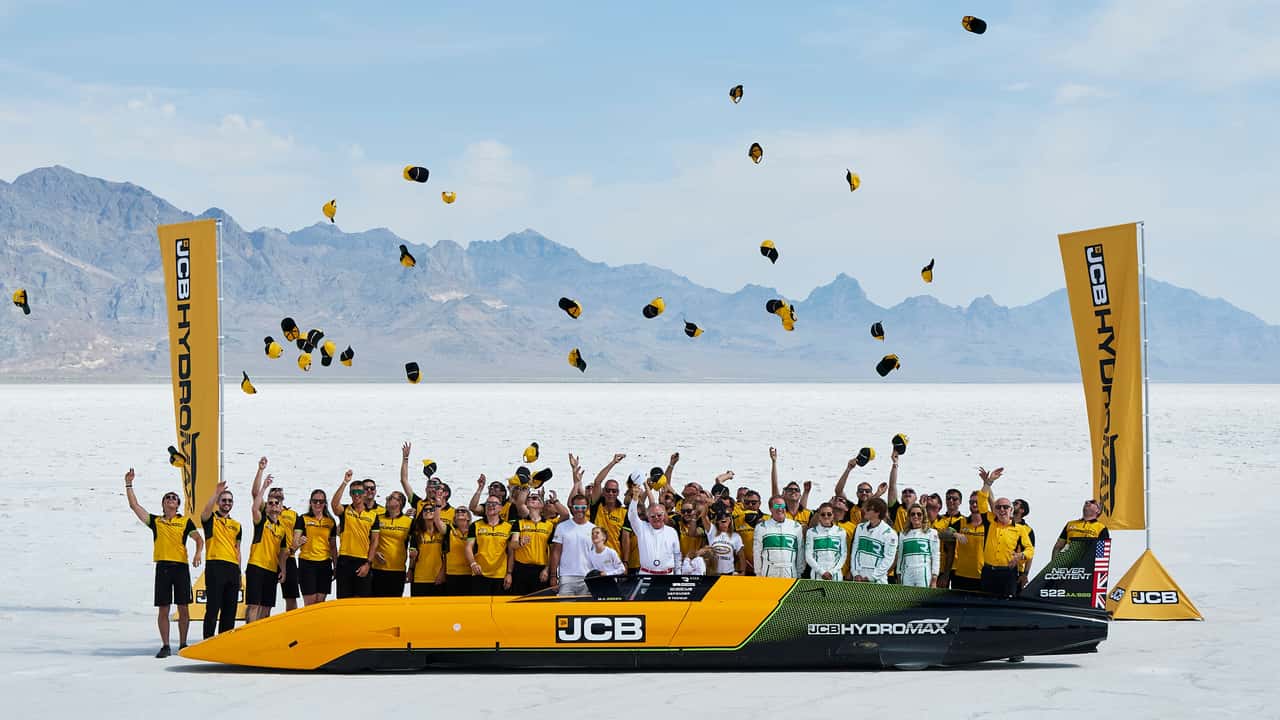


A 32-foot British streamliner burning hydrogen through two modified digger engines just averaged 406.320 miles per hour across the Bonneville Salt Flats. Not on fuel cells. Not on batteries. On internal combustion, fueled by hydrogen and producing zero CO₂ at the tailpipe.
JCB’s Hydromax completed the required two FIA runs in opposite directions within an hour on Sunday, clocking 400.623 mph on the first pass and 412.135 mph on the return. The two-way flying kilometer average obliterates the previous hydrogen internal combustion record of 185.5 mph, set by the BMW H2R more than two decades ago.
That old BMW mark had stood since 2004, largely because nobody with serious engineering resources bothered to chase it. JCB did.
The twin engines making a combined 1,600 horsepower are built at JCB’s plant in Foston, Derbyshire. The company insists they are the same hydrogen combustion units already running inside its construction machines, products of a £100 million development program. That claim, if it holds under scrutiny, is the real story here.
Wing Commander Andy Green, the only human being to break the sound barrier on land, drove the car. Green already held JCB’s diesel land speed record of 350.092 mph, set in the Dieselmax on this same salt in August 2006. Hydromax beat that number by more than 56 mph and did it without burning a drop of fossil fuel.
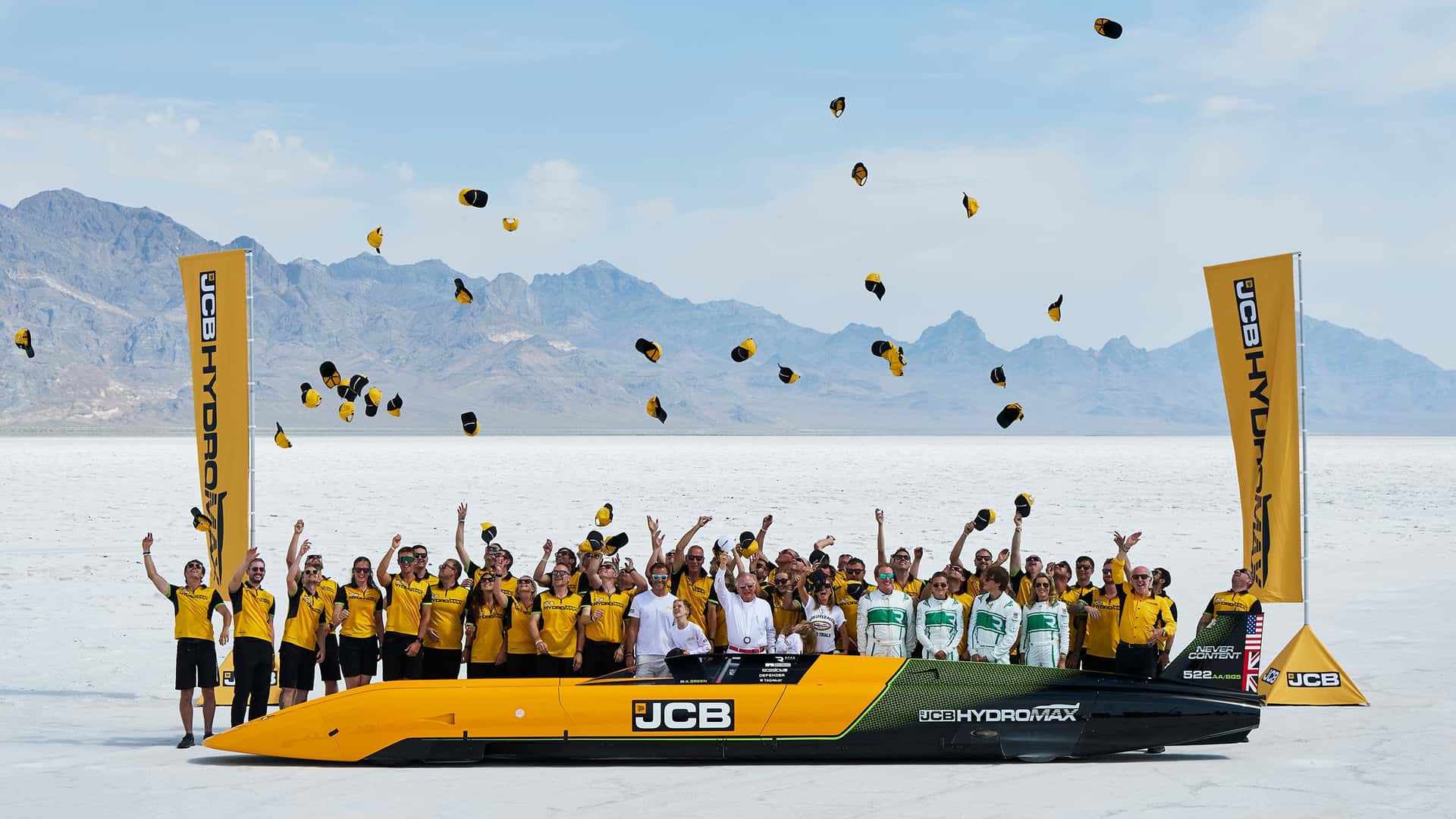
The record is provisional, pending official FIA ratification under Category A, Group XIV, Class 7. But the numbers are logged, the timing equipment was sanctioned, and the procedural requirements were met. Ratification is typically a formality at this point.
JCB Chairman Anthony Bamford framed the run as a sequel to the Dieselmax project. “Twenty years ago we came to Bonneville with JCB Dieselmax and showed what British engineering could do with diesel power. Today we have done it again, this time with engines powered by hydrogen,” he said.
The run also surpasses the 303 mph hydrogen fuel cell record, making Hydromax the fastest hydrogen vehicle of any type ever built. That distinction matters because it pits hydrogen combustion directly against fuel cell technology in the credibility race, and combustion just took the lead by a wide margin.
Before the FIA attempt, the car had already turned heads at the Southern California Timing Association’s Speed Week, setting a 368.347 mph average in the Blown Gas Streamliner class. That run served as both a shakedown and a proof of concept.
The engineering question hovering over this project is transferability. JCB builds excavators, backhoes, and telehandlers. Pushing those same basic architectures past 400 mph either validates the platform’s headroom or exposes how far removed a record car is from a working machine. JCB clearly wants the industry to believe the former.
For automakers and fleet operators still weighing hydrogen against battery electric, the Hydromax run lands at an interesting moment. Battery technology dominates the passenger car conversation, but hydrogen combustion keeps finding allies in heavy industry, where energy density and refueling speed matter more than charging infrastructure. A construction equipment company just proved its hydrogen engine can do something no battery-powered vehicle has ever done on the salt.
Green called Bonneville “the spiritual home of the world land speed record.” He’s right. And the fact that a pair of modified digger engines just became the fastest hydrogen powerplants on earth suggests this particular chapter is still being written.
Share this Story