
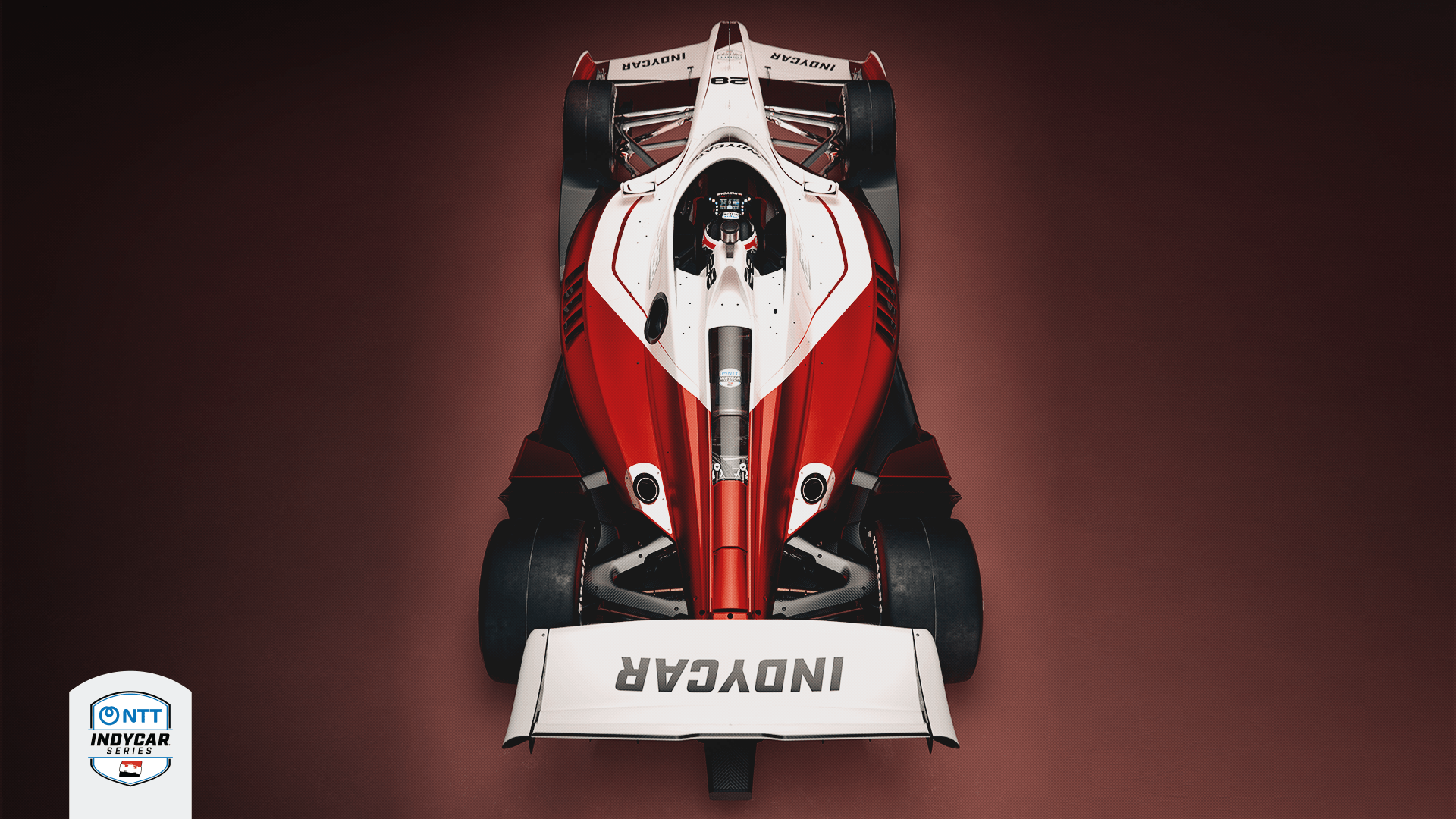


The IR28 exists on paper, and if everything holds, it will exist on track by 2028. IndyCar revealed renderings Tuesday of its first entirely new chassis since the DW12 debuted in 2012, a car that has been stretched, modified, and retrofitted so many times it barely resembles its original self. Sixteen years is a long time to run one platform.
Dallara remains the sole chassis builder, working out of its Indianapolis facility alongside IndyCar’s own engineering team. Honda and Chevrolet have been embedded in the development process, shaping regulations and specs for their respective versions of a 2.4-liter hybrid V6. IndyCar is also leaving the door open for a third engine manufacturer, a familiar tease that has yet to produce results.
The hybrid system is where the biggest technical leap lives. IndyCar is ditching its supercapacitor setup for a conventional battery-hybrid architecture that offers roughly 14 times the energy storage capacity of the current system. That alone sheds 20 pounds.
A next-generation Xtrac gearbox drops another 25. IndyCar says the car is 100 pounds lighter overall, though it did not clarify whether that figure accounts for the complete package or just specific components.
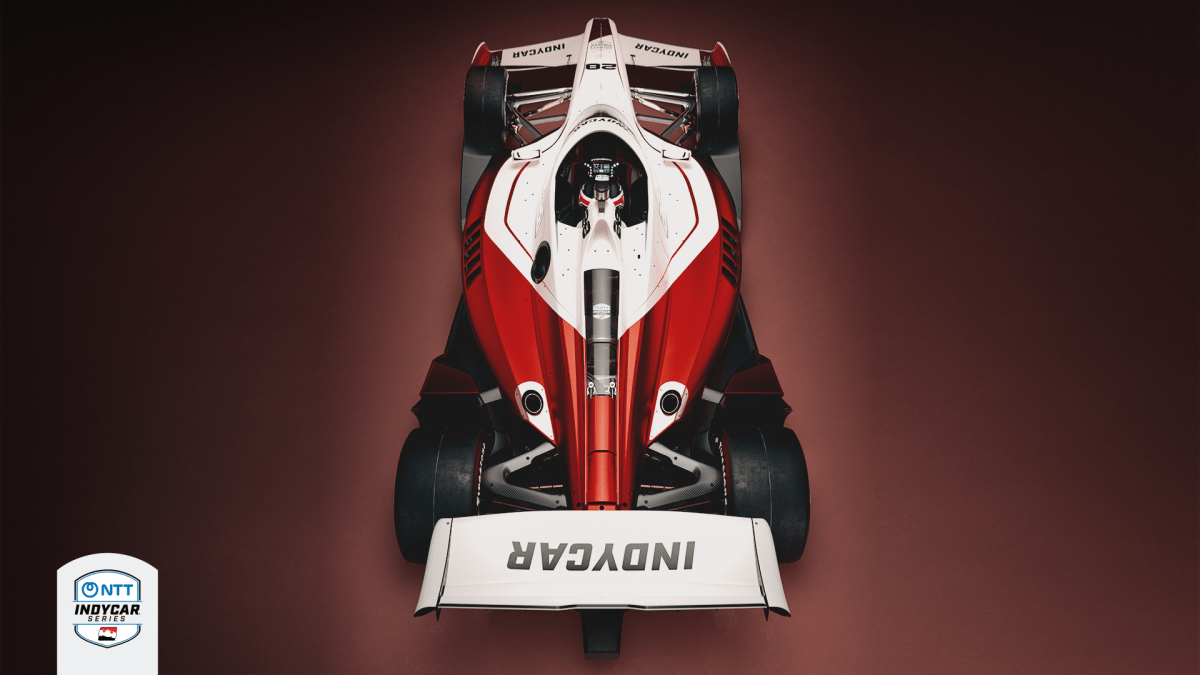
What separates the IR28 from its predecessor at a fundamental level is integration. The current car was designed before the aeroscreen existed and had the cockpit protection device bolted on years later. The IR28 was drawn from scratch around it, and that shows in the renderings, where the aeroscreen flows into the bodywork rather than sitting on top of it like an afterthought.
Aerodynamics got a philosophical overhaul too. The renderings show the superspeedway configuration, but IndyCar says the entire aero package was developed to reduce dirty air and promote closer racing on every type of circuit. No downforce numbers, no lap time targets, no hard data of any kind accompanied the reveal.
That absence is conspicuous. IndyCar may share performance benchmarks in the months ahead, but for now, fans and teams are left to judge the car on looks alone.
A new suspension system called Custom AXIS Inertance Control will give teams more freedom to tune setups, adding a layer of mechanical differentiation that the spec-chassis series has historically kept tight. Small screens mounted near the aeroscreen will display live race positions, borrowing a feature already common in IMSA sports car racing.
The timing of this reveal matters. IndyCar’s current ownership under Roger Penske has pushed hard to modernize the series, and the IR28 is the clearest expression of that ambition. But ambition and execution are different animals.
The DW12 arrived with its own set of compromises and criticisms, and the IR28 will face scrutiny from teams that have spent years mastering the current car’s quirks. Prototype testing begins later this week. That is when the renderings stop mattering and physics takes over.
Eighteen months remain before the car is supposed to race, which sounds comfortable until you remember how many racing programs have stumbled in that window. IndyCar has a history of delayed timelines and last-minute changes, and the 2028 season opener will arrive faster than anyone in the paddock expects.


Share this Story