
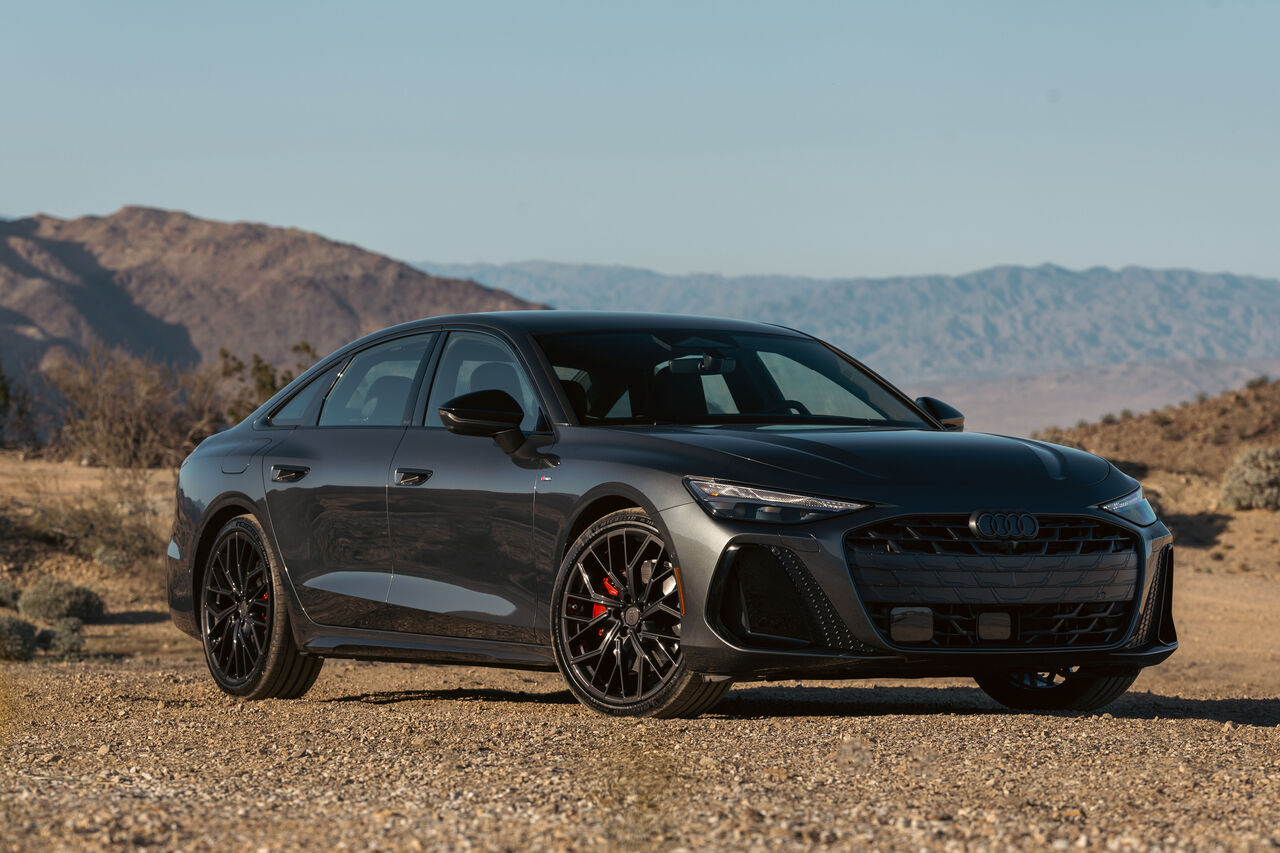


Seven models. All carrying the Insurance Institute for Highway Safety’s highest distinction. Audi just padded its lead over every other premium automaker in a year when earning that badge got harder.
The A6 secured TOP SAFETY PICK+ status this week, completing a sweep that now includes the A5, Q5 SUV, Q5 Sportback, A6 Sportback e-tron, Q6 SUV e-tron, and Q6 Sportback e-tron. No other luxury brand matches that count for 2026.
IIHS tightened its criteria this year, ratcheting up requirements for occupant protection and crash avoidance performance. Earning the plus sign was never easy. Now it demands top marks across every single discipline — front and side impact, pedestrian safety, headlight quality, and autonomous emergency braking effectiveness.
The A6 posted “Good” ratings across key crash tests and cleared the bar on both lighting and front crash prevention. Clean scorecard, no exceptions. That’s the price of admission in 2026, and plenty of competitors haven’t paid it.
What makes Audi’s haul notable is the breadth. This isn’t one platform carrying the flag. The seven winners span sedans, sportbacks, traditional combustion entries, and full battery-electric vehicles.
The A5 and Q5 variants represent Audi’s refreshed conventional lineup. The A6 Sportback e-tron and Q6 e-tron models prove the brand’s electric architecture isn’t trading safety for efficiency or range.
That distinction matters because the industry’s pivot to EVs has raised legitimate questions about crash structures, battery protection, and the added mass these vehicles carry. Audi’s answer is straightforward: test them all, pass them all, at the highest level.
The German automaker has been quietly building this safety portfolio while competitors spend their press cycles on horsepower figures and autonomous driving promises. BMW, Mercedes-Benz, and Lexus all field strong entries in IIHS testing, but none have matched seven TOP SAFETY PICK+ awards in a single model year. That’s a gap Audi’s competitors will have to explain to buyers who actually read the fine print on a window sticker.
IIHS operates as an independent body funded by the insurance industry — the people who write the checks when cars fail to protect their occupants. Their motivations are nakedly financial, which makes their testing protocols arguably more honest than government-run programs designed with political considerations in mind. When insurers say a car is safe, they’re betting real money on it.
Audi’s seven-model sweep also reflects a strategic decision to engineer safety uniformly across its range rather than concentrating resources on a halo product. A buyer choosing the Q5 Sportback gets the same top-tier safety validation as someone in the $80,000-plus Q6 Sportback e-tron. That’s not always the case across the luxury segment, where entry-level models sometimes slip to the lower PICK award or miss entirely.
The premium market is brutally competitive right now, squeezed between rising EV costs, tariff uncertainty, and buyers demanding more technology for every dollar spent. Safety ratings don’t generate the breathless social media coverage that a sub-three-second zero-to-sixty time does. But they move metal in showrooms, particularly with families and fleet buyers who actually keep these cars for years.
Audi isn’t shouting about this. The press release is characteristically understated, almost clinical. But seven out of seven is seven out of seven. The scoreboard doesn’t need embellishment.
Share this Story