
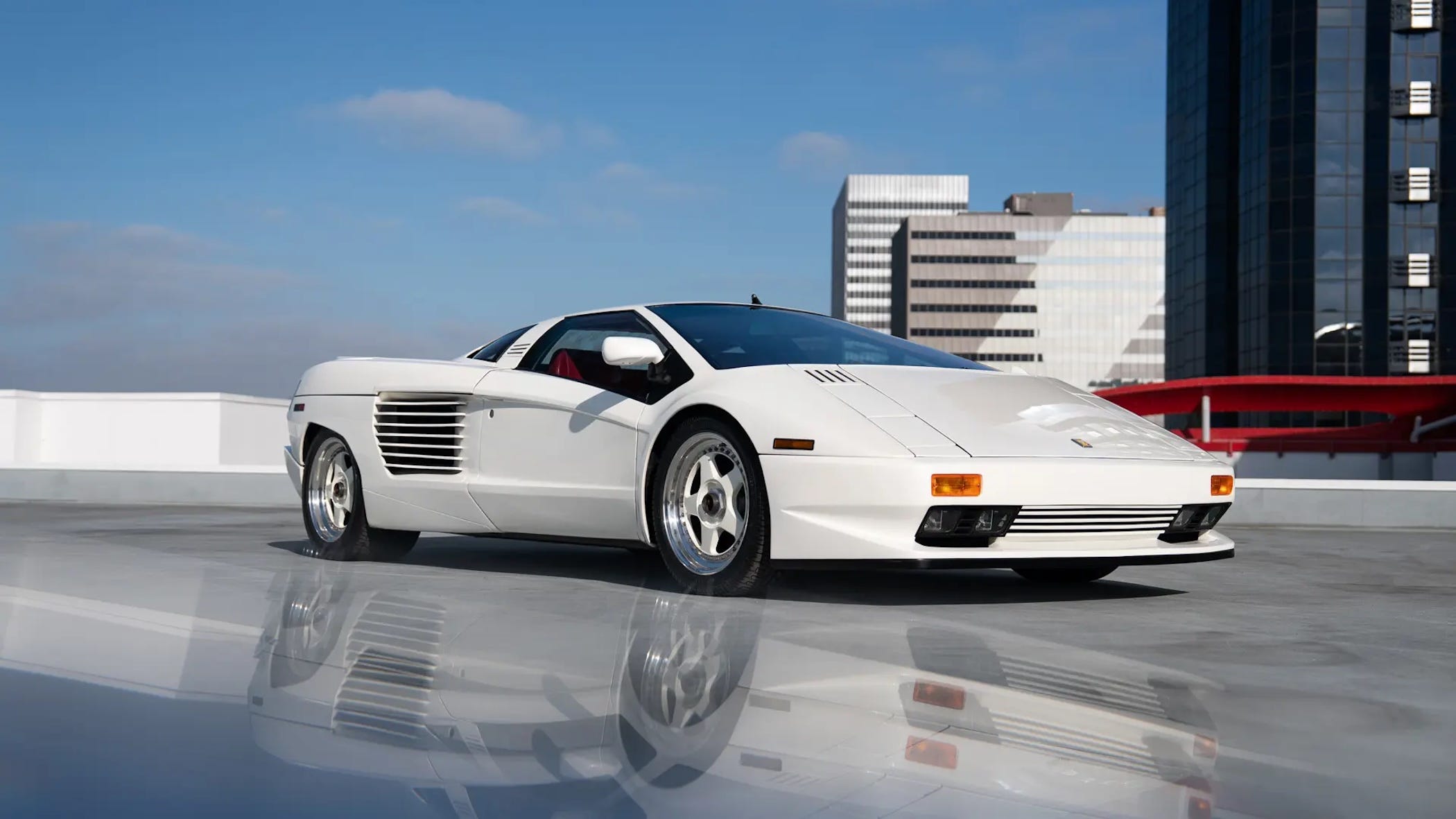


A 6.0-liter, 16-cylinder engine mounted sideways. Four pop-up headlights. A body three inches wider than a Ferrari Testarossa. And the name of a three-time Oscar-winning disco producer stamped on the tail. The only Cizeta-Moroder V16T ever built is heading to RM Sotheby’s in Monterey, and it’s exactly as unhinged as the era that created it.
This is the prototype — the one car out of ten total production examples that carries Giorgio Moroder’s name alongside builder Claudio Zampolli’s. The remaining nine cars dropped the hyphen and the Moroder moniker after the partnership dissolved, making this not just a prototype but a one-of-one artifact from a time when ego, ambition, and Italian engineering collided without guardrails.
Zampolli’s story reads like a screenplay nobody would greenlight because it’s too absurd. He cut his teeth at Lamborghini under Bob Wallace, the company’s legendary test driver, wrenching on Miura P400s. He moved to Los Angeles and became mechanic to rock royalty.
The engine revving in Van Halen’s “Panama? That’s Eddie’s Miura, serviced by Zampolli. Sammy Hagar’s 512BBi? Zampolli sourced it. When Van Halen needed a new frontman, Eddie made the call from Zampolli’s shop.
Building supercars costs money that turning wrenches for rock stars doesn’t generate. Zampolli went shopping for investors among Hollywood’s elite. There reportedly exists an engine cover bearing the name “Cizeta-Stallone,” which tells you everything about the ambition and the chaos. Sly passed, or the deal fell apart, and Moroder stepped in with the checkbook.
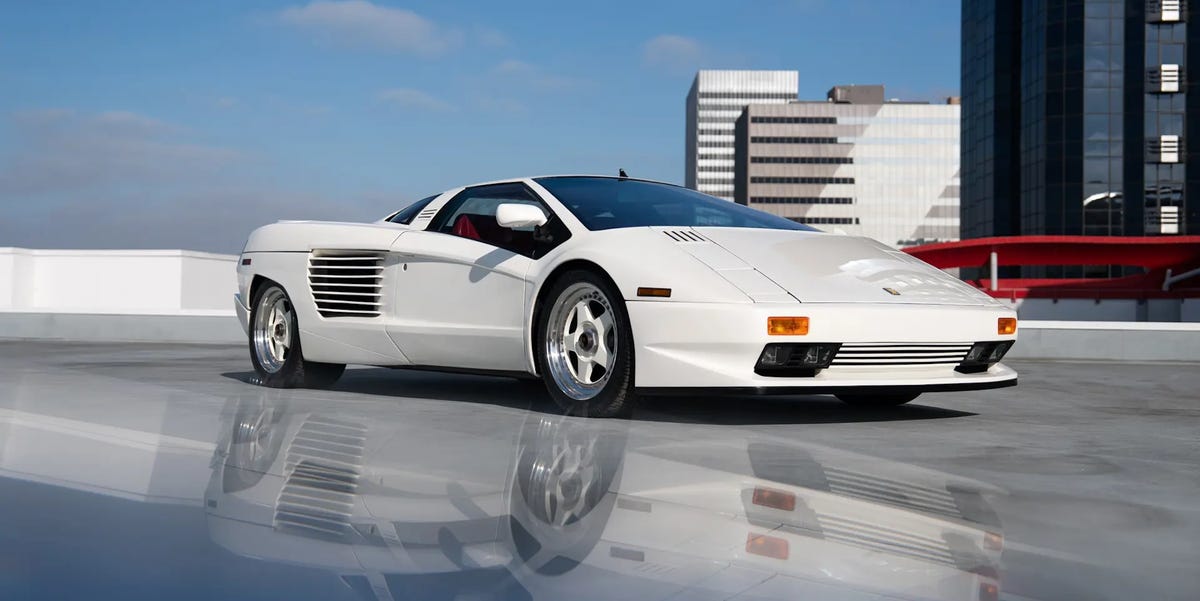
The talent Zampolli assembled was no joke. Marcello Gandini, the man who penned the Miura and the Countach, drew the bodywork. Former Lamborghini engineers handled the mechanicals.
The centerpiece is that transversely mounted V-16 — essentially two flat-plane V-8s geared together — making a claimed 540 horsepower at 8,000 rpm through a five-speed manual. Think of it as two Ferrari 308 engines bolted side by side. Nobody else was doing this, and nobody else has done it since.
The project moved slowly enough that Moroder and Zampolli split before production really got rolling. Moroder kept this car. It spent years in storage before eventually landing at Bruce Canepa’s shop near Santa Cruz, where a team accustomed to making Porsche 959s behave sorted out the prototype’s unfinished details and made it properly road-worthy.
That last detail matters more than the spec sheet. Prototypes of failed supercar ventures usually end up as static museum pieces or garage queens with electrical gremlins and questionable build quality. This one drives. Canepa’s involvement suggests it drives well.
Zampolli never became the next Ferruccio. He built ten cars total, a footnote in supercar history rather than a chapter. But what a footnote — the V16T is wider, louder, and more excessive than anything Lamborghini was selling at the time, conceived by a man who believed outrageous wasn’t a ceiling but a starting point.
The auction estimate hasn’t been disclosed, but rarity alone makes this a significant lot. There is exactly one Cizeta-Moroder V16T on the planet. There are exactly zero others with a disco legend’s name riveted to the bodywork, styled by the man who shaped the Countach, powered by an engine configuration that borders on mechanical satire.
Monterey in August draws the kind of collectors who want the story as much as the car. This one has both — a tale of immigrant ambition, rock-and-roll connections, Hollywood near-misses, and an Italian V-16 that screams at 8,000 rpm. Whoever buys it won’t just own a supercar. They’ll own the fever dream of a mechanic who refused to stay under someone else’s hood.
Share this Story