
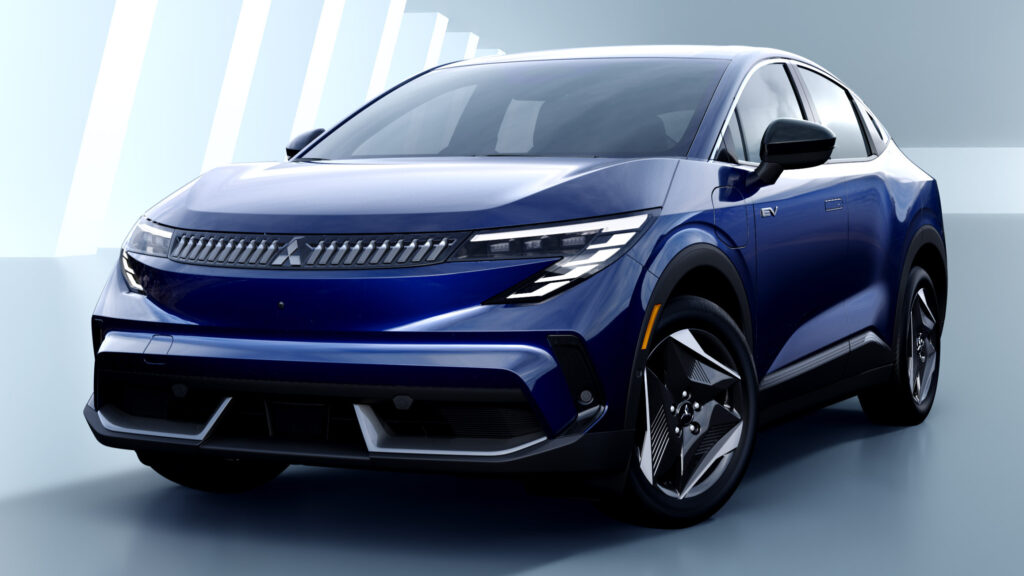


Mitsubishi just confirmed it’s bringing the Eclipse name back from the dead. Again. This time it’s pinned to a fully electric crossover called the Eclipse Sportback EV, arriving in North America this fall as a 2027 model. Underneath the restyled bumpers and Triple Diamond badges sits a new-generation Nissan Leaf, platform and all.
The original Eclipse, sold from 1989 to 2011, was a turbocharged sport coupe that built a cult following in tuner culture. It earned its reputation on drag strips and in aftermarket garages. Mitsubishi already diluted that legacy once when it slapped the Eclipse name on the Eclipse Cross crossover. Now it’s doing it again, this time on a vehicle it didn’t even engineer.
The Eclipse Sportback rides on Nissan’s CMF-EV architecture, the same bones under the Leaf and Ariya. Battery options are expected to mirror the Leaf’s 52 kWh and 75 kWh packs, paired with a single electric motor producing either 174 or 214 horsepower. EPA range tops out at 303 miles.
Mitsubishi hasn’t released full specs yet, but there’s no reason to expect meaningful mechanical divergence from its Nissan donor. Visually, the differences are cosmetic and modest. The front bumper gets a revised grille and horizontal intakes with some aerodynamic detailing.
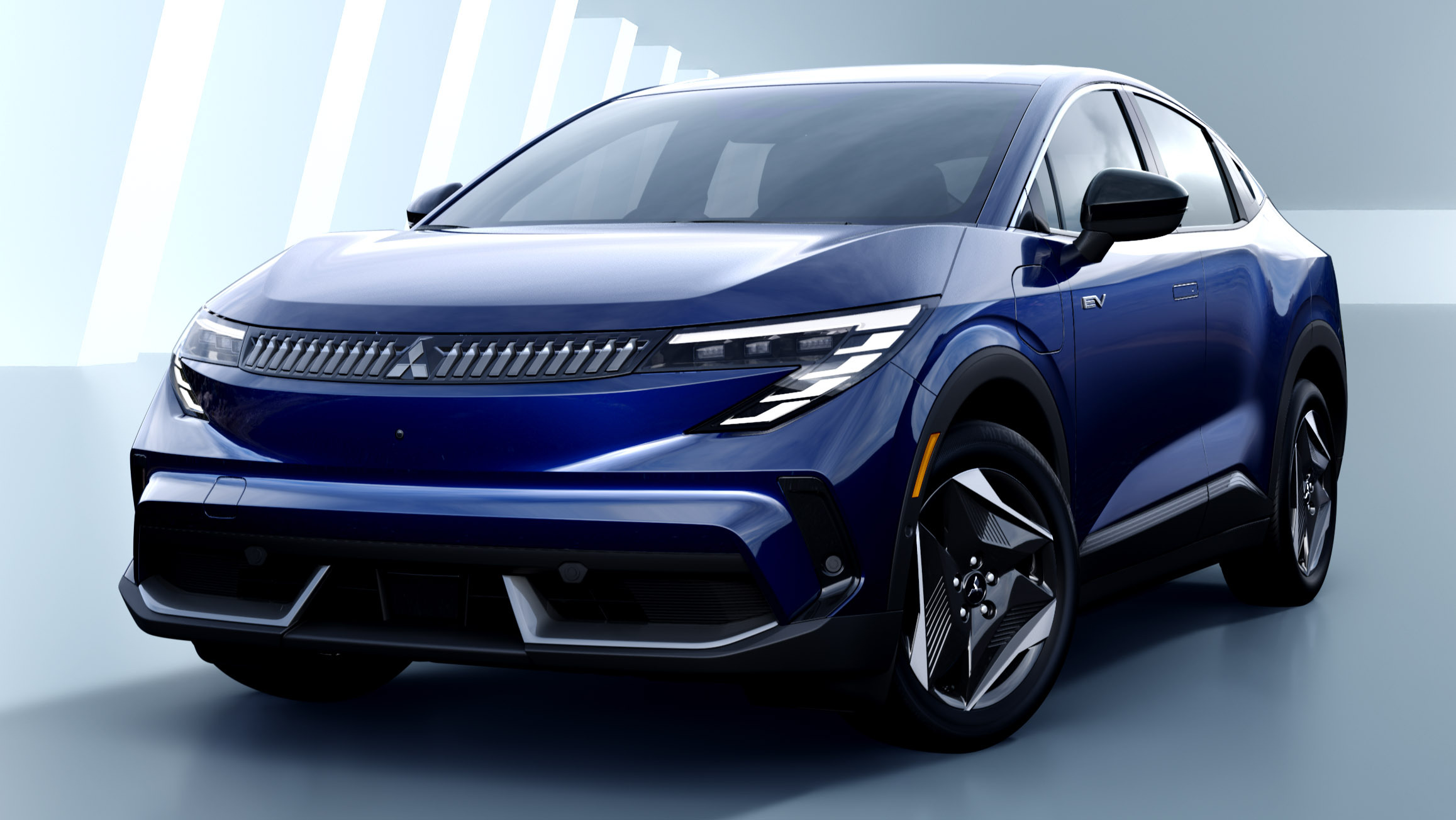
The headlights, despite official claims of differentiation, look nearly identical to the Leaf’s units, the main distinction being the absence of a connecting black trim strip. The profile is a copy-paste job: same crossover fastback silhouette, same 18-inch aero wheel covers borrowed from the Leaf S+, with Eclipse EV door badges and chrome window trim added for brand flavor.
Out back, Mitsubishi’s designers kept their fingerprints light. A sculpted rear bumper, a new tailgate without the Leaf’s glossy black trim panel, and custom LED taillight graphics. The flagship Leaf’s holographic LED taillights won’t make the cut.
The interior hasn’t been shown, but expectations should be calibrated accordingly. The Leaf offers dual screens in 12.3- or 14.3-inch sizes depending on trim. Whether Mitsubishi will offer the electrochromic panoramic roof or the Bose headrest-mounted speakers from higher Leaf trims is unknown. The safest bet is a Mitsubishi steering wheel badge and not much else.
This is the reality of Mitsubishi’s position inside the Renault-Nissan-Mitsubishi alliance. The company lacks the R&D budget to develop standalone EVs, so it borrows from its partners. The strategy isn’t new, the Outlander shares a platform with the Nissan Rogue, but rebadging an entire car with minimal changes and hanging a storied nameplate on it is a different kind of move.
Mitsubishi says pricing and additional details will come before launch. The company also confirmed the Eclipse Sportback will be followed by a rugged, off-road-oriented Outlander variant in early 2027, with a new or significantly revised model arriving every year through 2030. That’s an ambitious product cadence for a brand whose recent playbook has leaned heavily on Nissan’s parts bin.
The Leaf itself is a solid EV. Competitive pricing, decent range, and Nissan’s second-generation electric platform give it real credibility in the sub-$30,000 space. Whether any of that translates when wearing a Mitsubishi badge and a name that once meant something entirely different is the open question.
Badge engineering works when the borrowed product is strong and the price is right. It fails when the nameplate carries weight the product can’t support. The Eclipse name used to mean something visceral. Now it means shared architecture and aero wheel covers. That’s not a revival. That’s a requisition.
Share this Story