
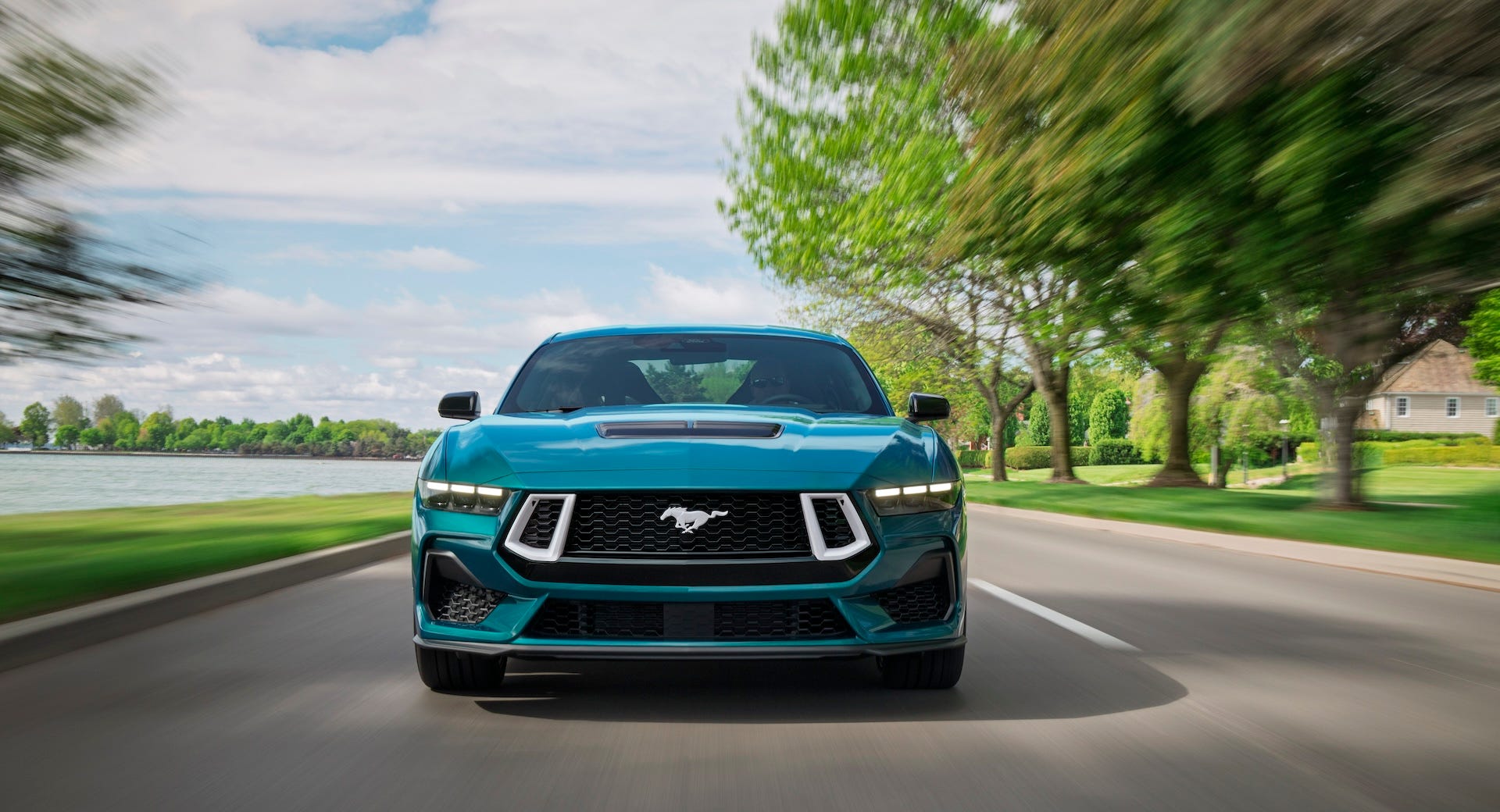


For sixty years, Ford has been building four-door Mustang prototypes and then quietly shelving them. That streak appears to be ending.
Andrew Frick, president of Ford Blue and Model e, told Automotive News the company is actively watching the sedan segment and looking to grow the Mustang family. His language was careful but unmistakable. “There is a percentage of the customer base that still buys sedans,” Frick said. We have a really great Mustang that people consider a car. We look to expand on the Mustang family as we move forward.”
He added that any new sedan would need to fit “within a family that we may already offer.” That’s not subtle.
Ford trademarked the name Mach 4 last year. In 2024, the company reportedly showed dealers two Mustang variants behind closed doors — a four-door sedan and a performance off-roader in the mold of the Porsche 911 Dakar. The off-roader sounds like a blast, but it’s a toy for a sliver of the market. The sedan is the one that moves metal.
The math isn’t complicated. Sedans account for 16 to 17 percent of the U.S. market, down from roughly half a generation ago. Ford currently sells zero sedans. Not one. The company that built the Taurus, the Fusion, the Crown Victoria, and the Five Hundred walked away from every single one of them. Dealers have spent years watching sedan-loyal customers drift to Toyota and Honda because there was nothing on the Ford lot to show them.
Meanwhile, Dodge went ahead and proved the thesis. The new Charger, available with a straight-six or electric powertrain, carved out space in a segment most Detroit executives had written off. If Stellantis can sell a four-door muscle car in 2025, Ford can certainly try in 2027 or 2028.
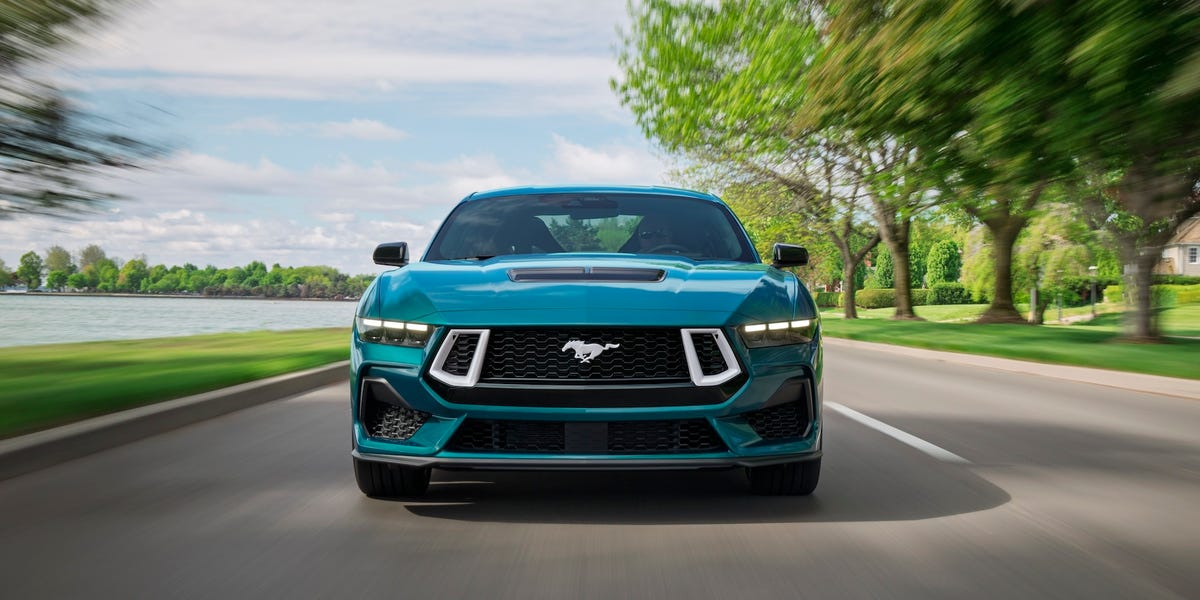
Building a Mustang sedan on a stretched version of the existing S650 platform would be the pragmatic play. The architecture already supports the 5.0-liter Coyote V-8 and the 2.3-liter EcoBoost four-cylinder. Packaging either into a four-door body gives Ford an instant competitor to the Charger without requiring a clean-sheet investment that no CFO would approve in the current tariff climate.
The Coyote V-8 version practically sells itself. There’s a deep reservoir of buyers who want American V-8 muscle but need rear-seat access for car seats and soccer gear. The EcoBoost variant, meanwhile, could undercut the Charger on price while offering something more exciting than a Camry — which is a bar so low it’s underground, yet Ford has had nothing to clear it with since the Fusion died in 2020.
The real question is whether Ford has the discipline to make the sedan feel like a Mustang rather than just wearing the badge, the way the Mach-E does. Purists still grind their teeth over an electric crossover carrying the pony logo. Slapping “Mustang” on a rental-spec commuter sedan would be worse.
The car needs the stance, the sound, and the attitude. It needs to be the thing Ford first imagined in 1965 when it mocked up that original four-door prototype and then lost its nerve.
Frick’s comments suggest Ford isn’t losing its nerve this time. The trademark is filed. The dealers have seen the concept. The sedan segment is smaller than it used to be, but it’s still millions of vehicles a year, and Ford owns exactly none of them.
Six decades of prototypes that went nowhere. A market gap wide enough to park a Taurus in. And now an executive going on the record about expanding the Mustang family within its existing portfolio. Ford has talked about a four-door Mustang for longer than most of its current customers have been alive. The only surprise would be if it keeps talking instead of building.
Share this Story