
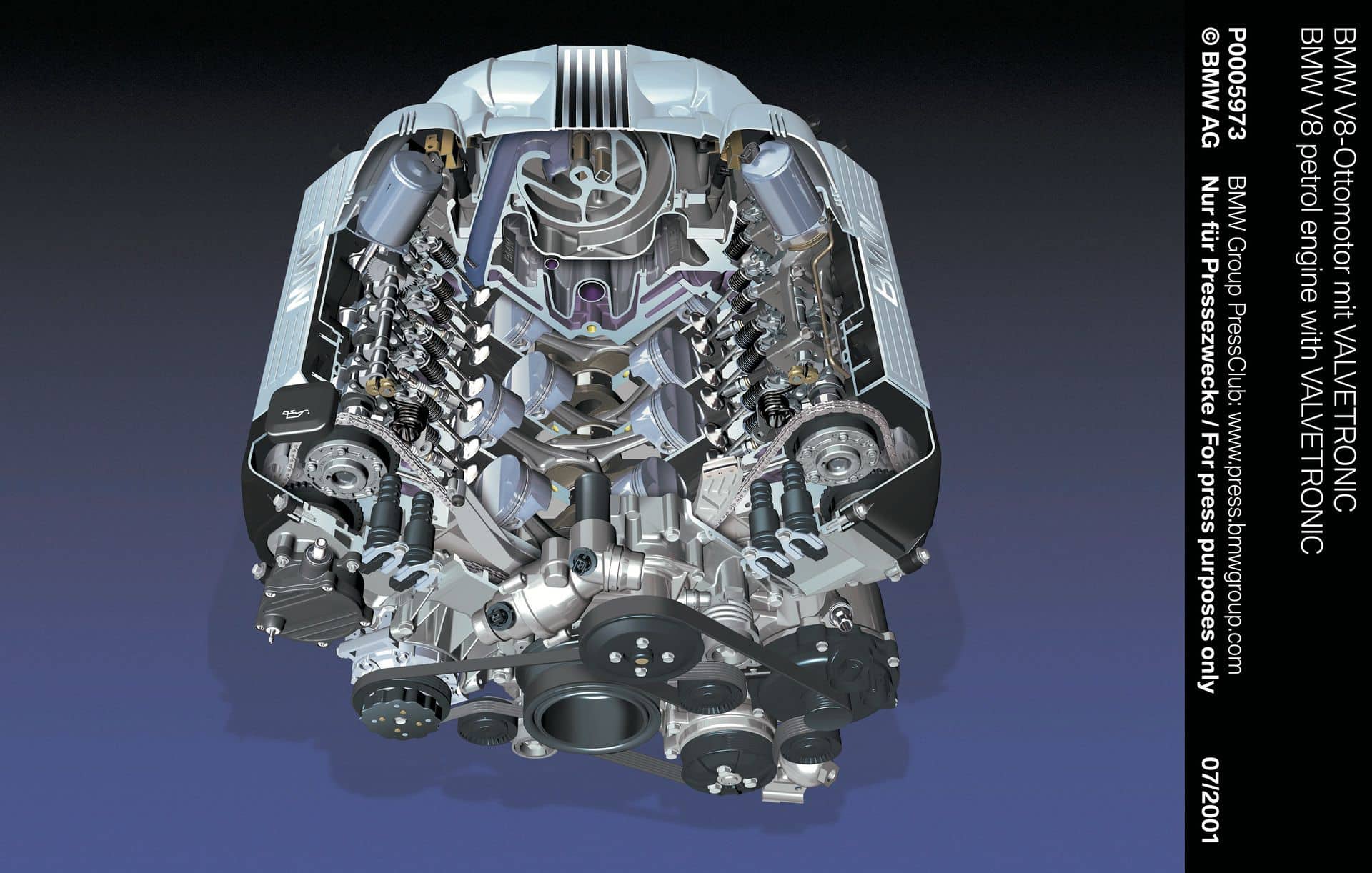


The N62 V8 won the International Engine of the Year award in 2002. It also won Best New Engine and the Above 4-Liter category. Today it is best known for sending owners to independent shops with four-figure repair bills for gaskets buried under the intake manifold.
That gap between engineering ambition and ownership reality is the defining story of BMW’s first Valvetronic V8. It was a clean-sheet 90-degree aluminum engine that replaced the M62 and powered the 5, 6, and 7 Series plus both generations of the X5 from 2001 to 2010. Morgan kept bolting it into Aero sports cars until 2019, though there was never an M version.
The technology list reads like a press release from an era when BMW’s engineering department had no budget constraints. Variable valve lift on both banks, double VANOS on all four camshafts, and a continuously variable-length intake manifold that no other production engine has ever used. The throttle body barely had a job, only stepping in during cold starts and to maintain a trickle of vacuum for the crankcase ventilation system.
All of that hardware had to live somewhere, and BMW packed most of it into the valley between the cylinder banks, underneath the intake manifold. That single packaging decision is responsible for nearly everything that went wrong with the N62’s reputation in the used market.
The valve stem seals are the headline failure. They harden with heat and age, letting oil past the valve guides and into the combustion chambers. The telltale sign is a puff of blue smoke after idling at a stoplight or on cold startup.
Replacing them without pulling the heads requires a specialized in-car spring compressor tool and a lot of patience. Independent shops routinely quote thousands of dollars.
The alternator bracket gasket is next. It carries oil passages, and when its gasket goes brittle, oil leaks into the valley. Fixing it means removing the intake manifold, so labor eats most of the bill, with owner reports putting the cost around $1,500 at an independent shop.
The coolant transfer pipe, also buried in the valley, has seals that fail on a similar timeline. Experienced mechanics do all three jobs at once because the intake is already off. None of these repairs involve exotic parts. The expense comes from access, where a gasket that costs a few dollars requires hours of disassembly to reach.
BMW’s own mid-cycle update acknowledged some of the problems. The N62TU, introduced for the 2006 US model year, dropped the complex DIVA intake for a simpler two-stage DISA manifold and eliminated the secondary air injection system entirely. That system had been a known failure point on the 4.4-liter engines, and deleting it removed one line item from the inevitable repair list.
Four displacements were offered across the N62’s life, from a 3.6-liter making 268 horsepower to the 4.8-liter TU producing 360 hp in US trim. ALPINA went further, supercharging the 4.4 with forged internals to make up to 523 hp. ALPINA did not trust the stock bottom end with boost, which tells you everything about the engine’s tuning ceiling for anyone without a six-figure parts budget.
The aftermarket never embraced the N62. ECU tunes from ESS and Dinan add modest power, and headers are the most effective bolt-on. Stack every available modification and you still fall short of 400 hp.
ESS once sold a supercharger kit claiming 120 hp gains at 6 psi, but those kits have been scarce for years and cost roughly as much as the car underneath them. A 2008 550i returned 15 mpg city and 22 highway on premium fuel. Valvetronic helped on the highway, but in town, the efficiency advantage over the older M62 mostly evaporated.
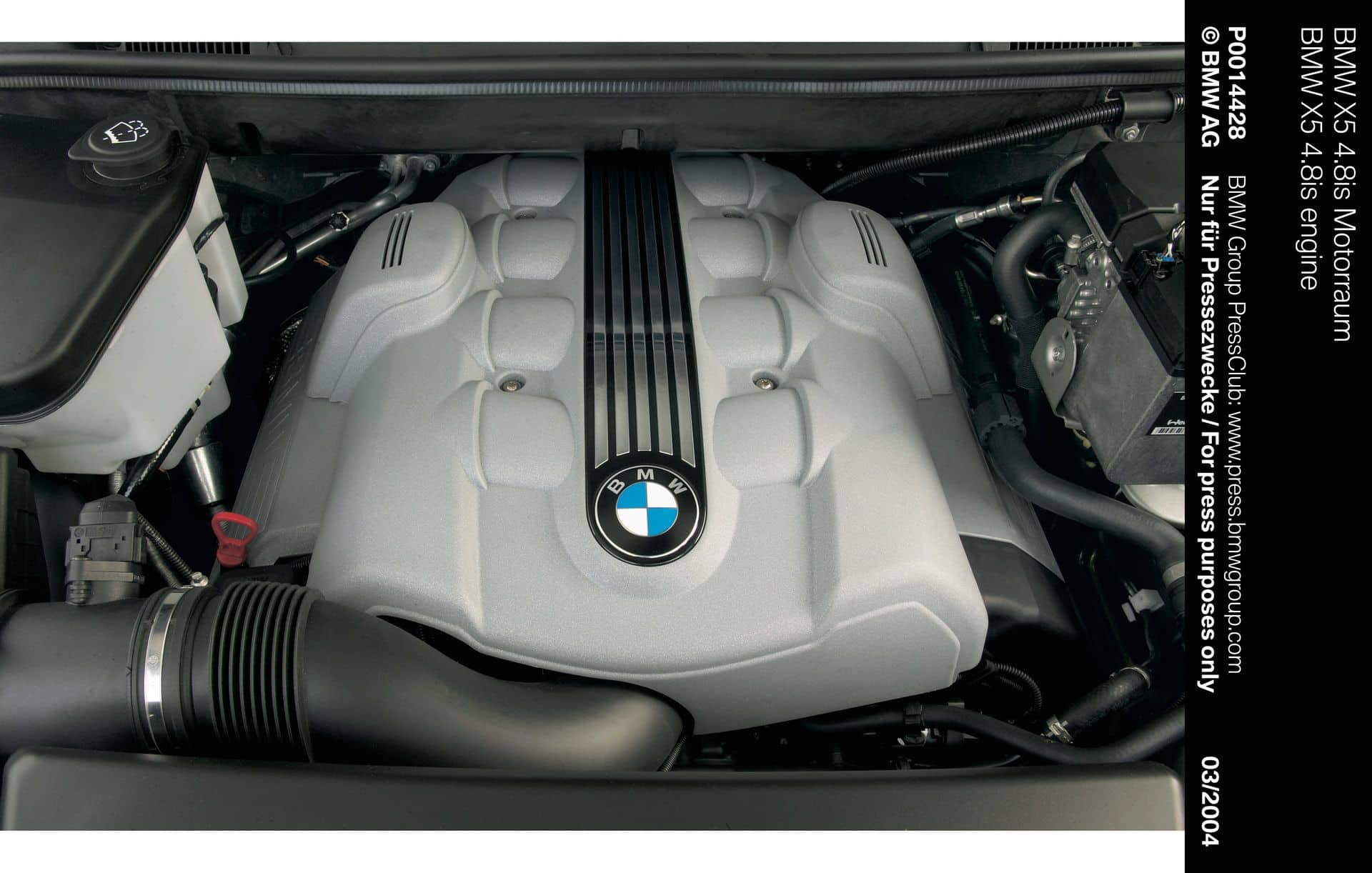
The N62 is now why a 545i, 650i, or 750Li can be bought for the price of a ten-year-old Corolla. The engine itself is smooth, responsive, and willing to spin to 6,500 rpm with a linearity that turbocharged successors never replicated. But the cars attached to it carry deferred maintenance that the asking price rarely reflects, and every N62 purchase is really a bet on whether the previous owner kept receipts.
Share this Story