
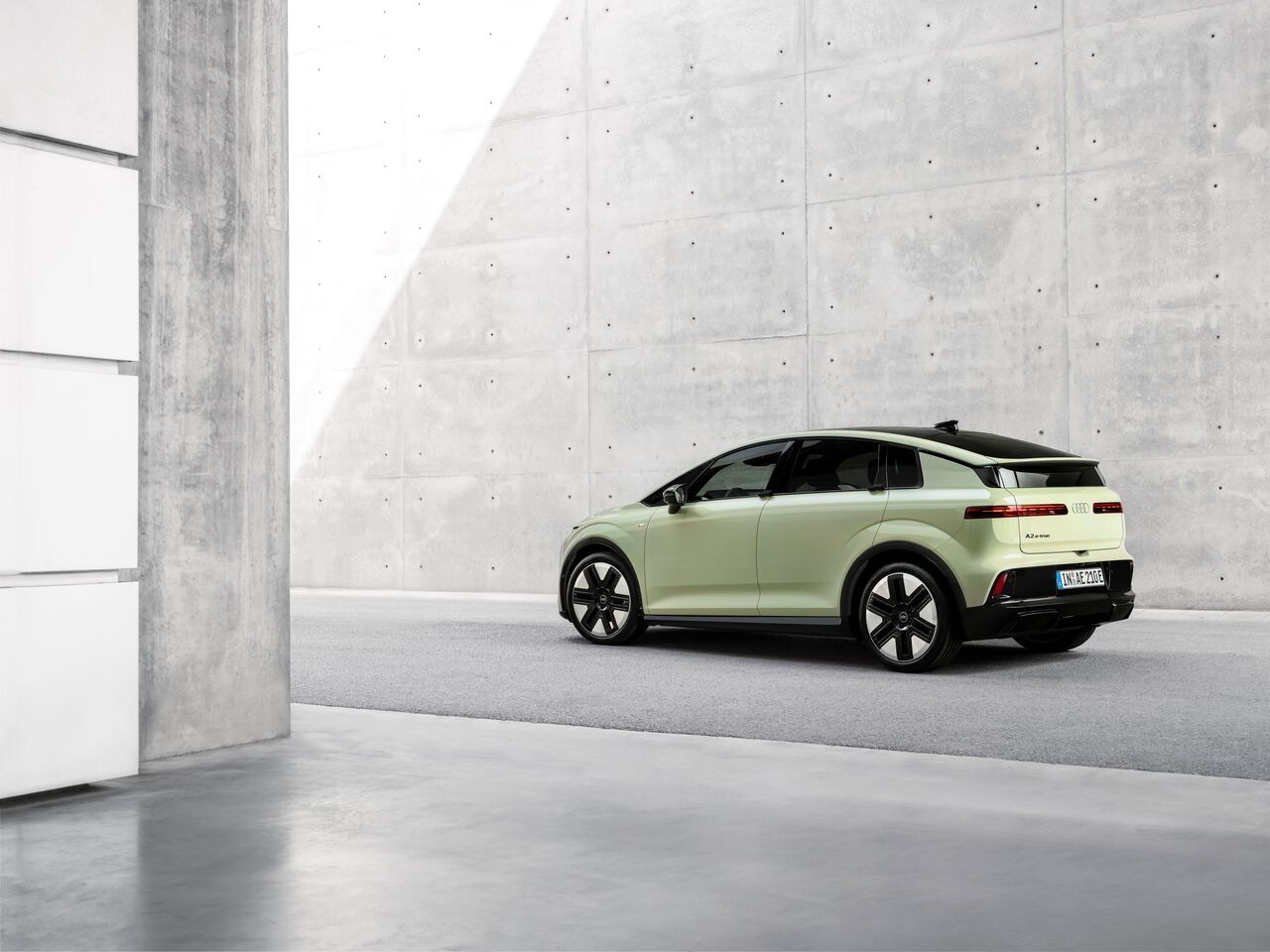


Gernot Döllner stood in Paris on September 7 and pulled the sheet off a car Audi killed more than two decades ago. The A2 is back, fully electric this time, and Audi is betting its compact future on efficiency rather than brute force.
The A2 e-tron consumes just 12.8 kWh per 100 kilometers, making it the most efficient vehicle Audi has ever produced. Paired with a WLTP range of up to 646 kilometers and a drag coefficient of 0.24, those numbers put it in direct competition with the Tesla Model 3 and the upcoming Volkswagen ID.2. Both chase the same efficiency-conscious European buyer.
The original A2, launched in 1999, was an aluminum-bodied oddity that prioritized lightness and fuel economy at a time when nobody was asking for either. It flopped commercially. Audi shelved the nameplate in 2005 and spent the next two decades chasing SUV margins with Q-badged everything.
Now the pendulum swings back.
Döllner framed the revival as a philosophical reset. “Premium cannot just mean more, more power, more size, more resources,” he said. “It has to mean using resources more intelligently.” That line reads like a direct rebuke of the last decade of German luxury strategy, where every model grew wider, heavier, and thirstier with each generation.
The A2 e-tron will be built in Ingolstadt, developed specifically for European driving habits and infrastructure. Audi is not trying to make a global car here. It is making a European one, tuned for tight cities, expensive electricity, and charging networks that still have gaps.
The 646-kilometer range means fewer stops on the autoroute. The 12.8 kWh figure means smaller electricity bills at home.
Context matters. European EV sales have softened. Subsidies have evaporated in Germany. Chinese competitors like BYD are flooding the continent with affordable electric models that undercut legacy brands on price.
Stellantis, Renault, and Volkswagen are all scrambling to field affordable EVs before the market shifts permanently. Audi’s answer is not to go cheap. It is to go efficient and call it premium.
Whether buyers accept that reframing will determine if the A2 e-tron succeeds where its predecessor did not.
The 0.24 drag coefficient deserves attention on its own. That figure matches the Mercedes EQS, a car three times the price and considerably larger. Achieving it on a compact body suggests serious aerodynamic work, likely including flush surfaces, optimized underbody panels, and carefully managed airflow around shorter overhangs.
Audi released no pricing, no battery capacity details, no powertrain specs beyond efficiency, and no timeline for deliveries. The company is controlling the narrative tightly, leading with philosophy and efficiency claims while holding back the numbers that will actually determine showroom traffic.
That selective disclosure is telling. Efficiency is the easy story to tell. Price is the hard one. European buyers shopping in the compact segment are ruthlessly practical, and they will cross-shop the A2 e-tron against the Renault 5, the Citroën ë-C3, and whatever BYD fields next. All of those will likely undercut it by thousands of euros.
Döllner insists the car “does not ask customers to adapt their lives to electric mobility.” The original A2 asked exactly that, and the market said no. Two decades later, Audi is running the experiment again with a battery instead of an aluminum block, hoping the answer has changed.
Share this Story