
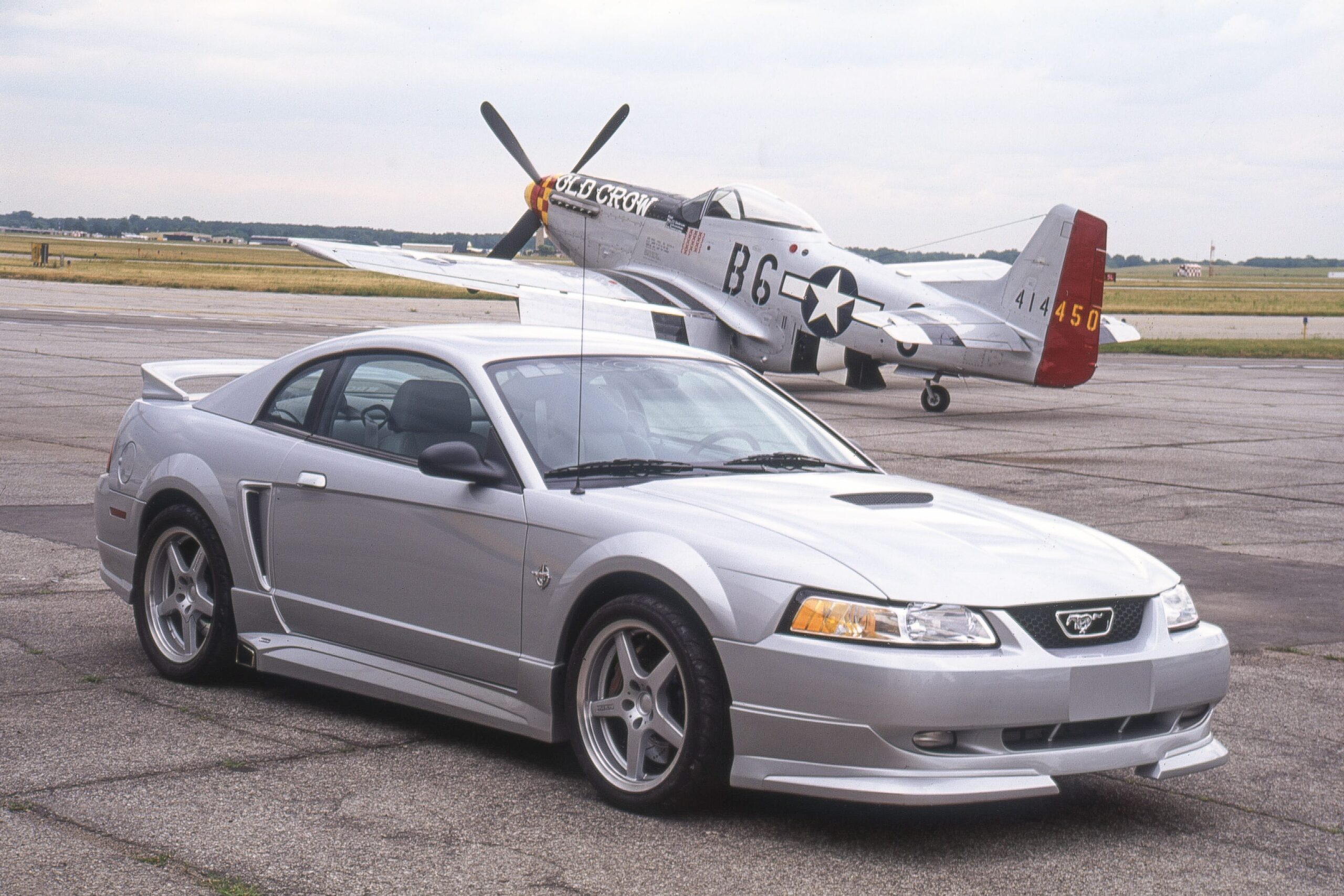


Twenty-five years ago, Car and Driver pulled off one of the most absurd comparison tests in automotive journalism history. They lined up a 1999 Roush Stage 3 Ford Mustang against a 1944 North American Aviation P-51D fighter plane. Both were silver, both were called Mustang, and one had 1,155 more horsepower than the other.
The premise was transparently ridiculous, and the magazine knew it. Photographer Aaron Kiley called it “weak.” Writer John Phillips tried valiantly to find common ground between the two machines, landing on the fact that one had a ground clearance of 6.5 inches and the other could operate at 41,900 feet.
But the real story wasn’t the contrived comparison. It was Jack Roush himself, a man so consumed by Mustangs, both kinds, that he’d become a one-man preservation society for Packard-built Rolls-Royce Merlin V-12 engines.
Roush owned 16 of them. Four were ready to fire at any moment. Each weighed over a ton despite aluminum construction, and in Roush’s hands they made around 1,500 horsepower while Reno air racers wrung 3,000 from the same platform. His P-51D, restored over ten months to his exacting standards, was worth up to $1.8 million, and he’d already bought a second one.
“A P-51 is more fun than two Cobras,” Roush told the magazine. “More fun than four Cobras.”
The man flew the fighter plane to NASCAR races. Charlotte and Talladega got the P-51 treatment. His administrative assistant Brenda Stricklin called flying his therapy, the thing that calmed him down after bad race weekends when his teams wrecked everything.
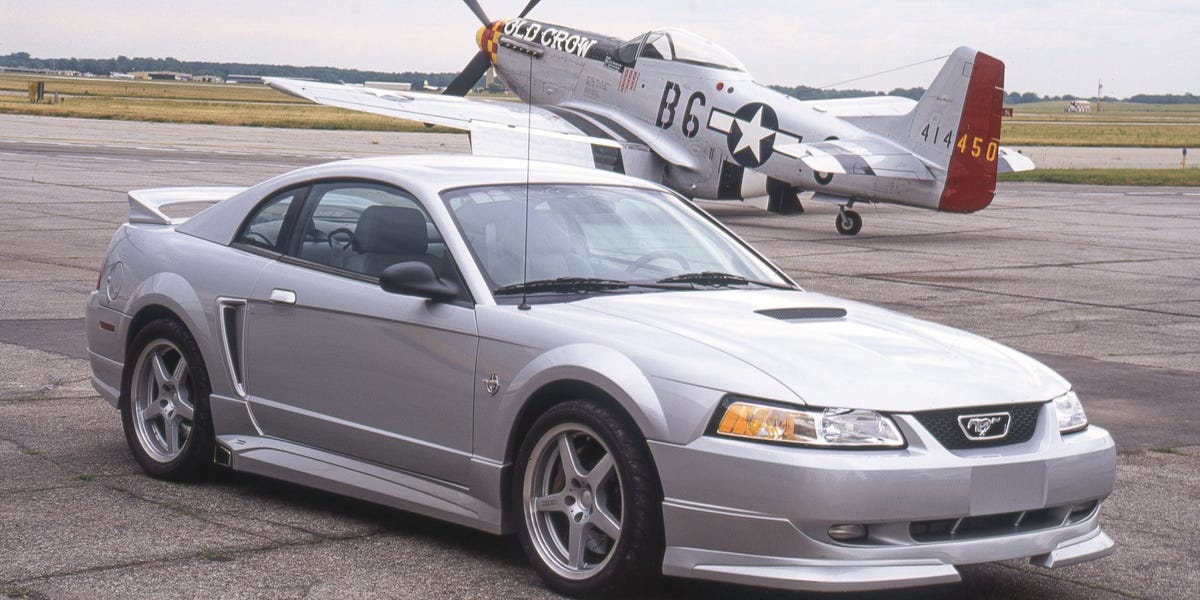
Up to 130 mph, the Roush Stage 3 Mustang actually beat the P-51 in acceleration. The car hit 60 in 4.9 seconds while the airplane needed 7.0. But past 130, physics shifted violently in favor of 1,490 horsepower and wings, and the P-51 climbed in a near-perfect linear rush to its 437 mph top speed while the car topped out at 162.
The car itself was no joke. For $39,000, Roush Performance would sell you a brand-new Mustang GT with SVO heads, a Roots-type supercharger, Bilstein suspension, massive Baer/Alcon six-piston brakes, and 18-inch BFGs. It pulled 0.94 g on the skidpad, better than a factory SVT Cobra, and ran the quarter in 13.5 seconds at 106 mph, beating the Camaro Z28 by 0.3 seconds and 2 mph.
The braking disappointed. At 181 feet from 70 mph, those exotic Baer/Alcons barely outperformed the stock Cobra setup. Roush said he was looking into it.
Every editor came back grinning, if slightly deaf. Half the exhaust exited inches from the driver’s left ear, and the ride was borderline punishing. The steering was twitchy and prone to bump steer, but nobody cared because the supercharger delivered seamless torque from 3,800 rpm through the 6,000 rpm redline without a whisper of whine.
Nineteen Roush badges adorned the car. Phillips cracked that they existed in case a minor head injury made you forget what you were driving.
The P-51 had its own quirks. Full power at low speed could flip the aircraft faster than most pilots could react. Roush attended a dedicated Mustang flight school in Florida that cost him more than his first house, and when he finally soloed, he handed his straw hat to a bystander and said, “I might need this later.
He’d already burned a piston over Toledo and had a hired pilot belly-land the thing in Oshkosh after a landing strut failed. The plane survived both. “These planes are essentially unwreckable,” Roush said. “If you have spare parts.”
Roush had spare parts. Roush always had spare parts.
Share this Story