
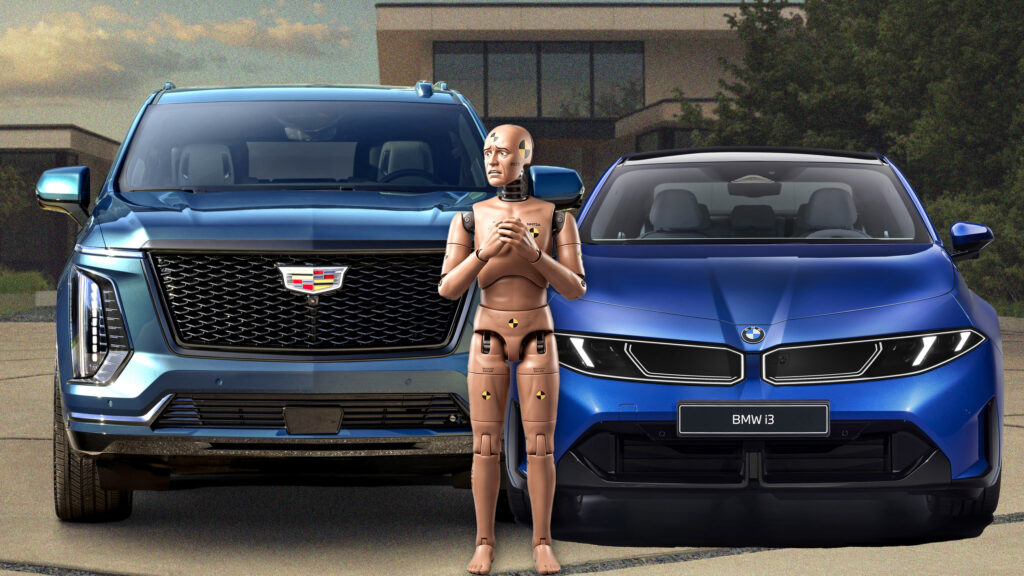


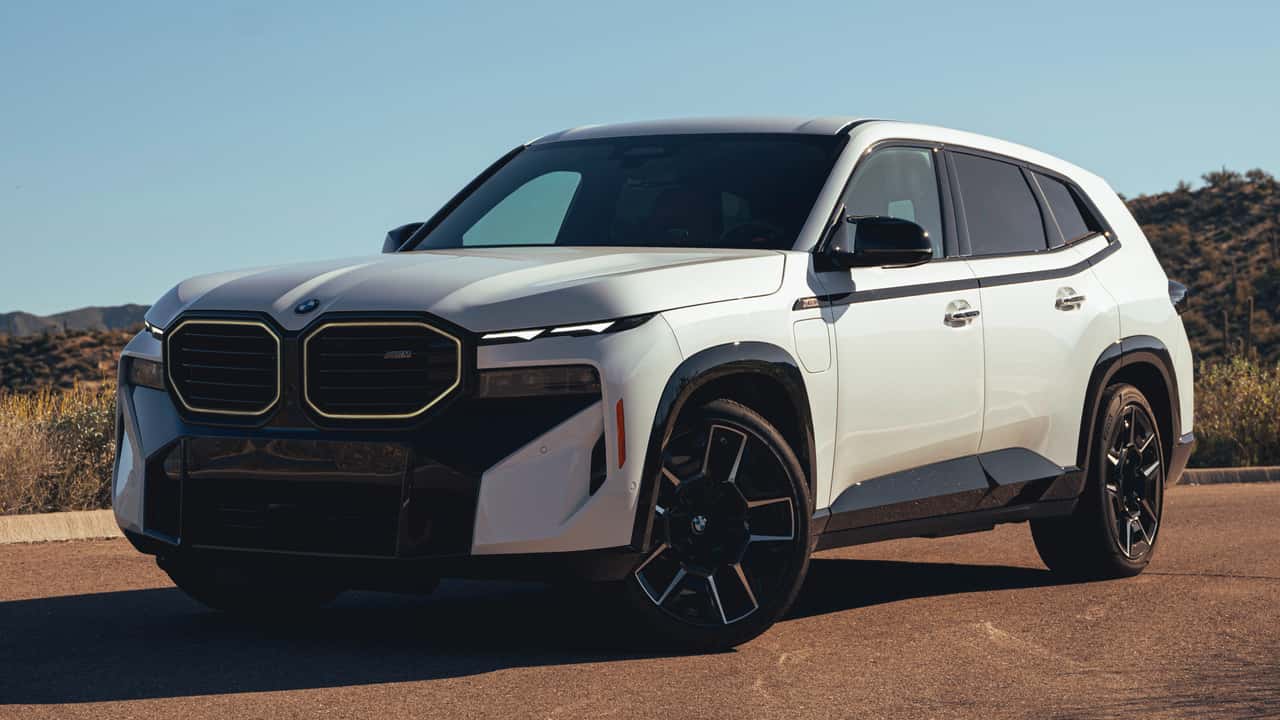
A hood height of 45 inches doesn’t sound like much until you realize it catches a grown adult at chest level. That’s the average clearance on a new pickup truck. According to a New York Times investigation pulling from federal crash records, vehicle dimensions, and crash-test data, it’s helping kill between 200 and 400 additional pedestrians every year.
Researchers estimate roughly 3,000 pedestrian fatalities between 2016 and 2024 can be traced directly to rising hood heights compared to vehicles from the early 2000s. That number is conservative. It excludes parking lots, driveways, and private roads — crashes that never reach the federal database.
The physics are brutal and simple. A sedan hood sits below 30 inches, low enough to catch a pedestrian below the waist and roll them onto the hood. A modern pickup strikes at the chest.
Instead of rolling, the victim gets driven downward into pavement. “Before the driver knows what’s happened, the pedestrian’s head is under the wheel,” said Shawn Harrington of Forensic Rock, which conducted crash tests for the analysis.
The average new vehicle now wears a hood roughly three feet tall — enough to knock down anyone under five-foot-six. That describes about half the adult population of the United States, according to CDC data.
This isn’t just a striking-height problem. It’s a seeing-the-person problem. A 2009 federal roof-crush standard forced automakers to triple the load-bearing capacity of vehicle roofs, and many responded by thickening A-pillars. That protected occupants in rollovers but carved wider blind spots into the forward view.
The Chevrolet Silverado’s blind zone has nearly doubled over two decades. The GMC Sierra and Toyota Tacoma grew theirs by roughly 60 percent. Even the Ford F-150, the mildest offender among the four trucks studied, expanded its blind zone by about 25 percent.
Automakers point to automatic emergency braking, pedestrian detection, and surround-view cameras as the answer. Safety researchers aren’t buying it. Electronic systems fail in unpredictable conditions — low light, rain, a child darting between parked cars. Direct sightlines don’t need a software update.
Here’s the tension that nobody in Detroit wants to address honestly. Pedestrian fatalities in the U.S. have climbed about 75 percent since 2009. Other wealthy nations haven’t seen the same spike, which effectively eliminates smartphones as the primary explanation.
What America has that Europe and Japan largely don’t is a passenger fleet that keeps getting taller and heavier, driven by profit margins that make every other business case irrelevant.
A full-size pickup now lists near $70,000 on average — roughly double what a sedan commands — yet costs only modestly more to build. Ford’s car sales cratered from over a million units in 2017 to fewer than 100,000 by 2022. The truck didn’t replace the sedan because customers demanded it. The truck replaced the sedan because the math was irresistible for manufacturers.
So the industry bankrolls itself on vehicles whose proportions are measurably more lethal to the people walking around them. Study after study confirms the same data. Year after year, hoods climb another inch. The tradeoff is not hidden. It’s just not priced into the sticker.
A resurgence of sedans and wagons might help, but betting on that feels like waiting for the tide to reverse itself. The money flows upward — to bigger grilles, taller hoods, fatter margins — and pedestrians remain the line item nobody’s accounting for.
Share this Story