
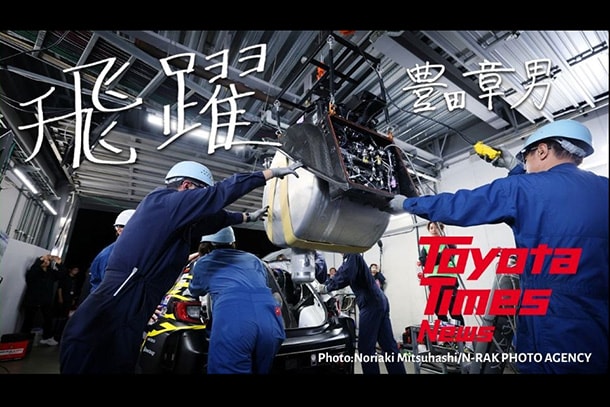


A race car carrying a superconducting motor inside its liquid hydrogen tank just completed the Super Taikyu Fuji 24 Hours. Toyota says it’s the first time the technology has been used in competition anywhere in the world.
The hydrogen-powered GR Corolla, now in its sixth year of endurance racing development, debuted a superconducting liquid hydrogen pump at the 2026 event. The engineering trick exploits liquid hydrogen’s extreme cold — minus 253 degrees Celsius — to enable superconductivity without the elaborate cooling systems normally required.
By moving the pump motor inside the tank instead of mounting it on top, Toyota doubled the volume of liquid hydrogen the car can carry compared to its first-generation tank. The company says this path eventually leads to driving range parity with gasoline.
That’s the sales pitch. The engineering reality is far more stubborn. Superconducting motors operate in pristine, vibration-free environments — laboratories, MRI machines, particle accelerators. Not endurance race cars hammering over curbs at Fuji Speedway for 24 straight hours.
Kyoto University professor Taketsune Nakamura, who collaborated on the development, called the application “almost unthinkable.
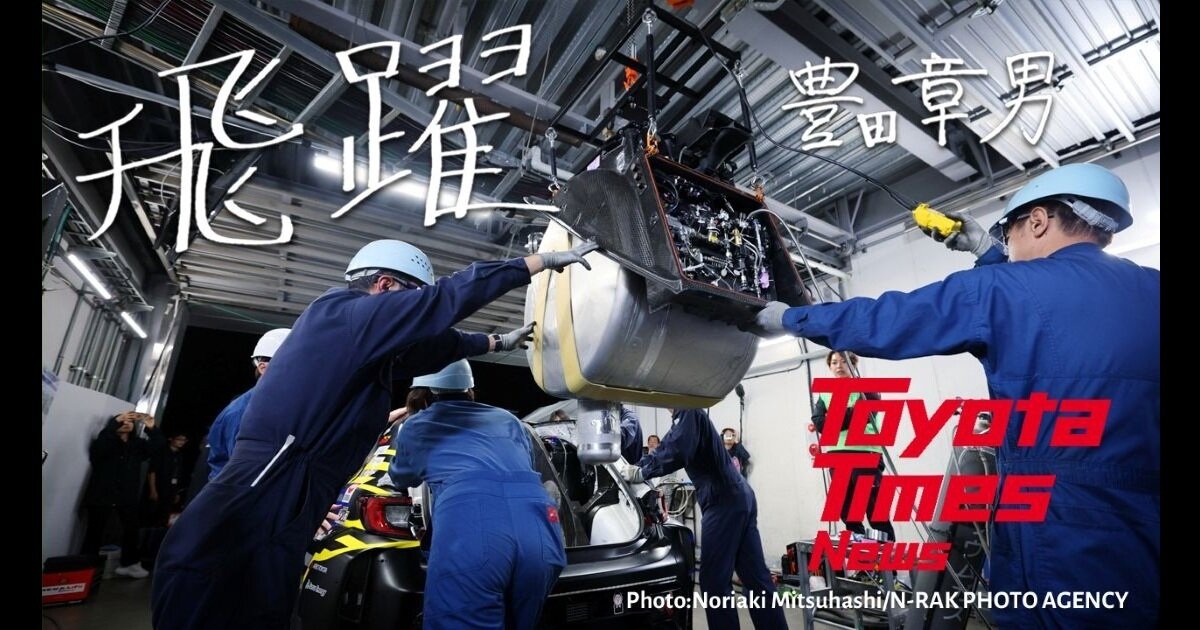
Akio Toyoda, still going by his racing alias Morizo, framed it with characteristic ambiguity before the green flag: “Our journey toward the future, now in its 6th year, is just beginning.” Six years in and still at the beginning tells you everything about the timeline Toyota sees for hydrogen combustion.
The broader context here is a company that refuses to abandon hydrogen internal combustion even as battery-electric vehicles dominate the conversation around zero-emission transport. Toyota has poured years into proving hydrogen engines can work in the most punishing conditions motorsport offers. Each year the car gets a little better, a little more capable, a little closer to the performance envelope of conventional machinery.
But closer is not there. Doubling the tank capacity sounds dramatic until you remember the first tank was woefully small. Range parity with gasoline remains a future promise, not a present reality.
The superconducting pump, while genuinely novel, solves one problem in a chain of dozens that still separate hydrogen combustion from commercial viability.
What Toyota is doing at Fuji is building a public engineering diary. Every race surfaces new problems — vibration tolerance, refueling speed, thermal management — and the solutions feed back into production development. It’s the same philosophy that made hybrid technology bulletproof over two decades: race it, break it, fix it, repeat.
The competition finished. The car made it to the checkered flag. Whether that constitutes proof of concept or an expensive demonstration depends entirely on what Toyota does next with the superconducting hardware.
No other manufacturer is running liquid hydrogen in endurance racing. No other manufacturer is stuffing superconducting motors inside cryogenic fuel tanks and sending them around a circuit for a full day. Toyota occupies this space alone, which is either visionary or lonely depending on how the next decade unfolds.
Toyoda drove during the race, as he has in previous years. At 69, the chairman continues to put himself in the car, which at minimum ensures the engineering team cannot hide from its problems. When the boss feels every vibration through the seat, superconducting or otherwise, accountability is built into the lap times.


Share this Story