
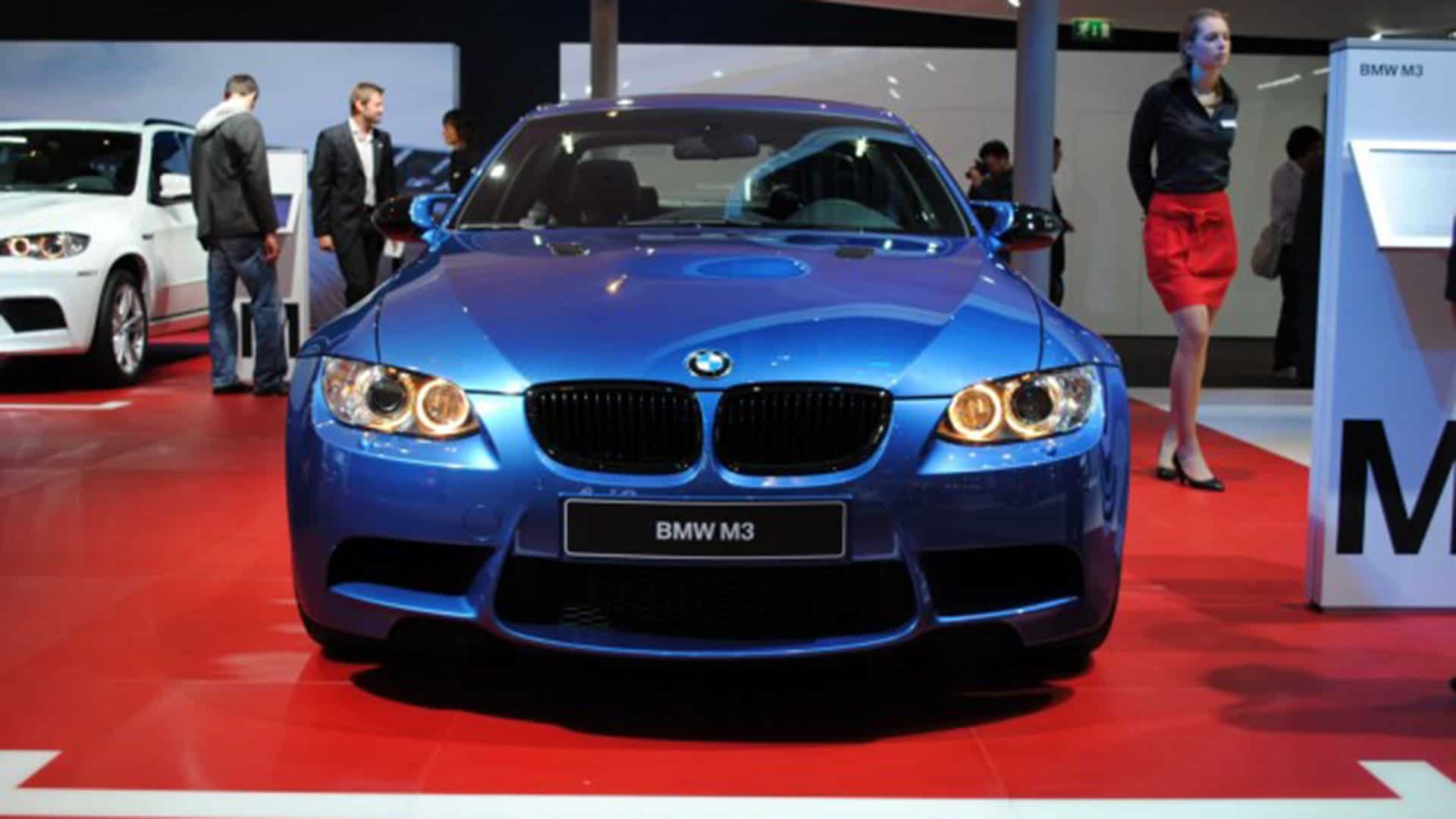


BMW built 707 examples of the M3 Edition starting in July 2009, making it the largest special-edition run on the E9x M3 platform. Ask around at any cars-and-coffee lineup of E92 owners and you’ll get blank stares. Almost nobody remembers it existed.
The reason is simple geography. Of those 707 cars, only 47 crossed the Atlantic to North America, according to production data compiled by Mdataworks. Every single one went to Canada.
The United States, which was by far the largest market for the E92 M3, received zero examples. The biggest special edition of a generation that spawned countless track-day legends and garage queens simply skipped the country that would have devoured it.
The M3 Edition carried chassis code KA335 and rolled off the line over a six-month production window. Four colors were offered: Alpine White, Black, Dakar Yellow, and Monte Carlo Blue, the last being the only metallic option. The spec sheet leaned heavily on interior coordination rather than powertrain upgrades.
White cars got white console and armrest accents with white-stitched Black Novillo leather. Yellow and blue cars swapped those accents to match their exterior paint. BMW Individual High-Gloss Satin Chrome dressed the kidney grilles, side gills, and exhaust tips. Black mirror caps, body-color mirror arms, checkered-flag door sill plates stamped with the M3 name, and 19-inch forged double-spoke wheels rounded out the visual package.
Pretty trim work, sure. But trim work alone doesn’t make a car worth chasing fifteen years later.
The one detail that separated the Edition from a well-optioned BMW Individual build was underneath. Every car sat 10 millimeters lower than the standard M3. That drop was a factory hardware change, not something a buyer could tick on an options list.
It was a quiet preview of where BMW’s M division was heading. When the Competition package arrived later, it carried the same lowered ride height, this time paired with retuned Electronic Damper Control settings. The Edition was the prototype for that philosophy, just without the formal branding.
Everything else stayed stock E92 M3. The 4.0-liter S65 V8 produced 420 horsepower. The six-speed manual remained standard, with the M DCT dual-clutch available as an option, shaving the 0-to-100 km/h sprint from 4.8 seconds to 4.6. The carbon fiber roof was included, though Electronic Damper Control and the M Drive menu were still optional.
BMW churns out special editions now at a pace that borders on parody. Most of them amount to a unique paint code, a contrast stitch, and a numbered plaque screwed to the door sill. A patient customer with access to BMW Individual can usually replicate the cosmetics without paying the premium or waiting for an allocation.
The M3 Edition predated that era, and its one mechanical distinction, the suspension drop, was something the configurator could not reproduce.
That makes the 47 Canadian-market cars a curiosity worth tracking. So are the remaining 660 scattered across Europe and other markets, now eligible for import into the U.S. under the 25-year rule starting in 2034.
The E92 M3 already commands strong money in clean, low-mile condition. An Edition with documented provenance and a change BMW itself later validated with the Competition line sits in a different category entirely.
Whether the market figures that out before the importation window opens is the open question.
Share this Story