
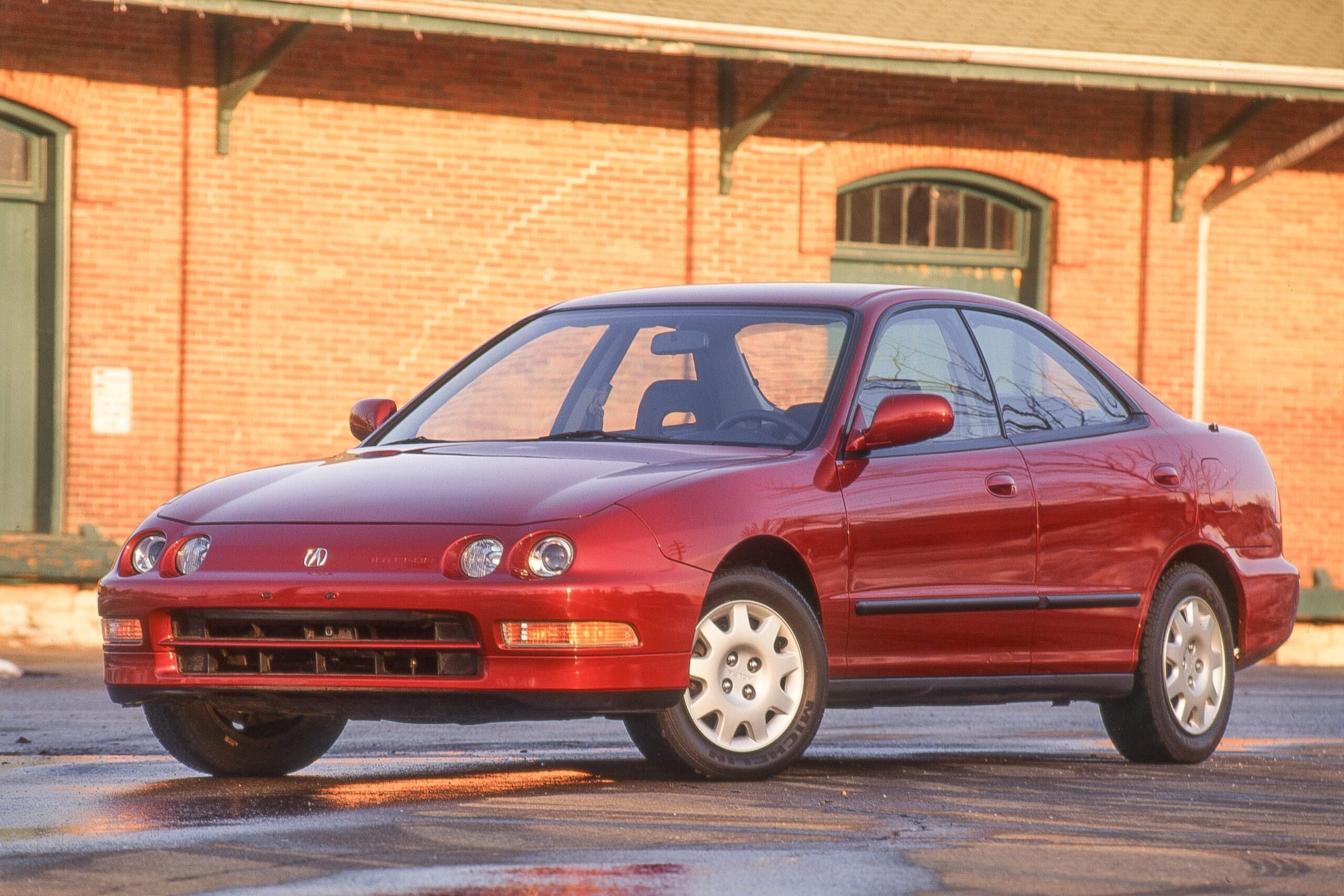


Seventeen thousand eight hundred fifteen dollars. That was the ask for a 1994 Acura Integra LS sedan, a car that could not have tried harder to disappear in a parking lot. Car and Driver’s June 1994 review, written by Barry Winfield, read less like a test and more like a love letter to restraint.
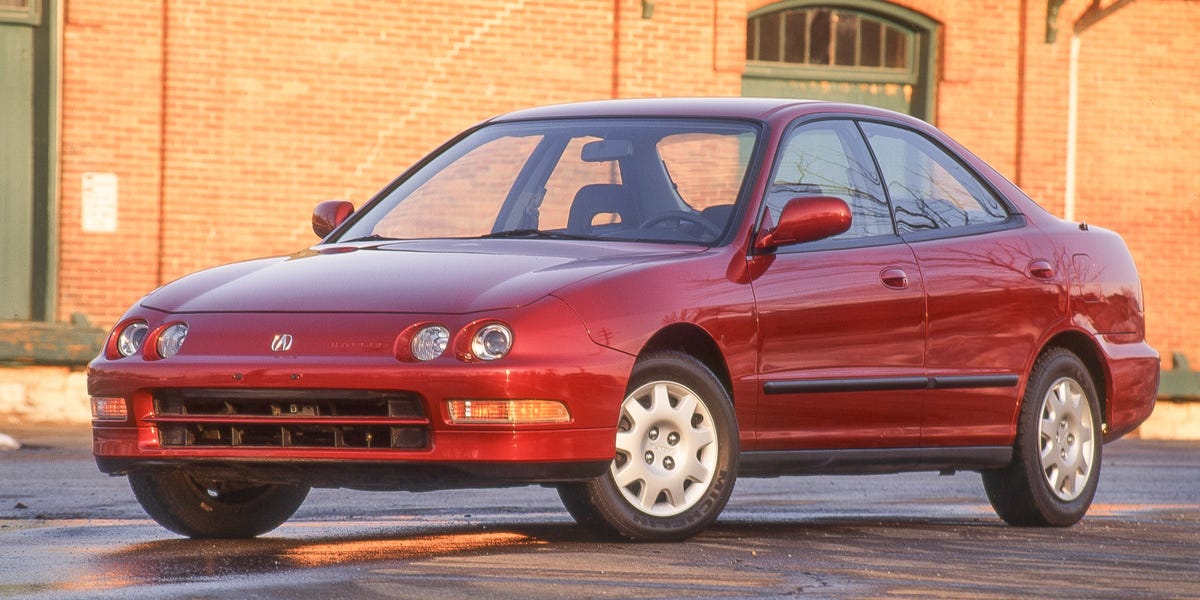
The review opened with a confession most car magazines would never make: the thing was boring to look at. Four tiny headlamps gave it what Winfield called a “deadpan guppy face.” The compact dimensions, the familiar sedan shape, the unassuming stance — nothing about the Integra LS screamed for attention.
Acura’s designers apparently bet those quad eyes would register with buyers. They lost that bet. But then Winfield sat in it, turned the key, and drove.
What followed was one of the more tactile reviews the magazine ever published. The throttle snapped to life. The 1.8-liter DOHC four-cylinder spun to nearly 7,000 rpm with an eagerness that bordered on enthusiasm.
The shifter drew comparisons to a Porsche 968, which in 1994 was not a sentence you threw around casually. Short throws, mechanical engagement, the kind of precision that made heel-toe downshifts feel like a birthright rather than a skill.
Honda’s torque-sensing rotary-valve power steering delivered natural weight through the wheel. The clutch was light. The gauges were big and deeply recessed, bathed in warm light at night.
Even the projector low beams earned praise for their even spread, though the high beams were called out for laziness. The 142-horsepower engine hit 60 mph in 7.6 seconds and ran the quarter-mile in 16.0 flat at 87 mph. Those numbers were perfectly adequate for 1994 and not a tick more.
The Integra LS was never about straight-line violence. It pulled 0.82 g on the skidpad, which Winfield noted was generous given the modest tire size.
The suspension told the real story. Soft springs paired with firm dampers and a stiff unibody produced a ride that filtered road imperfections in a way that, as the review put it, belied the car’s size and weight. The LS traded the GS-R’s tighter body control for more compliance, more roll, more comfort on long hauls.
What made the review remarkable was its central argument: the Integra LS communicated. The brake pedal was readable. The steering answered honestly.
Winfield described a car whose mechanical feedback created a loop between driver and machine that built confidence rather than anxiety. You pushed harder because the car told you it was ready.
Saturn got a backhanded mention. Winfield noted that Saturn engineers had tried to replicate the Integra’s exhaust note, calling plagiarism the sincerest flattery. It was a casual, devastating aside.
The marketing problem, Winfield suggested, was that nothing about the Integra LS stood out enough to put on a billboard. The performance was excellent but not flashy. The ride was refined but not luxurious.
The styling was clean but not memorable. Everything worked in concert, and nothing dominated. The only feature that rose above the rest was those tiny headlamps, and they did not rise far.
Thirty years later, clean Integra LS sedans trade hands for prices that would have seemed absurd in 1994. The cars that whisper tend to age better than the ones that scream, and the third-generation Integra whispered so quietly that most people walked right past it in the lot. The ones who stopped and drove one rarely forgot it.
Share this Story