
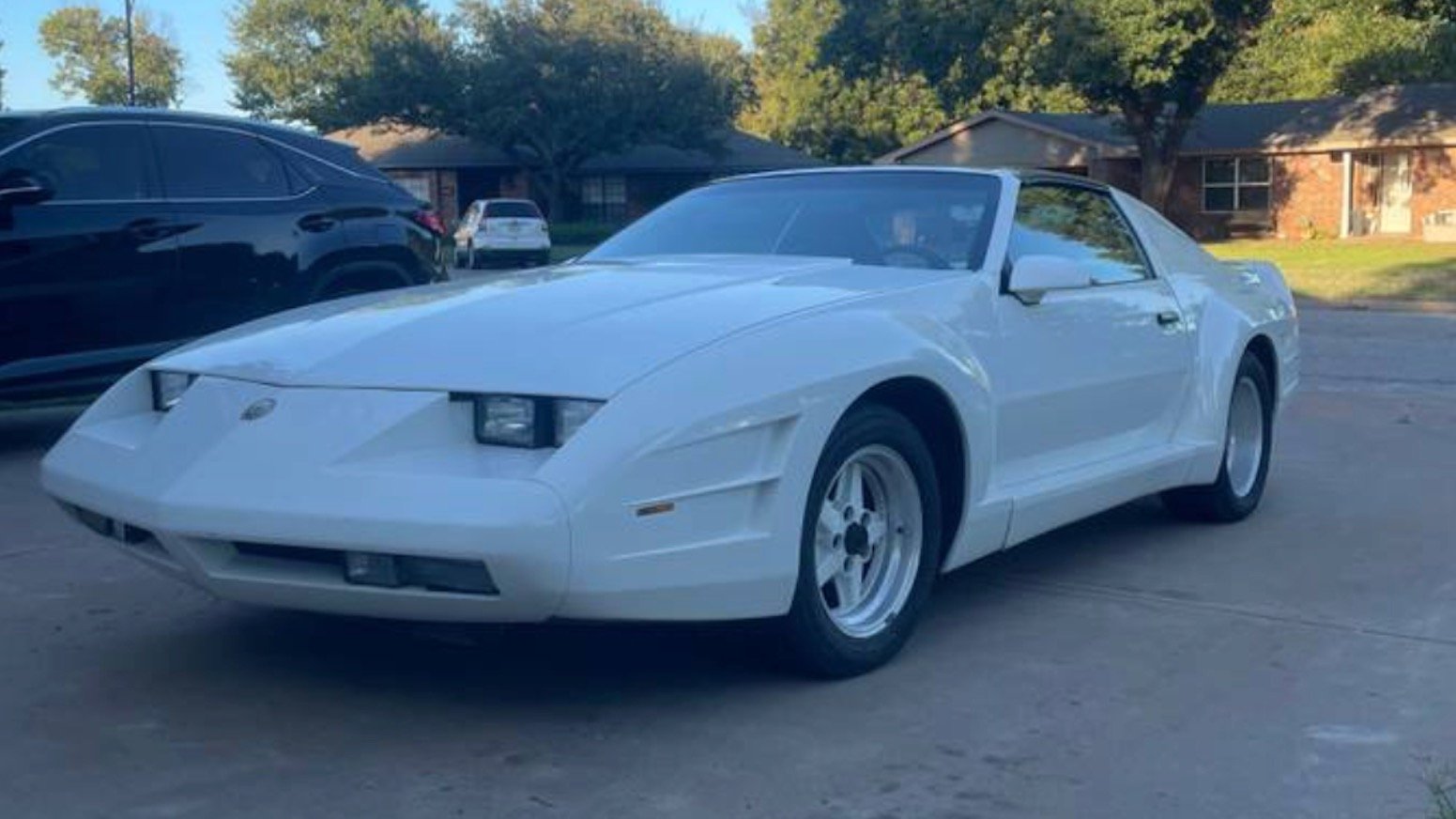


Somewhere in Henrietta, Texas, a 1989 Chevrolet Camaro sits on Craigslist wearing a body kit so bizarre it looks like it was designed by a committee that couldn’t agree on which car they were copying. The asking price is $18,500. The name on the body is “Carralo,” and according to the listing, only two were made for the 1989 model year.
This is not a render. It is not a mod from Grand Theft Auto. It is a real, titled, road-legal automobile with 55,000 miles on the odometer.
The Carralo takes a third-generation Camaro and replaces nearly everything below the beltline with custom fiberglass panels that seem to borrow from at least three different cars. The front end grafts the Camaro’s rectangular headlights onto a pointed nose that looks lifted from a Pontiac Firebird. The taillights and rear fascia could pass for a Plymouth Duster’s, and wide-body fender flares wrap the whole thing in that unmistakable late-1980s aftermarket ambition.
Above the belt, though, it’s pure Camaro. The boxy rear roof pillar, the greenhouse, the T-tops, all stock. The interior is largely untouched aside from some cracked leather that tells you this car has actually been driven, not just stashed.
Under the hood sits the 5.7-liter L98 V8, which was the top engine option for the 1989 Camaro. No mention of mechanical modifications. This was always about the look, not the go.
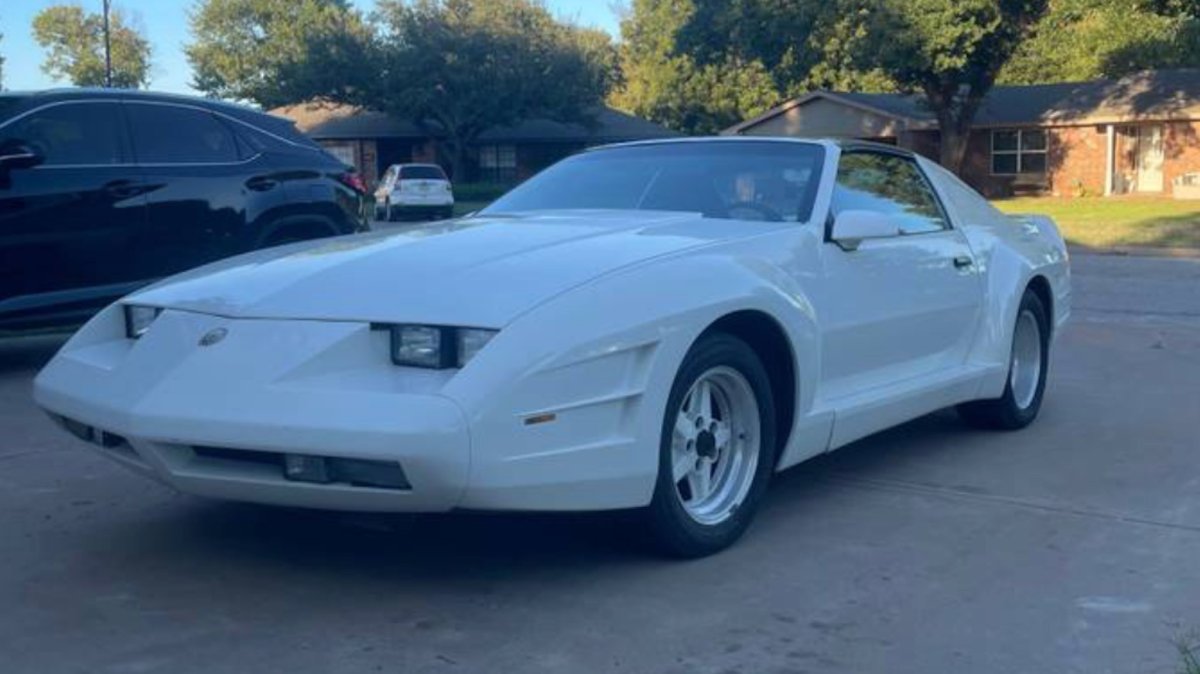
The seller claims roughly 90 more Carralos were produced as 1990 models, suggesting whoever was behind this operation was trying to scale up. Whether they succeeded or quietly disappeared is unclear. Tracking down the manufacturer behind these kits is like searching for a company that only existed in a fever dream and a few trade-show brochures.
The late 1980s were littered with small outfits offering body conversions on popular platforms, most of which evaporated before the decade ended. What makes this particular car interesting is its condition. It appears clean, well-maintained, and comes with car-show information boards, the kind of detail that signals an owner who treated the thing as a collectible rather than a joke.
That matters when you are talking about a fiberglass-bodied kit car from 35 years ago. Companies like ASC, Callaway, and others turned factory cars into something else entirely during this era, some with real engineering merit, others with little more than fiberglass and ambition. The Carralo falls squarely in the latter camp, a styling exercise that asks you to accept its premise without questioning it too hard.
At $18,500, you are not paying Camaro IROC-Z money, but you are paying more than most third-gen Camaros command unless they are pristine low-mile IROC-Zs or 1LE cars. What you get for that premium is a conversation piece that will stump every person at every car show you attend.
The listing is still live. No word on how many inquiries the seller has received, or whether anyone has shown up in Henrietta to kick the tires on what might be one of the strangest surviving Camaros in the country.

Share this Story