
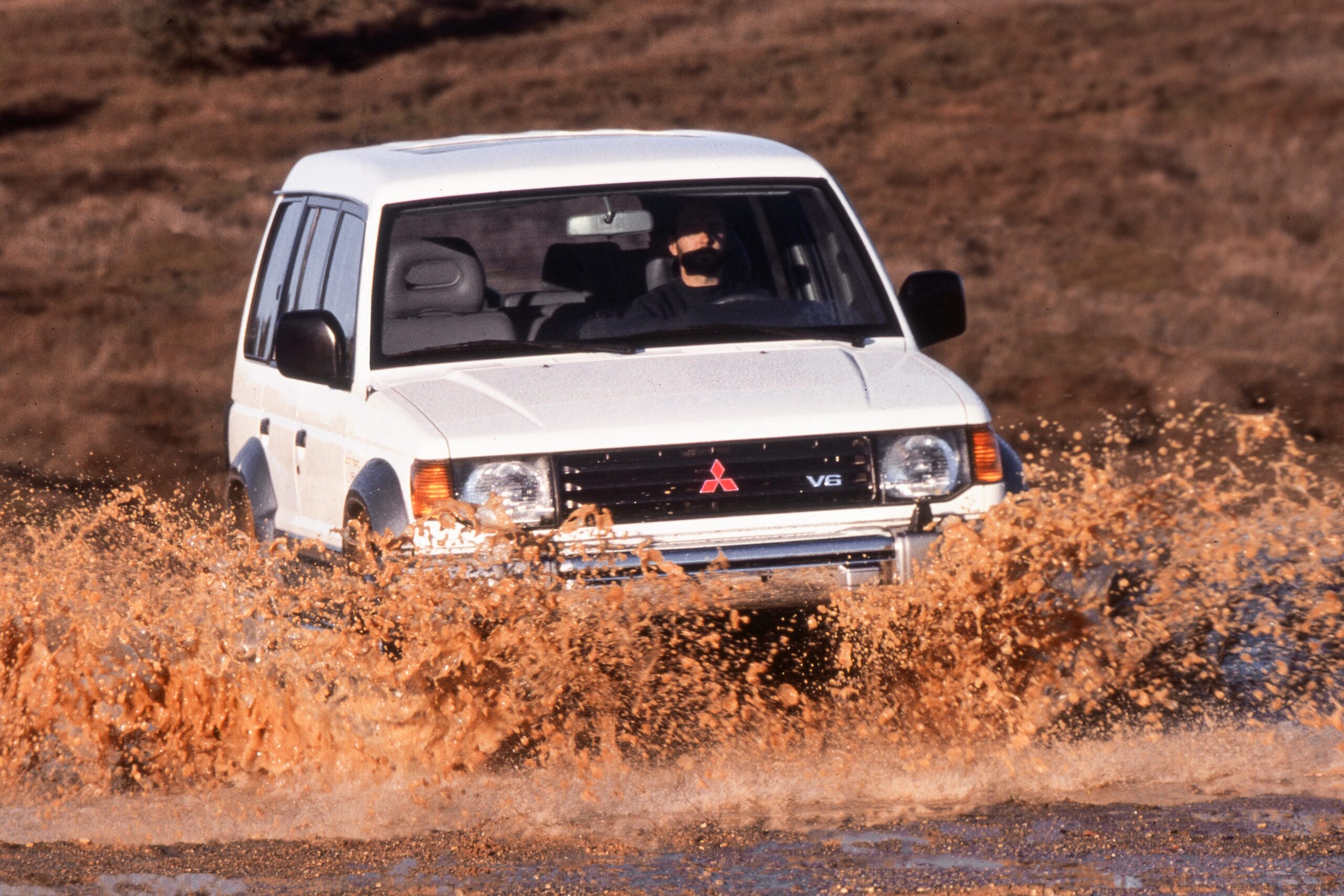


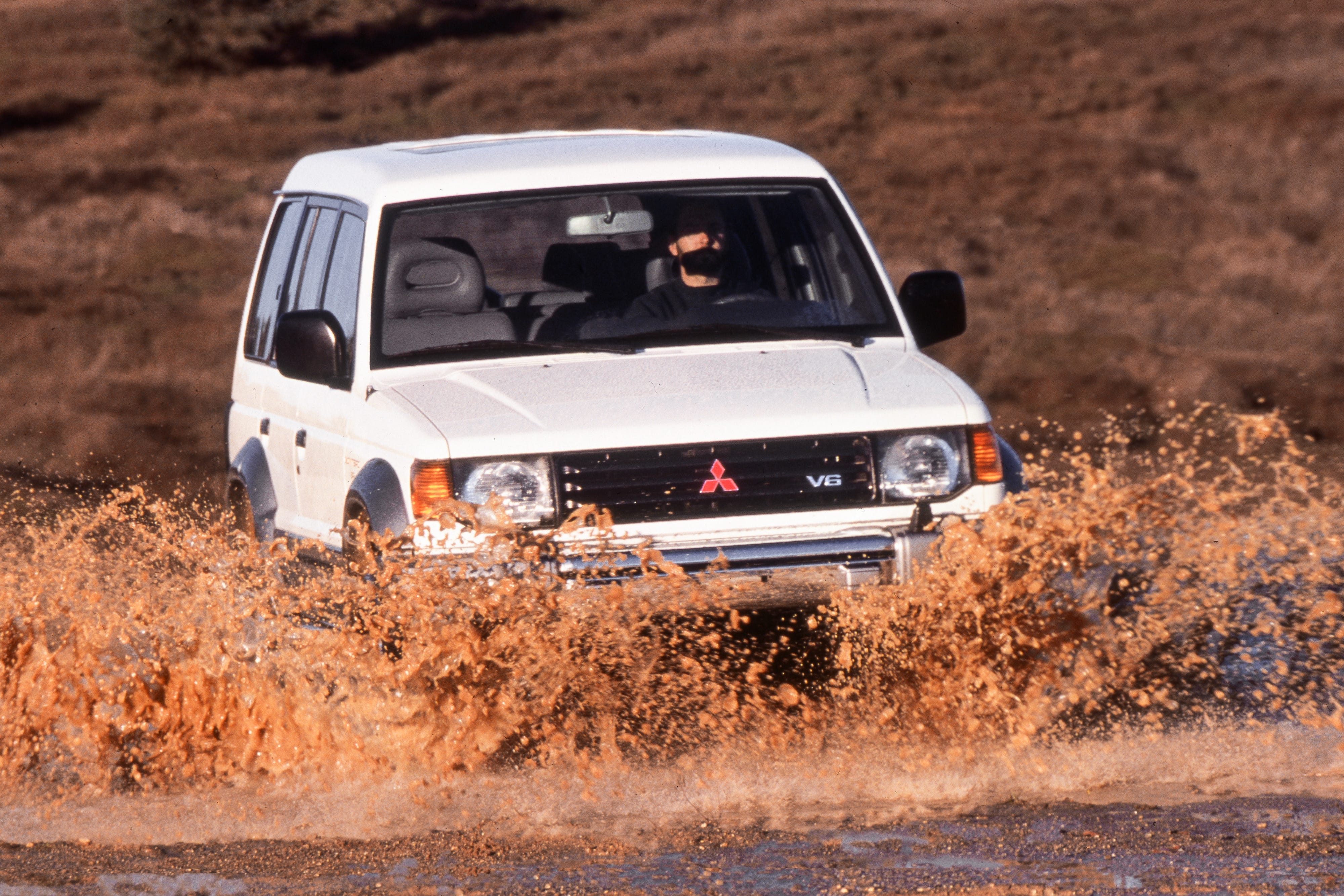
Thirty years ago, Mitsubishi built an SUV that belonged in a SkyMall catalog. The 1995 Montero SR crammed so many buttons, switches, and digital readouts into its cabin that Car and Driver compared it to a Sharper Image store on wheels. Reading the original March 1995 review today is like cracking open a time capsule stuffed with Pentium processors and portable GPS receivers.
The pitch was simple. While the Hummer flexed and the Grand Cherokee played gentleman outdoorsman, the Montero SR bet everything on techno-wizardry. Its instrument cluster looked like it was pulled from a submarine movie set.
An electronic compass, exterior temperature display, adjustable suspension damping with three settings, a transmission mode selector with normal, power, and hold options. If a feature could be toggled, Mitsubishi gave it a button. The stereo panel alone, with its graphic equalizer and digital display, had enough visual complexity to intimidate a flight engineer.
Under the hood sat something unusual for the segment: a high-revving 3.5-liter DOHC 24-valve V-6 making 214 horsepower. In a class dominated by lazy V-8s and low-end sixes, the Montero’s engine wanted to be wound out, peaking at 5,000 rpm and spinning happily to a 7,000-rpm redline. Smooth and willing, but not fast.
At 4,714 pounds, the SR needed 10.5 seconds to reach 60 mph. That was slightly below average for the class even then.
The drivetrain tried to match the cabin’s complexity. Mitsubishi’s Active Trac system offered full-time four-wheel drive with on-the-fly shifting, and a locking rear differential was available as an option. Three-channel ABS came standard and worked in every drive mode.
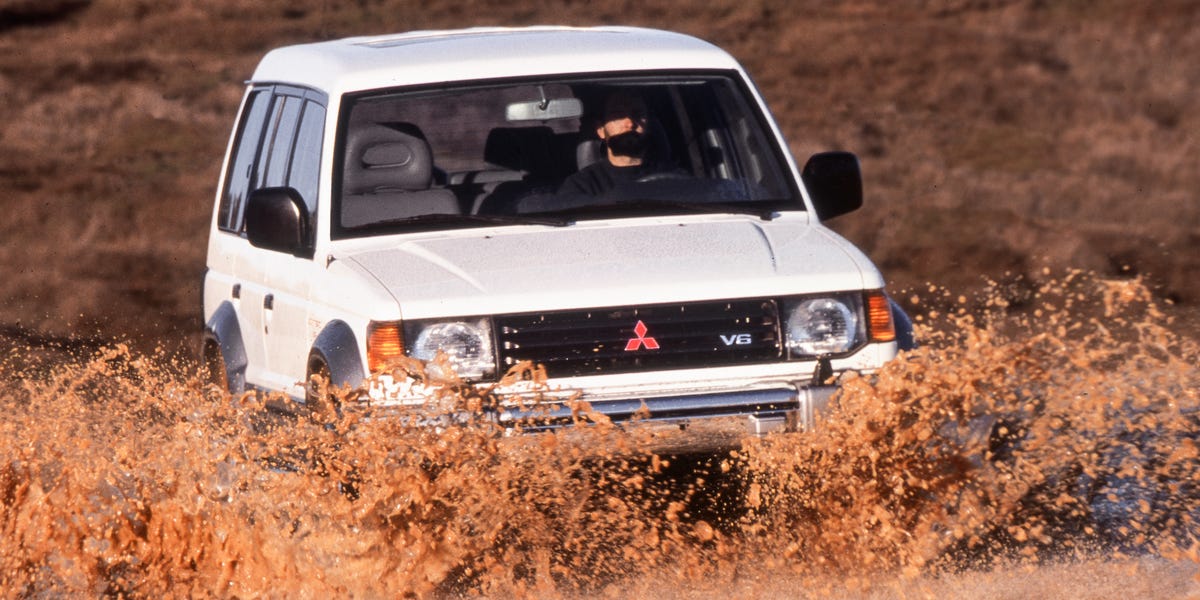
Towing capacity jumped to 5,000 pounds for 1995, up a thousand from the year before. Physically, the thing towered over its competition. It stood ten inches taller than a Jeep Grand Cherokee, enough to make you flinch pulling into a standard garage.
That height bought a commanding view and generous headroom for up to seven occupants when the rear jump seats were deployed.
Not everything worked. The steering had a vague, sloppy feel on center, a trait Car and Driver had already flagged in earlier Monteros and one Mitsubishi apparently felt no urgency to fix. And a twin-cam engine that made its power up high was a questionable match for low-speed off-road crawling, the one activity the Montero’s body-on-frame bones and transfer case were theoretically designed for.
But most buyers never left pavement, and Mitsubishi knew it. The chrome wheel option told you everything about the target customer. So did the leather seats, wood trim, and CD changer that pushed the as-tested price to nearly $40,000, which in 1995 dollars was serious money for a Japanese SUV.
The Montero SR was an odd machine built for a very specific buyer: someone who wanted a big, capable truck but got a little thrill from toggling suspension modes at a stoplight. It was the SUV for people who read the owner’s manual cover to cover and enjoyed every page.
That breed of vehicle largely vanished as the market consolidated around a few dominant players. Mitsubishi’s SUV ambitions shrank with each passing decade, eventually landing on the compact Outlander as the brand’s volume play in America. The company that once built a flagship this loaded with personality now fights for relevance in a segment it helped define.
The buttons are all touchscreens now. The gadget freaks moved on. But in 1995, for one brief moment, Mitsubishi out-teched everyone in the truck aisle.
Share this Story