
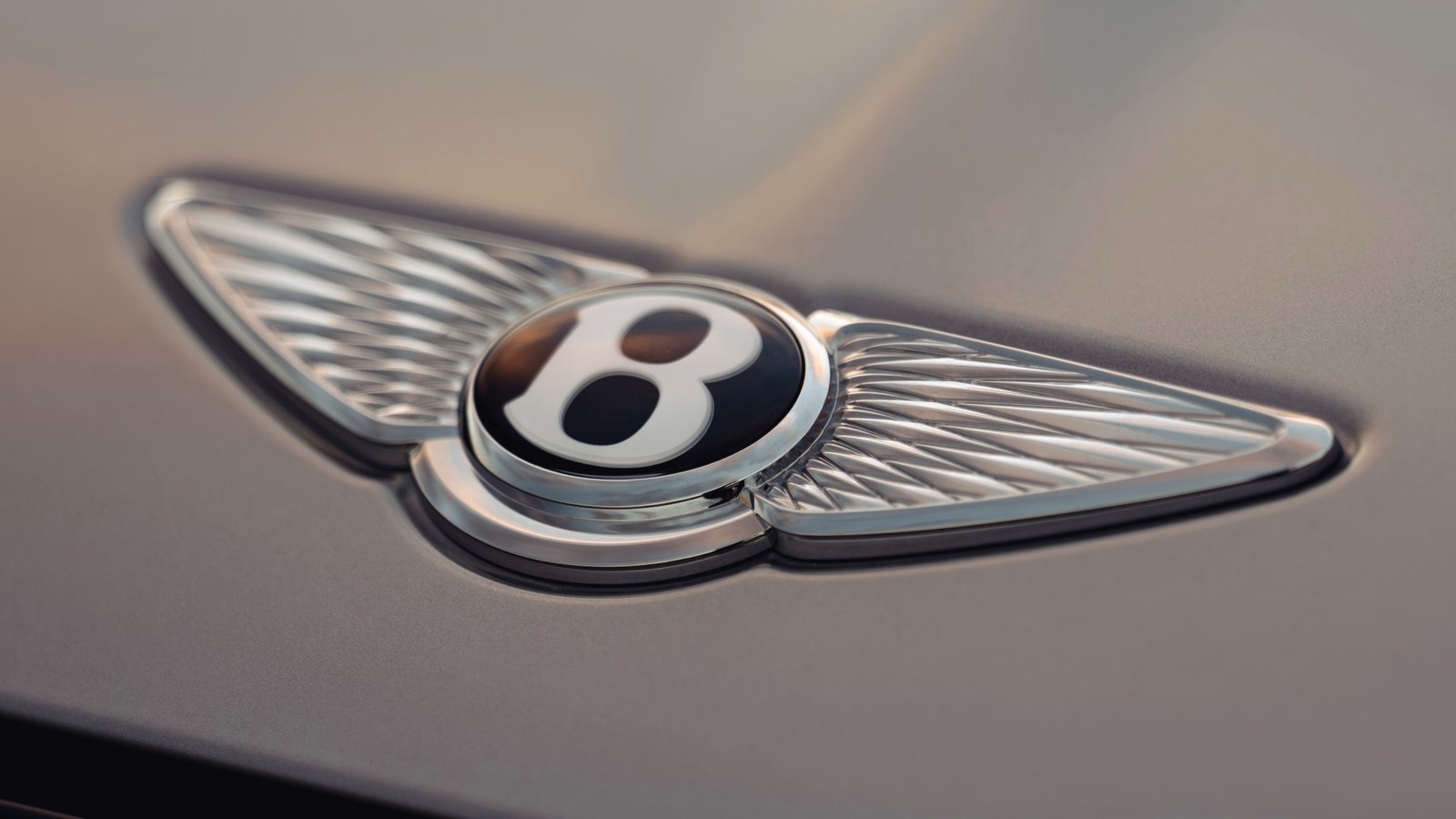


Every Bentley rolling off the line today is assembled in Crewe, England. Not Wolfsburg. Not Ingolstadt. Crewe, population 73,000, in the northwest of England, where Rolls-Royce first set up shop decades before Volkswagen’s money arrived.
That fact alone keeps a 106-year-old argument alive. Is Bentley still British?
The answer depends entirely on where you draw the line. The body shells come from Germany, some previously stamped in Slovakia. The 4.0-liter V8 and 3.0-liter V6 engines are pulled straight from the VW Group parts bin, cast on the continent.
The Bentayga rides on the same platform as the Porsche Cayenne. The Continental GT and Flying Spur share bones with the Panamera. Strip a modern Bentley down to its skeleton and you’d be forgiven for thinking you’re looking at something from Stuttgart.
But nobody buys a Bentley for its skeleton.
What happens at Crewe is what separates a Bentley from every other vehicle in the VW empire. The paint. The leather. The wood veneers hand-matched and hand-finished by craftspeople whose skills trace back to the postwar era.
The Mulliner personalization work turns a luxury car into something bordering on bespoke furniture. That is where the British identity lives, and Bentley knows it.
The brand recently poured £350 million into upgrading the Pyms Lane facility. A new paint shop, a new engineering technical center, and a dedicated production line for the Torcal, Bentley’s first electric vehicle. That kind of capital investment in a small English factory town is not the move of a company planning to relocate production to Germany.
There was a brief exception. When demand for the Flying Spur overwhelmed Crewe’s capacity after its 2005 launch, and again in 2013, VW quietly assembled a small number at its glass-walled Dresden factory. Those cars carried Bentley badges but were born on German soil. It was a pragmatic decision, not a philosophical one, and it didn’t stick.
The deeper tension traces back to 1998, when Vickers put both Rolls-Royce and Bentley on the block. BMW offered £340 million. Volkswagen countered with £430 million and grabbed the factory, the cars, and even the Spirit of Ecstasy mascot.
Then BMW played its trump card, having quietly secured the Rolls-Royce name from the aerospace company for a mere £40 million. The two German giants carved up the spoils. BMW built a fresh Rolls-Royce factory at Goodwood, and VW inherited Crewe and everything in it.
Keeping Crewe was the shrewdest part of the deal. It gave Volkswagen’s Bentley an unbroken thread to the original company, the same postal code where W.O. Bentley’s successors had been building cars since the 1940s. Relocating to Zuffenhausen or anywhere else would have severed that link permanently.
Since 2021, Bentley has operated under Audi’s umbrella within VW’s Progressive division. The old 6.75-liter V8, that magnificent pushrod dinosaur tracing its lineage to the Rolls-Royce era, died in 2020. The brand’s first EV is coming, and the German engineering influence runs deeper than ever.
And yet, the hands doing the final work are still English. The factory is still in Cheshire. The brand still leans hard into its Britishness in every press photo and marketing campaign, because that identity is the one thing no platform-sharing strategy can replicate.
Whether that’s enough to call Bentley “British” is a question that says more about the person answering than the car itself.
Share this Story