
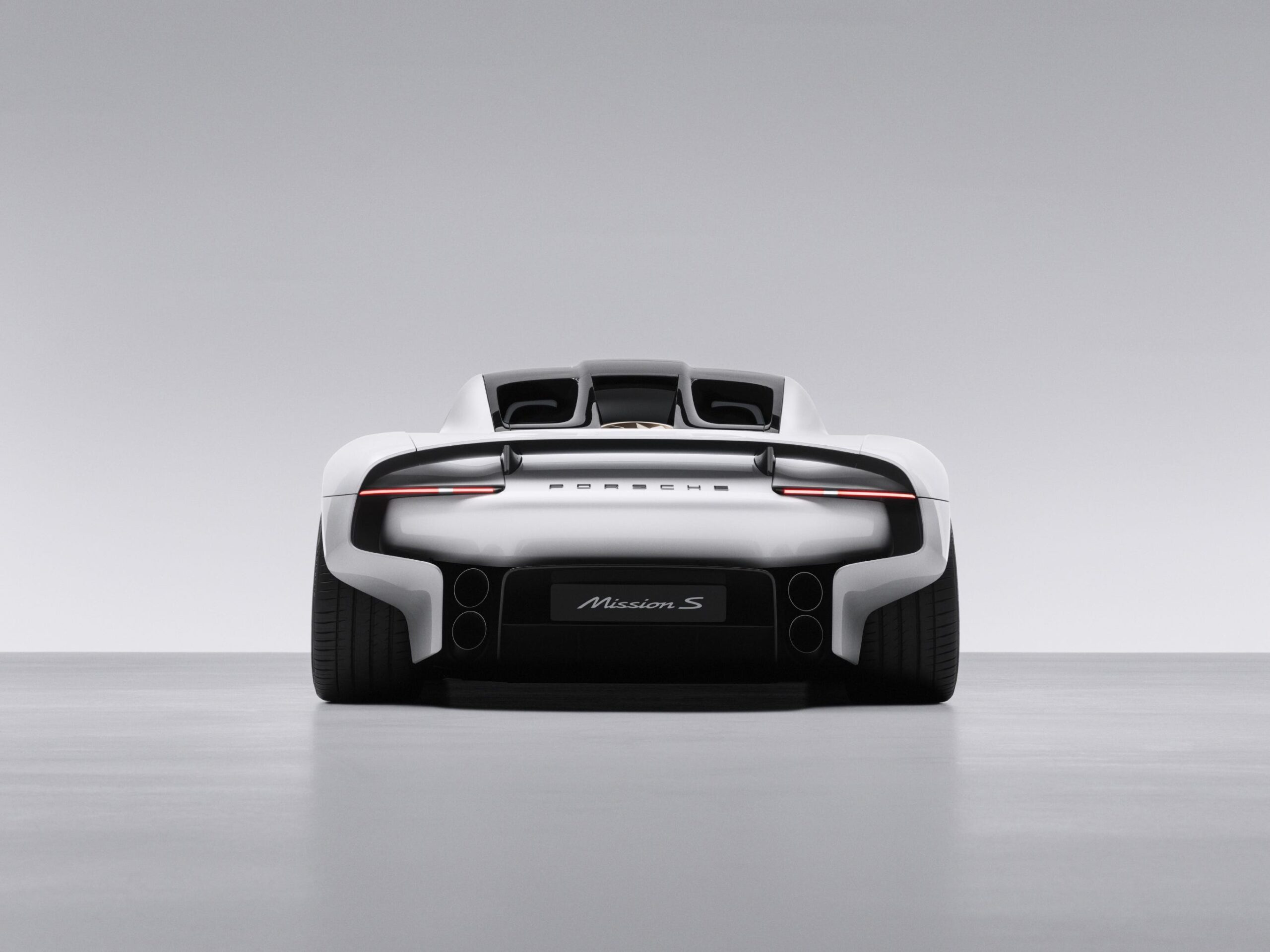


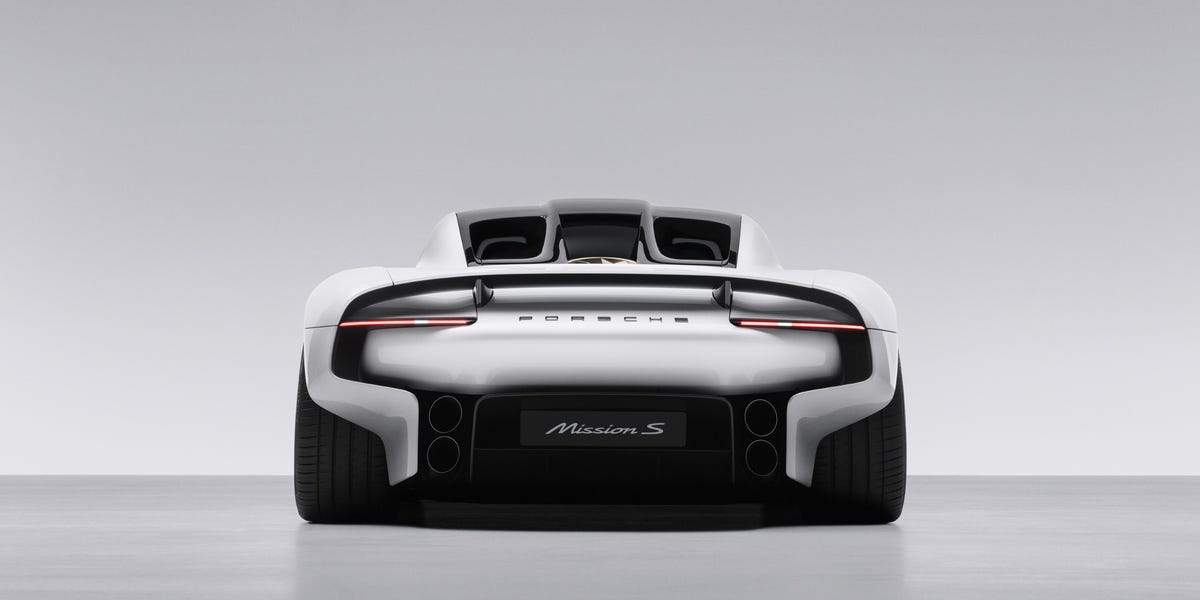
Tobias Sühlmann had been on the job only a few months when Porsche CEO Michael Leiters rang him on a Saturday evening. The directive was blunt: build a car above the 911, make it mid-engine, start sketching. That phone call produced the Mission S, a production-ready mid-engine super sports car just revealed in New York, developed on a timeline that would make most automakers nervous.
Sühlmann, who took over as Porsche’s vice president of style in February, came from a résumé that reads like a tour of Britain’s most expensive garages. McLaren, Bentley, Aston Martin, Bugatti. He knows how to shape sheetmetal that costs six figures and up.
But Porsche required homework. He hit the museum, dug through the archives, studied the lineage. His favorites tell you something about his instincts: the original F-Model 911, the 550 Spyder, the 959, and, endearingly, the 928.
“It was a complete break from the 911 before,” he said, sketching a shark-nosed egg in the air with his hands.
Beyond the Mission S itself, Sühlmann has restructured how Porsche thinks about its entire lineup. Three buckets now: “Halo” cars like the Mission S at the top, “Plus” vehicles like the Cayenne, Macan, and Panamera that carry people and stuff, and “Core” cars where the 911 sits at the center of gravity. Every model will share design DNA pulled from the 911 and the 356 before it. Torpedo front fenders, a fastback flyline roof, a clean body line, muscular haunches.
Seven decades of visual consistency in the 911 could feel like a cage. Sühlmann reframed it. He told his team to see every Porsche as an athlete, each with a different body type.
A boxer doesn’t look like a cyclist doesn’t look like a sprinter. Same gym, different physiques.
The Mission S carries a manual transmission, analog gauges, and no integrated LCD touchscreens. That decision came straight from customers. “There were customers who were saying, ‘The only screen I need is my windscreen,'” Sühlmann said.
Whether that analog philosophy filters into the broader lineup remains an open question, and Sühlmann wasn’t biting. He drives a 992 GTS daily but keeps a Taycan in London for his family. Kids want iPads on long trips.
“All Porsches, all good cars, but different needs,” he said, connecting the idea to Porsche’s powertrain strategy: hybrids, EVs, combustion, customer’s choice.
That pragmatism is worth watching. Porsche is simultaneously building a no-screens analog supercar and selling fully digital EVs. The bet is that one brand can stretch across two very different philosophies of driving without snapping anything in the process.
Sühlmann also let slip a personal detail that humanized him more than any corporate bio could. He once owned a black-on-black 996 3.4-liter with a manual gearbox. He sold it. He sounded like he regretted it.
“Back in the day, people said to me about my 996, ‘Oh, what a big car,'” he recalled. “But if you compare it nowadays to a 911, it seems like a compact car.” The observation carried a wry edge. Size creep has swallowed every sports car segment, and Porsche hasn’t been immune.
Whether Sühlmann can actually push back against that tide while managing three product tiers and a powertrain-agnostic philosophy is the real test. The Mission S proves he can move fast when the CEO calls on a Saturday night. The harder question is whether speed and clarity survive the inevitable compromises of a full product cycle.
Share this Story