
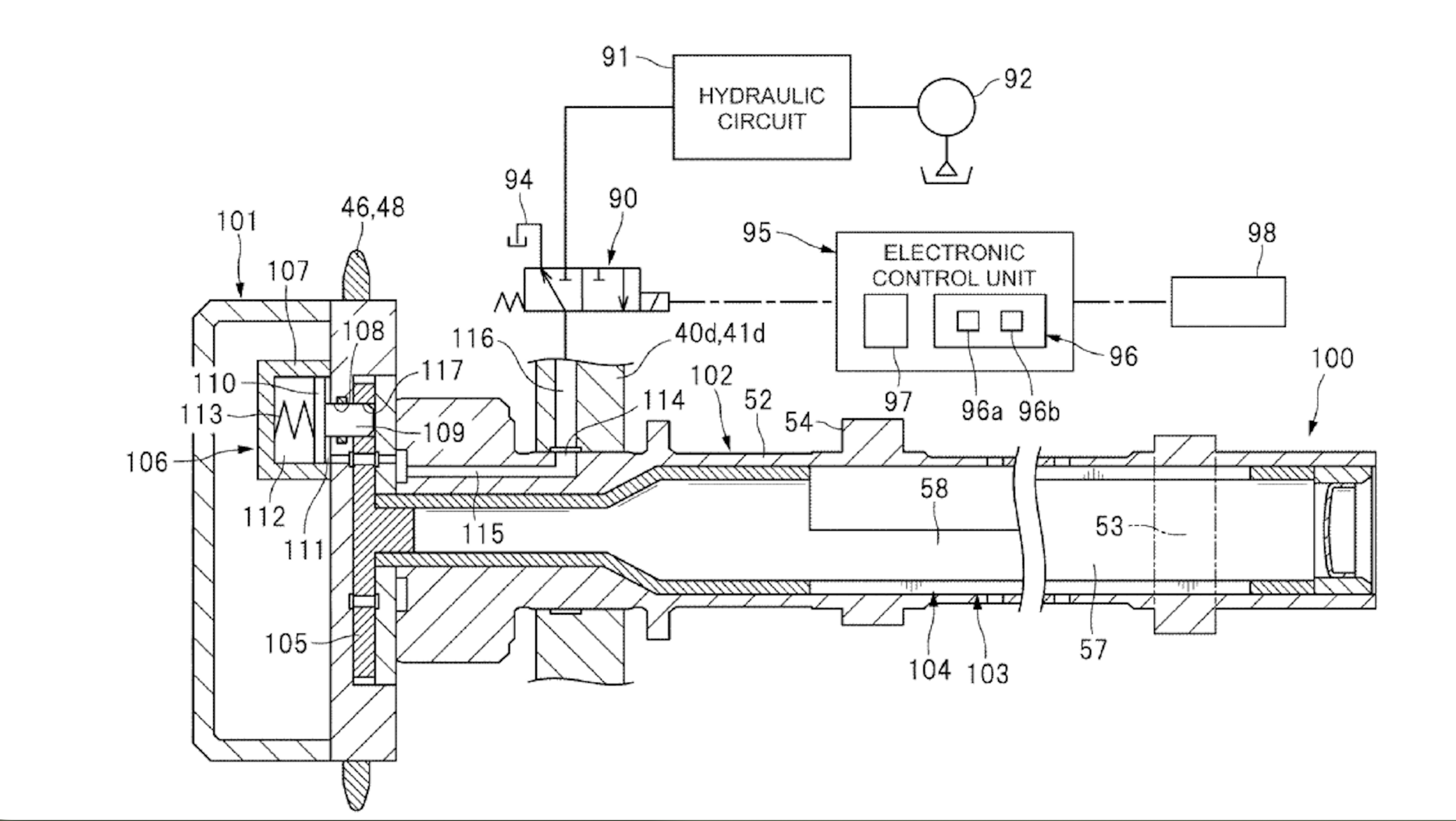


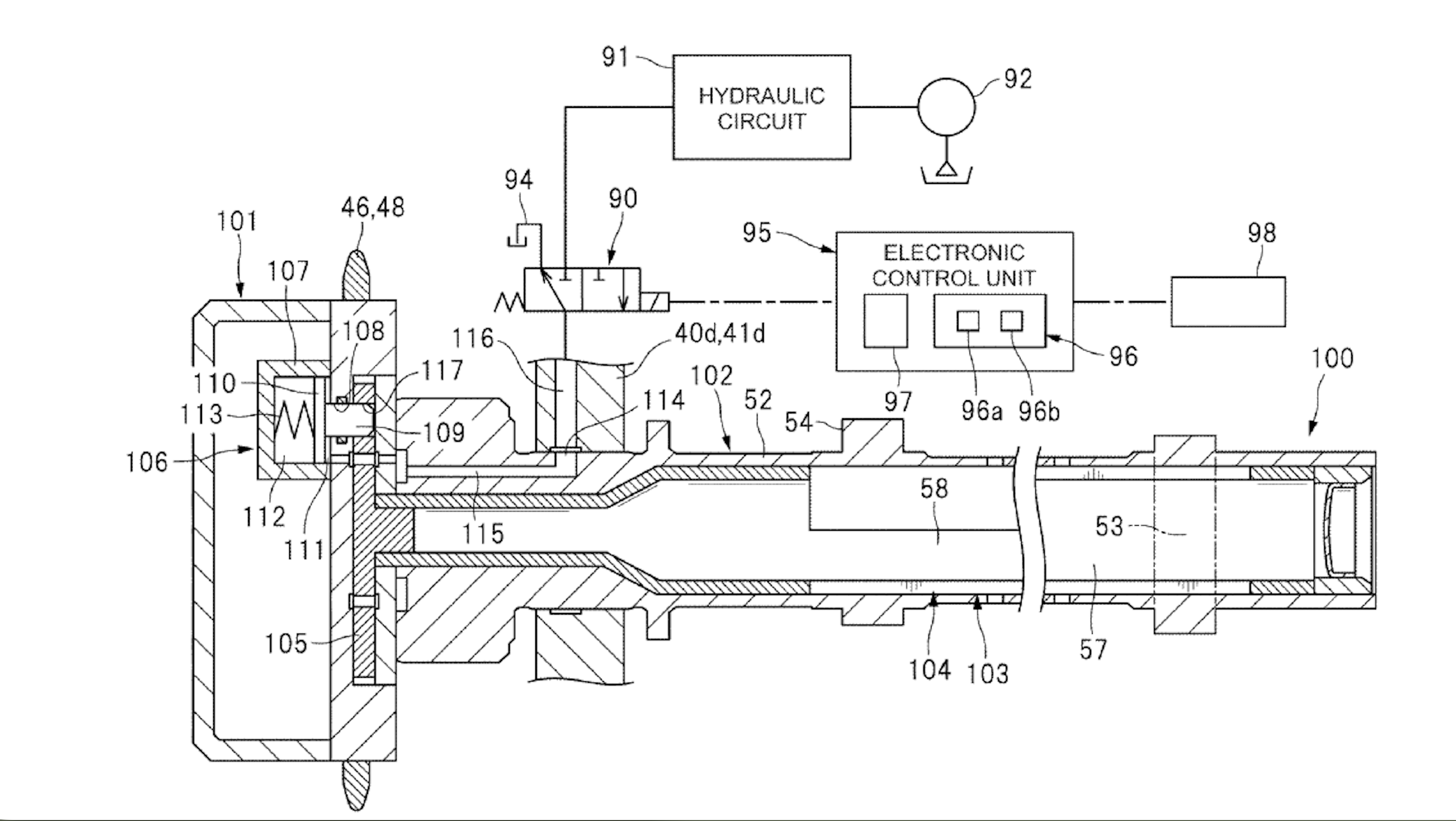
Eight Subaru engineers have their names on a patent application for a hollow camshaft with a lockable balance weight inside it. The filing, published earlier this month, describes a system designed to tame vibration in a horizontally opposed four-cylinder engine. It is the kind of mechanical ingenuity that feels almost quaint in an industry obsessed with software and electrification.
The concept itself is not entirely new. Hollow camshafts have been a staple of racing engines for years, shaving grams where grams matter. What Subaru’s patent describes is different: a precisely machined cylindrical weight sitting inside the hollow shaft, capable of locking and unlocking its position relative to the shaft’s rotation based on engine speed.
At lower RPMs, lock pins hold the weight in place. In this locked position, the weight counteracts vibrations generated by the external cam lobes. As engine speed climbs past a predefined threshold, centrifugal force releases the pins, allowing the weight to spin freely inside the shaft. That free rotation raises the shaft’s natural frequency, which Subaru says should make vibrations less perceptible to occupants.
The patent also describes alternative actuation methods. Oil pressure, hydraulic controls, or electric actuators could trigger the lock pins instead of relying solely on centrifugal force. Flexibility in how the system engages suggests Subaru’s engineers were thinking beyond a single application.
And they were. While the patent uses the company’s signature boxer four-cylinder as its example, Subaru explicitly states the technology could work in inline or V-engine configurations. That broadens the potential usefulness considerably, though whether any of this ever reaches a production vehicle is another question entirely.
Subaru declined to comment on the patent or its future applications. That silence is standard procedure. Automakers file patents routinely as a form of intellectual property defense, and most never see the inside of a showroom.
Filing a patent costs far less than developing a product, and it keeps competitors from claiming the idea first.
Still, the filing reveals something about where Subaru’s powertrain engineers are spending their time. The company has committed to electrification but continues to invest in refining internal combustion. Its boxer engines have always carried a distinct vibration signature, a characteristic that owners either love or tolerate. A system that smooths out that signature without fundamentally altering the engine’s architecture would be a meaningful refinement.
The camshaft has been with us for more than 800 years, dating back to the writings of Ismail al-Jazari in 1206. Honda’s VTEC system, born in the 1980s, proved that rethinking cam profiles at different RPMs could unlock both performance and efficiency. Koenigsegg went further in 2016, demonstrating a camshaftless engine concept called Freevalve that eliminated the component altogether.
Subaru is going the other direction. Rather than removing the camshaft, its engineers are trying to make it smarter from the inside out. It is a mechanical solution to a mechanical problem, the kind of work that rarely generates headlines but keeps engines civilized.
Patent application 19/638,324 was filed in April 2026. Whether its contents ever vibrate inside a real Subaru boxer remains entirely up to the accountants and product planners who decide what clever engineering actually deserves a production budget.



Share this Story