
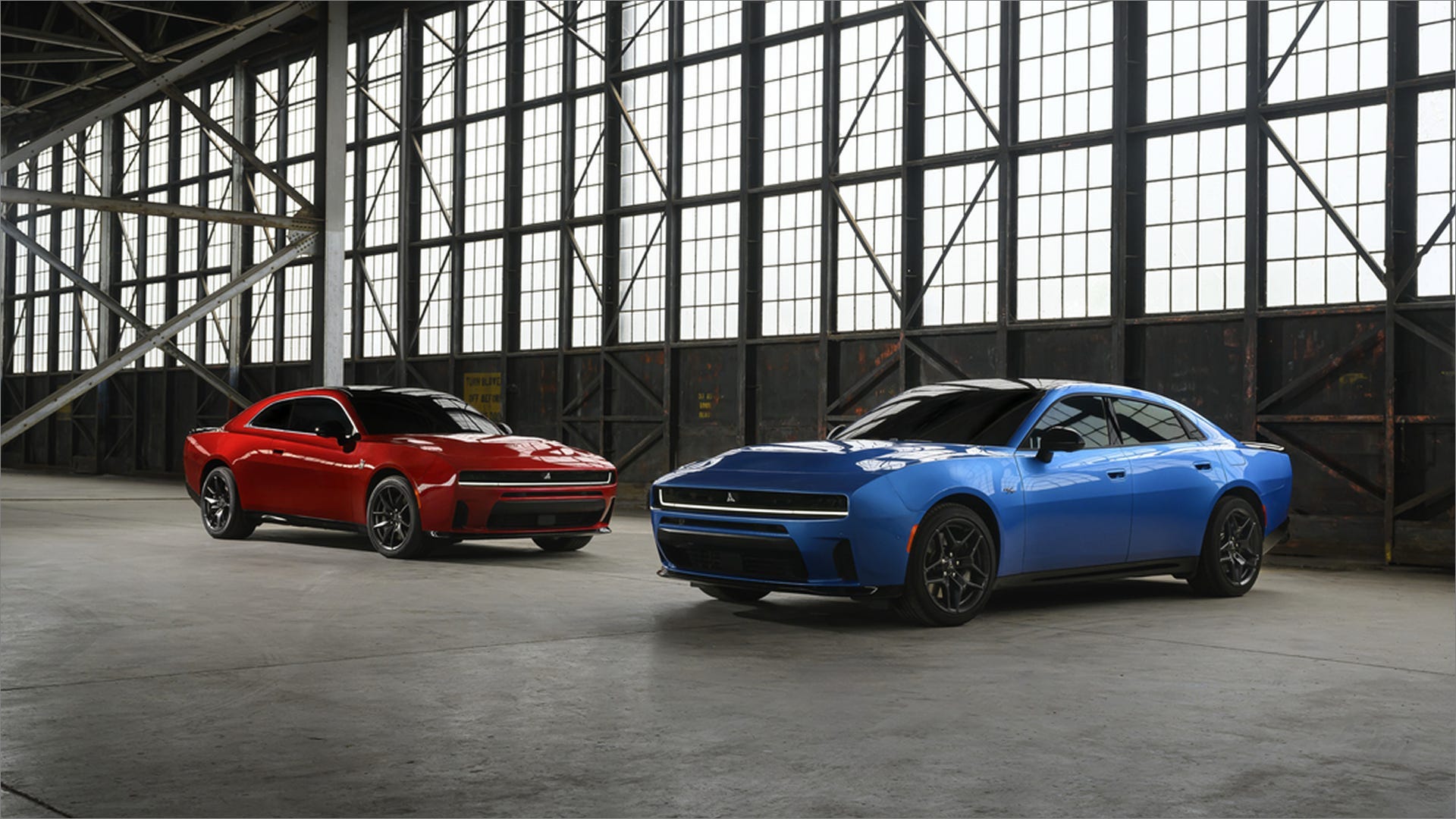


Eight builders walked into Dodge’s Direct Connection Grudge Match at Roadkill Nights with identical starting points: a 2026 Charger Scat Pack packing 550 horsepower from the SIXPACK, a 3.0-liter twin-turbocharged inline-six. One walked out with 1,064 horsepower. Another cracked four digits at an even 1,000. Every single car started life on a dealer floor.
That’s the number that should rattle around the heads of anyone who dismissed the new Charger’s move from a Hemi V-8 to a boosted straight-six. The old guard mourned displacement. The tuners went to work.
The SIXPACK’s architecture tells you everything about where Dodge wants this platform to go. Twin 54mm Garrett turbochargers, up to 30 psi of factory boost in High Output trim, and peak torque arriving at 2,500 rpm. In standard form it makes 420 hp and 468 lb-ft. The HO bumps that to 550 hp and 531 lb-ft.
Those are the factory settings. The Grudge Match proved the ceiling is nowhere close.
What makes the Charger Scat Pack different from previous Dodge muscle is not just the engine swap. It is the entire philosophy underneath. Four-wheel independent suspension replaces the live rear axle that defined decades of Mopar drag launches.
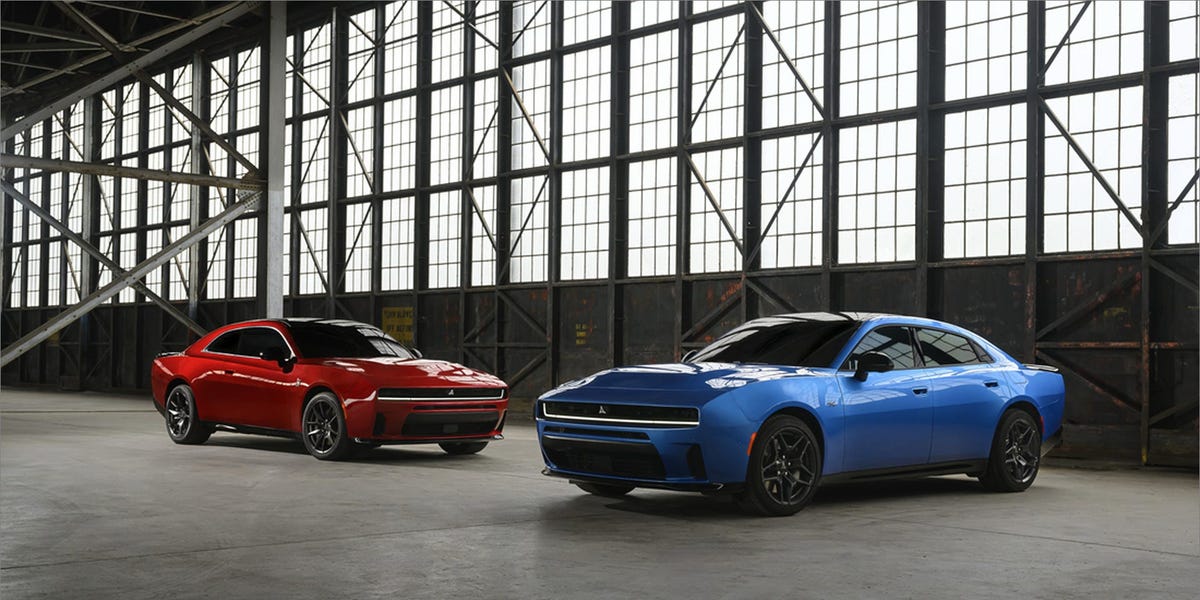
Up front, forged aluminum multilink geometry. Out back, an integral link setup tuned for body control at speed. The widebody shell is not cosmetic theater. It creates room for serious wheel-and-tire packages, staggered setups, and the kind of mechanical grip that a 1,000-hp car desperately needs if it plans to do anything other than smoke its rears and go sideways.
Going sideways, incidentally, is also on the menu. The Charger offers rear-drive mode at the push of a button for those running the available all-wheel-drive system. Controlled oversteer becomes an intentional part of the driving experience rather than an accident.
The tuner equation has changed. With a naturally aspirated V-8, the traditional path to big power meant heads, cams, intake, exhaust, and eventually forced induction bolted onto an engine that was never designed for it. The SIXPACK flips that script.
Boost pressure, airflow, calibration, cooling, fuel delivery, and turbo efficiency are all variables from day one. The engine was born with boost. The headroom was engineered in, not jury-rigged after the fact.
Dodge clearly understands this. The Grudge Match was not a stunt. It was a public proof of concept for Direct Connection, the brand’s performance parts pipeline.
Hand tuners a platform, let them compete, film the results, and let the horsepower numbers do the marketing. When a stock 550-hp car nearly doubles its output with aftermarket modifications and the block survives, that is a stronger endorsement than any press release.
The broader question hovering over the Charger is whether the inline-six can inherit the cultural weight of the Hemi. Nostalgia is a powerful force in the muscle car world. The 426 Hemi, the 6.2-liter Hellcat — these engines became identities, not just powerplants.
The SIXPACK has to earn that kind of loyalty. But 1,064 horsepower from a platform you can buy at a dealership is a compelling opening argument.
The tuner community does not care about cylinder count or heritage when the numbers land like that. They care about headroom, durability, and whether the chassis can handle what they throw at it. Early returns suggest the Charger can take the punishment.
Whether the aftermarket ecosystem grows fast enough to turn the SIXPACK into the next Hemi-level phenomenon is a question that only time and torque wrenches will answer.

Share this Story