


Porsche CEO Michael Leiters didn’t confirm a manual transmission for the Mission S supercar when asked about it directly at the concept’s New York reveal. He didn’t deny it, either. His exact words: “Customer demand will define what we build on this platform.”
That is corporate speak for “yes, but legal won’t let me say it yet.”
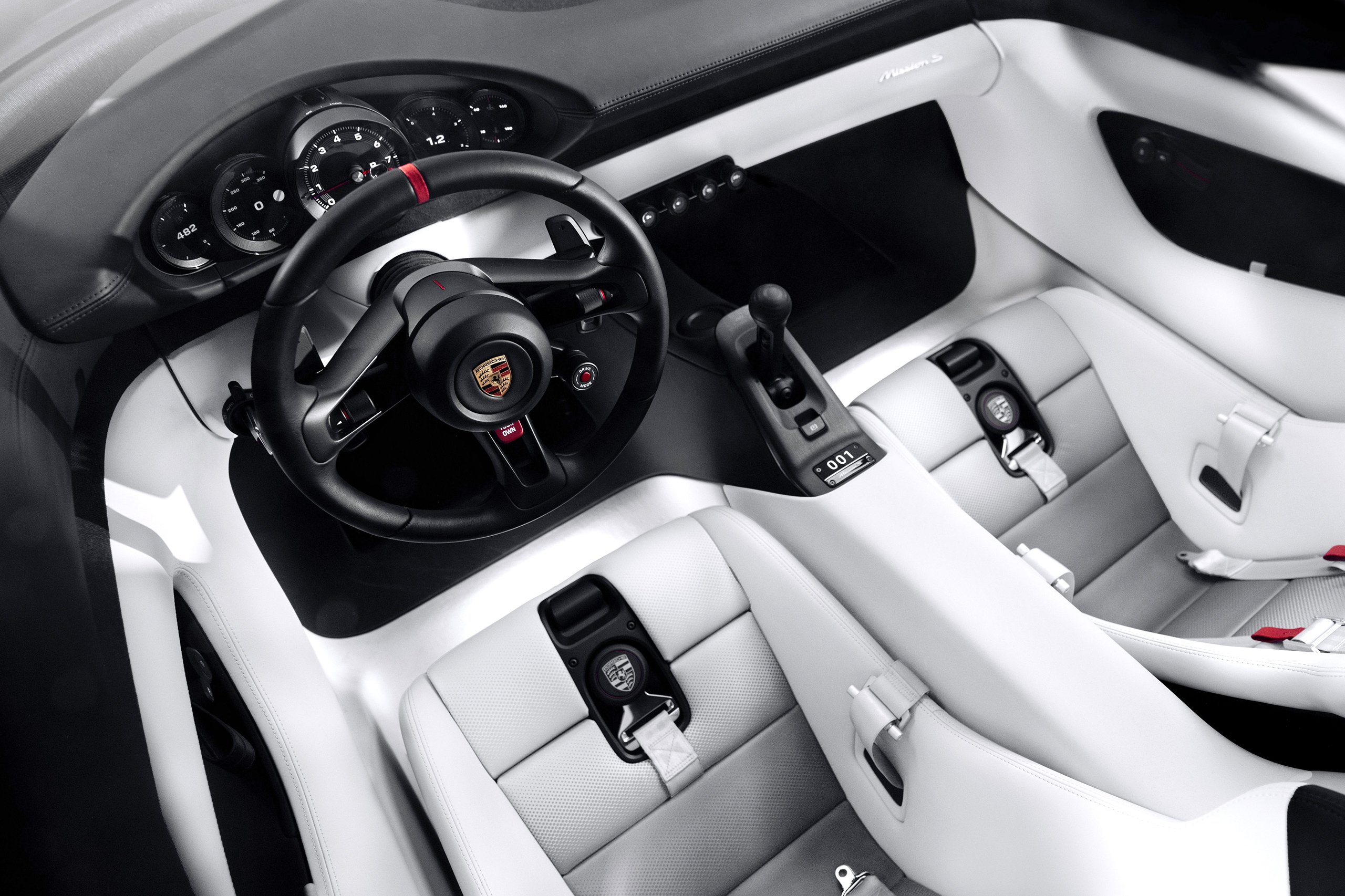
The more telling detail is the hardware itself. The Mission S concept features a height-adjustable shifter, a piece of engineering that costs real money and real development time. You don’t build a mechanism like that for a paddle-shifted dual-clutch box that drivers tap twice a week.
You build it because someone is going to be rowing gears on a mountain road, and you want the lever positioned exactly where their hand falls naturally.
Porsche has been down this road before. The 911 GT3 kept its manual option alive when every competitor abandoned theirs, and it became a defining characteristic of the car, a purchasing reason, a cultural statement. The 911 S/T, a $290,000 farewell tour for the 992 generation, came exclusively with a six-speed stick. Both sold out.
Porsche learned that the manual isn’t a liability. It’s a profit center.
The Mission S sits in different territory. This is Porsche’s flagship, a successor in spirit to the 918 Spyder, and a direct challenge to the upper reaches of Ferrari and McLaren. Offering a manual here would be more than nostalgia. It would be a declaration that driver engagement still matters at the very top of the food chain, a space where automated gearboxes have reigned unchallenged for over a decade.
Nobody else is doing this. Ferrari wouldn’t dream of putting a stick in the F80. McLaren has moved entirely to dual-clutch. Lamborghini hasn’t offered a manual since the Gallardo went out of production.
If Porsche drops a three-pedal option into a car at this price point, it stands alone.
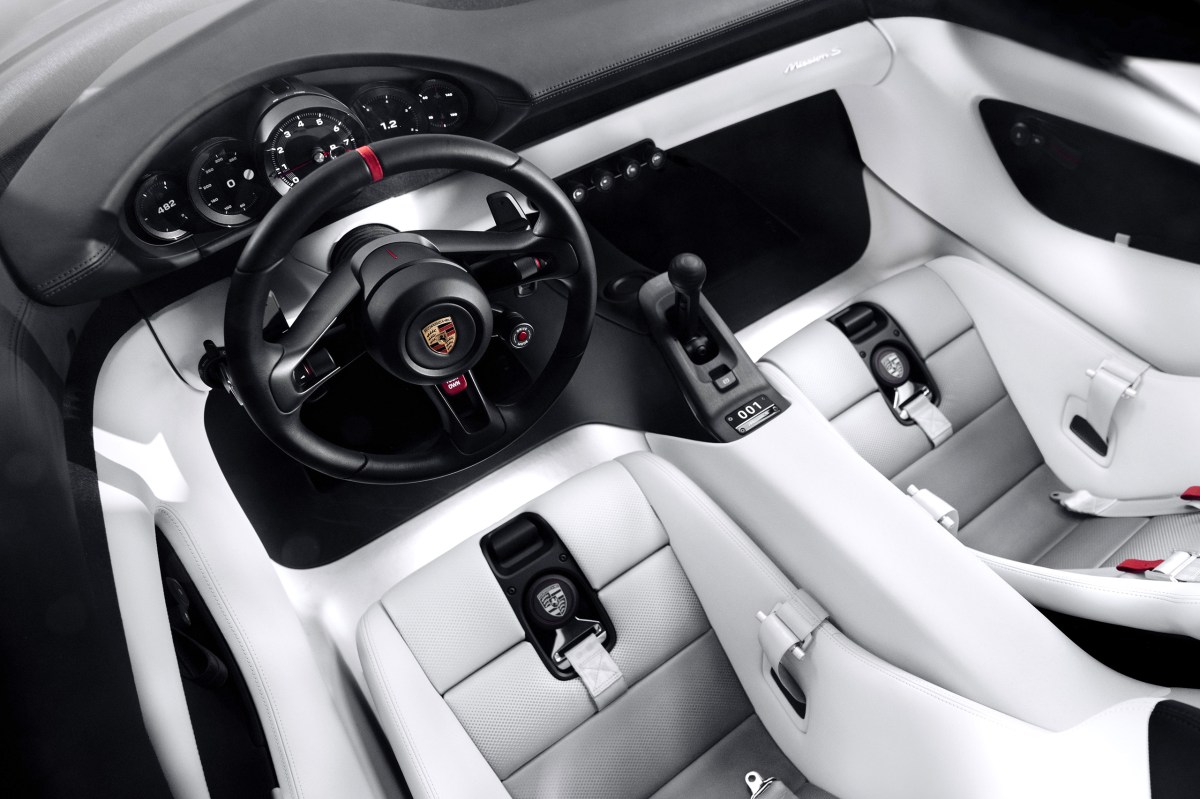
The concept’s interior layout supports the theory. The cockpit is tight, focused, organized around the act of driving rather than managing screens. The adjustable shifter sits in a prominent position, not tucked away as an afterthought.
Leiters knows the demand exists. The 911 GT3 manual take rate runs well above 50 percent in most markets. Porsche’s customer base has been the loudest, most consistent voice in the industry calling for analog engagement. Asking whether customer demand supports a manual Porsche is like asking whether Bavarians drink beer.
The real question isn’t if. It’s when, and whether the production version carries this detail forward from the concept stage or quietly drops it during the engineering grind toward homologation. Concepts promise things that accountants and crash test regulations sometimes take away.
Porsche has given itself room to maneuver with Leiters’ carefully worded non-answer. But the height-adjustable shifter is the tell. That’s not a styling exercise. That’s functional intent baked into the architecture.
Engineers don’t spend months developing adjustable shift mechanisms for show cars that will never leave a turntable. Production timing for the Mission S hasn’t been confirmed, and Porsche is still being careful about what it commits to publicly. But the evidence in the metal speaks louder than the press conference.

Share this Story