
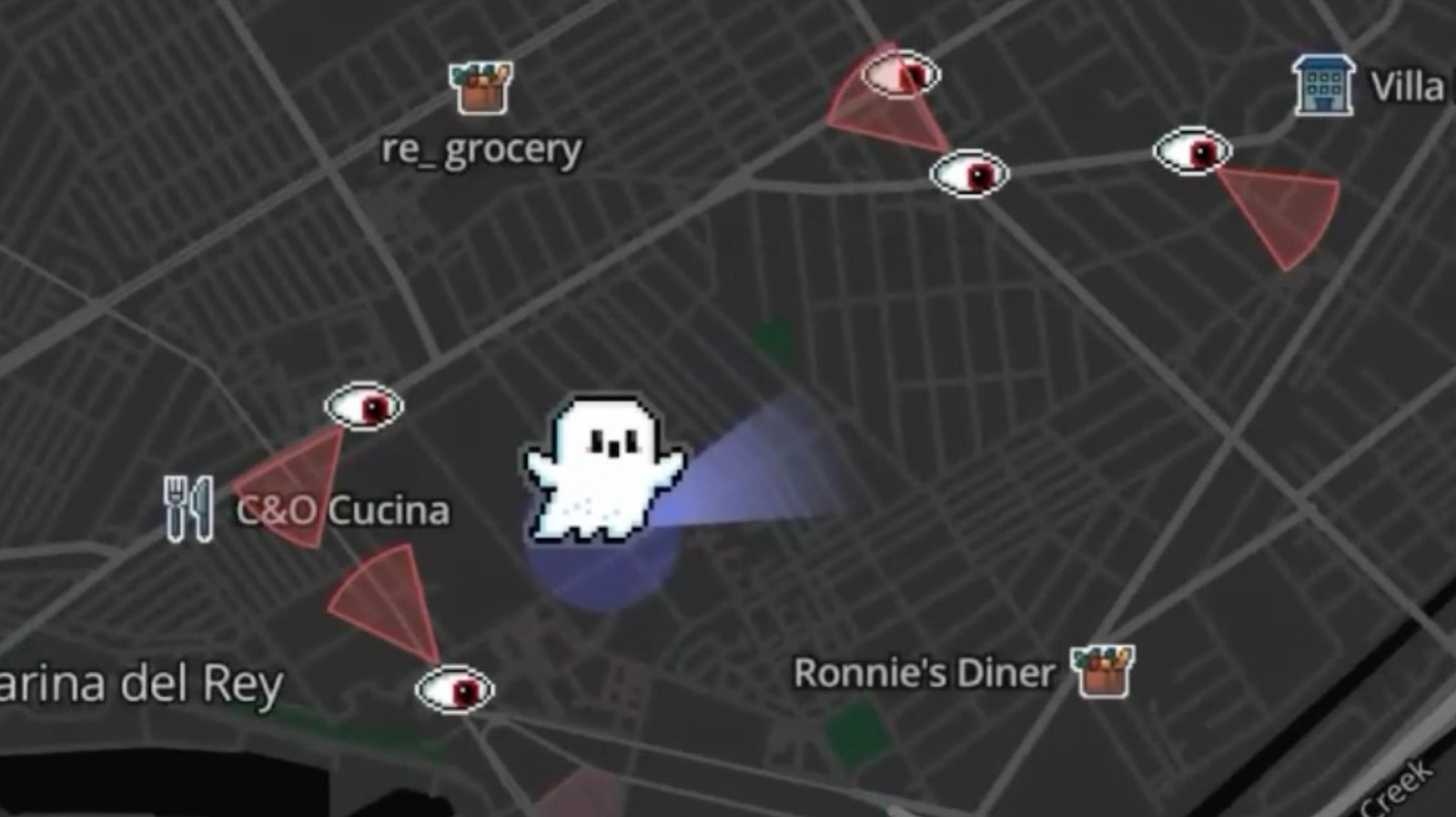


MapQuest, the navigation app most people assumed died sometime around 2008, just made the most provocative move in the mapping wars. It now shows drivers the exact locations of Flock surveillance cameras and other license plate readers scattered across the country. Google Maps and Waze don’t touch this.
The Colorado company rolled out what it calls a “Surveillance Layer” that plots devices from Flock Safety, Motorola’s Vigilant system, Genetec, Axon, Rekor, and a dozen other manufacturers. “The Roads Have Eyes!” MapQuest announced on social media, sounding less like a tech company and more like a civil liberties pamphlet.
The layer runs on crowdsourced data. Users who spot a camera can pin its location, building a communal map of the surveillance network one device at a time. Given that Flock alone has deployed more than 100,000 cameras across the U.S., there is no shortage of pins to drop.
Flock markets itself as a crime-fighting tool, helping police solve cases and locate missing persons. But the backlash has been brutal and bipartisan. Multiple police officers have been arrested or fired for using Flock’s technology to stalk individuals.
Innocent people have been misidentified as suspects. Residents in some communities have physically vandalized the cameras.
The political tide has turned against Flock too. Texas Governor Greg Abbott froze state funding for license plate readers on state rights-of-way. Florida ordered automatic plate readers removed.
Counties and cities across the map have pulled the plug on their systems entirely. Reuters reported that Flock cut 270 employees this month, roughly 18 percent of its workforce.
Into that vacuum steps MapQuest, a company that launched in 1996 when printing turn-by-turn directions from a desktop computer felt like witchcraft. AOL bought it for $1.1 billion in 2000, a price tag that looks quaint and absurd in equal measure. Google Maps and Waze bulldozed its market share over the following decade.
But MapQuest never quite disappeared, and it has been picking fights above its weight class lately. Earlier this year, it refused to rename Lake Ontario as “Lake America” on its maps, a rebrand pushed by President Donald Trump. Google Maps and Waze complied quickly, at least for U.S. users.
MapQuest held the line. That stubbornness is starting to look like a brand strategy.
The Flock layer positions MapQuest as the navigation app for drivers who don’t want to be tracked, cataloged, and cross-referenced every time they drive to the grocery store. It is a niche, but it is a growing one.
The legal and ethical questions here are tangled. Flock cameras sit on public roads, and there is no law against knowing where they are. MapQuest is not helping anyone evade law enforcement.
It is simply showing people where the cameras are, information that is technically public but practically invisible to most drivers. Still, framing this as a privacy tool rather than a crime-avoidance tool requires some faith in the average user’s intentions. MapQuest itself offered a careful disclaimer, suggesting drivers should not treat the feature as “an invisibility cloak for your car.”
Flock is bleeding employees and political support. MapQuest is gaining attention it has not enjoyed in 15 years. The same surveillance infrastructure that was supposed to make roads safer is now making one forgotten app relevant again.
Whether cities keep installing cameras or keep ripping them out will determine how long that relevance lasts.

Share this Story