
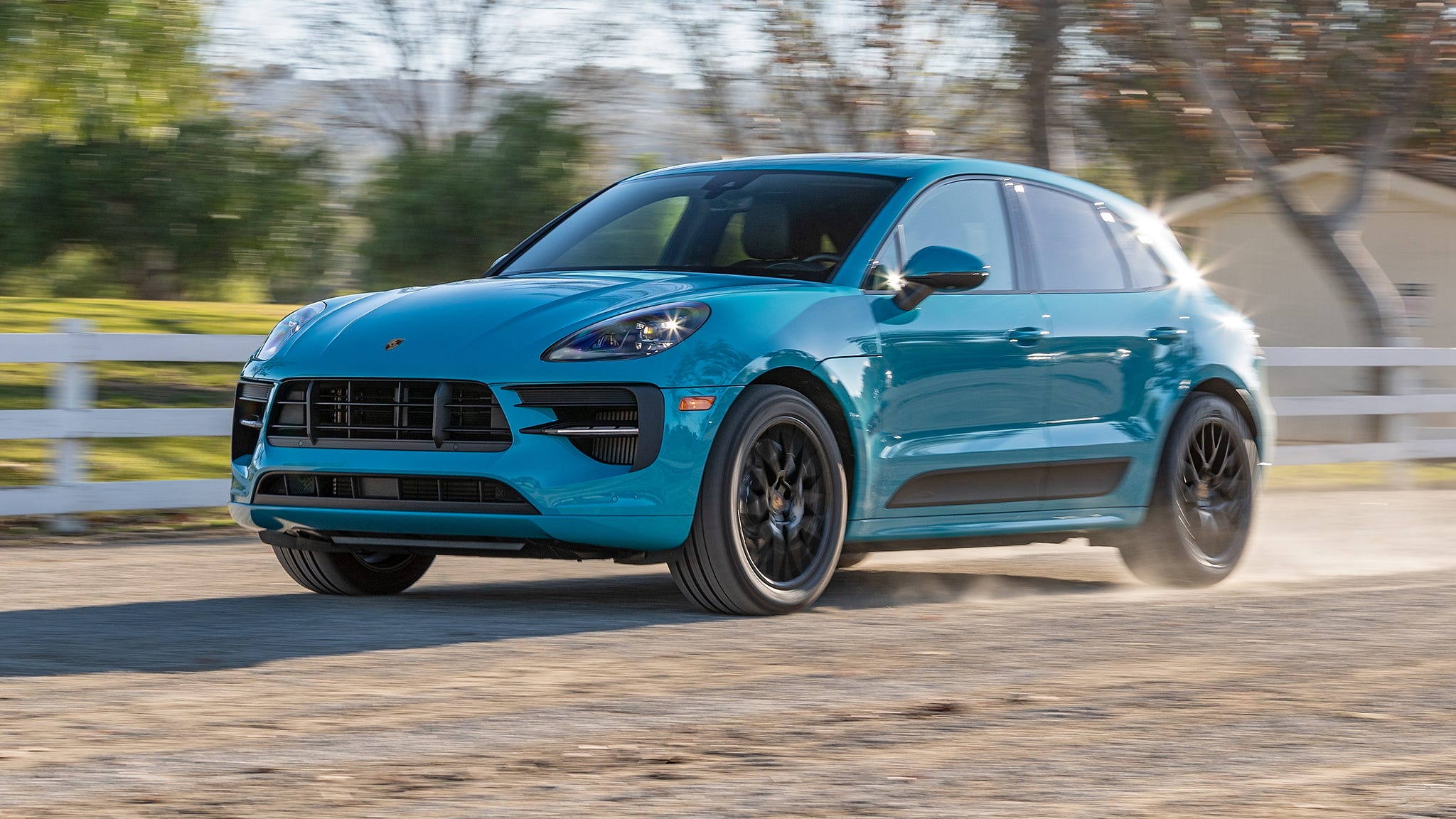


Porsche just admitted what the sales charts have been screaming for two years. The company needs a gas-powered Macan, and it needs one badly enough to resurrect a four-cylinder engine to do it.
“We need to bring the Macan with a combustion engine back to life,” said Michael Leiters, who took over as chairman of Porsche AG’s executive board in January after a stint running McLaren. That sentence lands differently when you remember Porsche announced back in 2019 that the next Macan would go fully electric. No hedging, no maybe. The future was BEV, full stop.
Seven years later, the future has a four-banger.
The gas-powered successor carries the internal code name “M1” and will ride on Audi’s Premium Platform Combustion architecture. It is due in 2028, offered with either a straight gas engine or a plug-in hybrid, and will be sold alongside the electric Macan that launched in 2024. Production is expected at Leipzig, the same plant building the EV version.
The Macan was Porsche’s bestseller before the brand pulled the plug on the combustion variant this summer. North America was its strongest market. Ditching the gas version meant walking away from the single vehicle that brought more buyers into Porsche showrooms than any other.
The electric replacement has been a tough sell by comparison. It competes in a segment where premium EV demand has cooled and where buyers still want the option of a fuel filler.
When Porsche killed the combustion Macan, it also eliminated its last four-cylinder offering. The Boxster and Cayman ended production at the close of 2025, and with those went the turbocharged 2.0-liter flat-four. The brand’s entire lineup briefly became a mix of sixes, eights, and electric motors.
Under its latest turnaround strategy, Porsche now plans to offer two combustion-powered models, including hybrids, for every EV in the lineup. The powertrain menu will span four-, six-, and eight-cylinder engines, naturally aspirated and turbocharged variants, eTurbo setups, plug-in hybrids, performance hybrids, and full EVs. Transmission choices will include manual, automatic, and PDK. It reads like a company trying to cover every possible exit.
The PPC platform is an Audi creation, which means this new Macan will share its bones with the next-generation Q5 and related Volkswagen Group products. Porsche has always been comfortable borrowing from the corporate parts bin for the Macan. The original shared its platform with the Audi Q5, and nobody complained as long as the driving experience held up.
What changed between 2019’s confident EV commitment and today’s four-cylinder retreat is the market itself. EV adoption in the luxury segment plateaued faster than anyone at Zuffenhausen projected. Tariffs and trade friction have complicated cross-border pricing. And buyers with $60,000 to $90,000 to spend on a compact luxury SUV have shown a stubborn preference for engines that burn fuel.
Leiters took over a company whose stock price had been hammered and whose EV-first strategy was looking increasingly like a miscalculation. The M1 project is his clearest course correction yet.
Porsche spent half a decade telling the world it was done with small engines and combustion-powered crossovers. Now it is building a new one on someone else’s platform, with the smallest engine configuration it offers, aimed squarely at the customers it told to go electric. The 2028 launch date means at least two more years of the electric Macan carrying the nameplate alone.
Share this Story