
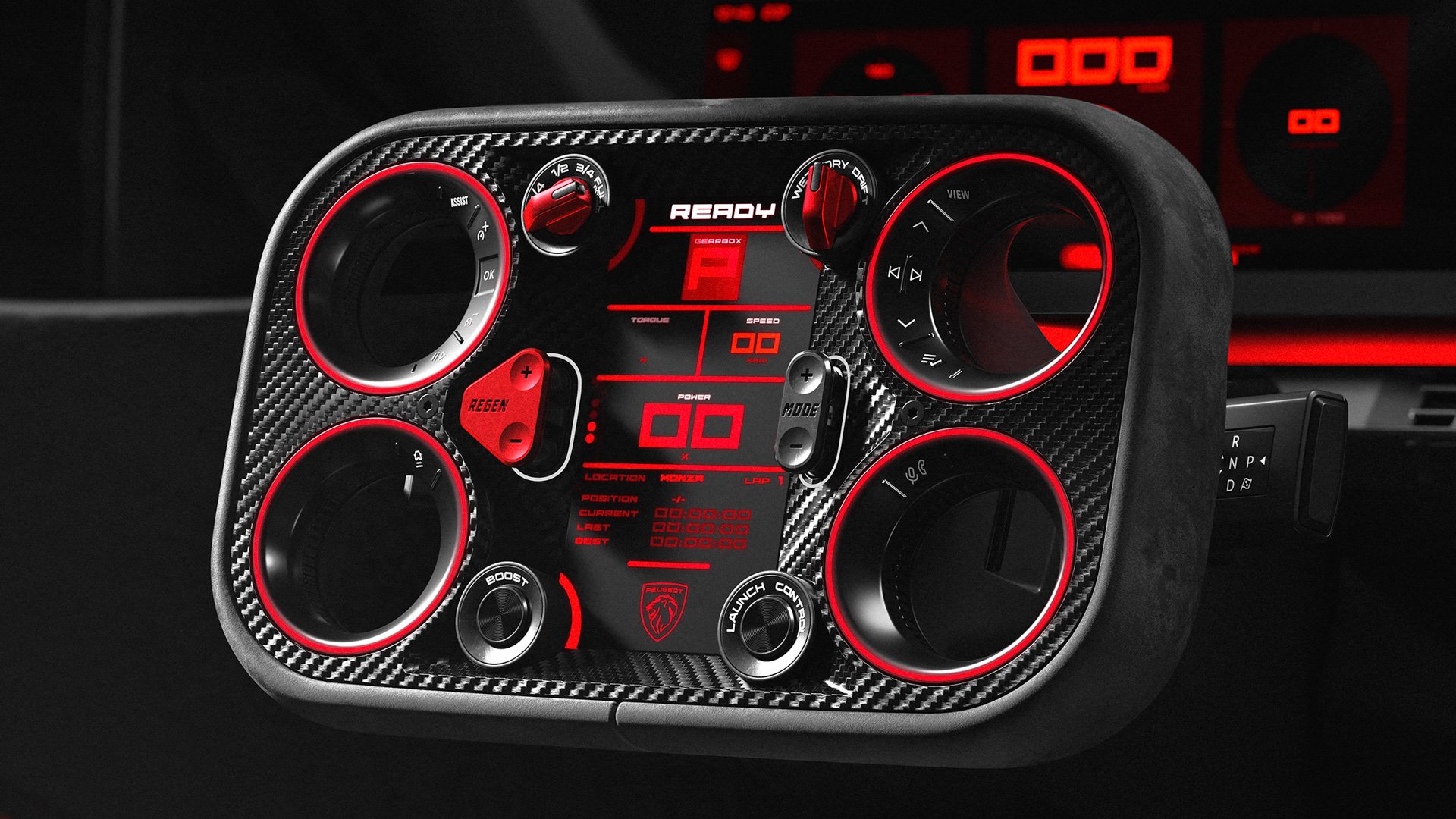


The 2026 Paris Motor Show opened today with French automakers swinging hard at convention, and Peugeot landed the strangest blow. Its E-T16 Concept, a tri-motor electric hatchback paying homage to the rally-dominating 205 T16 of the mid-1980s, features a steering controller that looks less like a wheel and more like a game controller mated with a tablet.
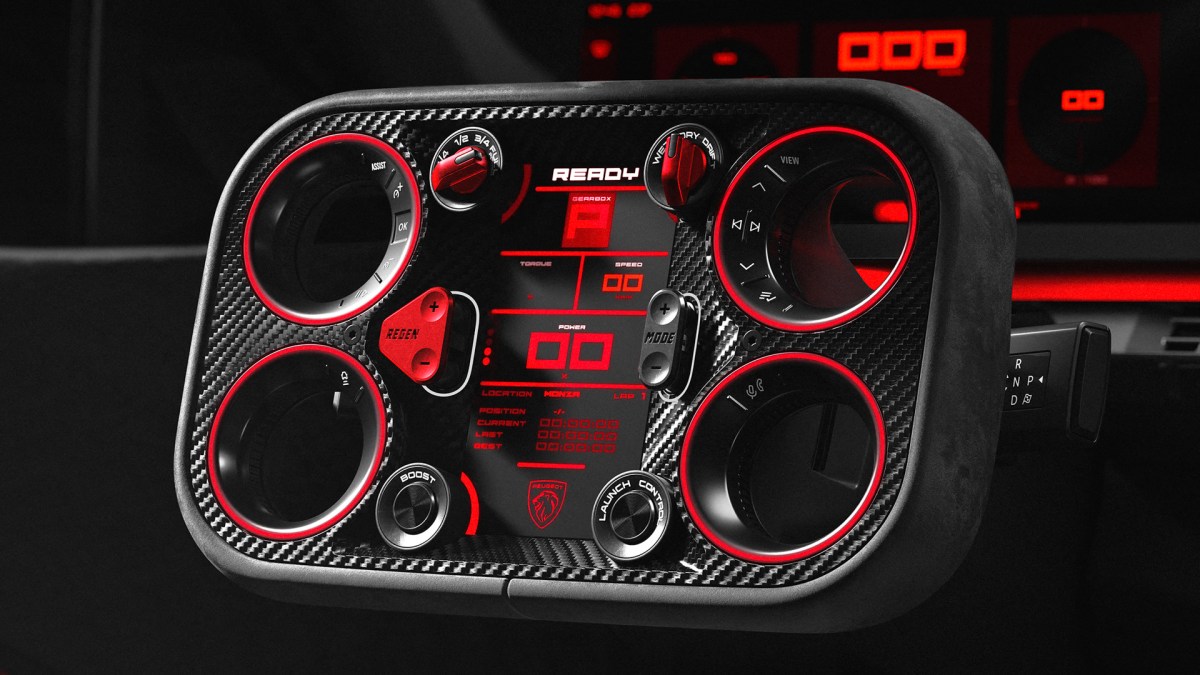
Peugeot calls it the Hypersquare. It is a steer-by-wire unit shaped roughly like a square, studded with buttons, and built around a configurable central display showing speed and lap timing. There is no round rim, no column connecting your hands to the front axle.
Your inputs go to a computer, electric motors turn the wheels, and software decides how much response each movement gets. The logic is straightforward. Traditional steering requires multiple rotations lock-to-lock because the wheel is mechanically linked to a rack.
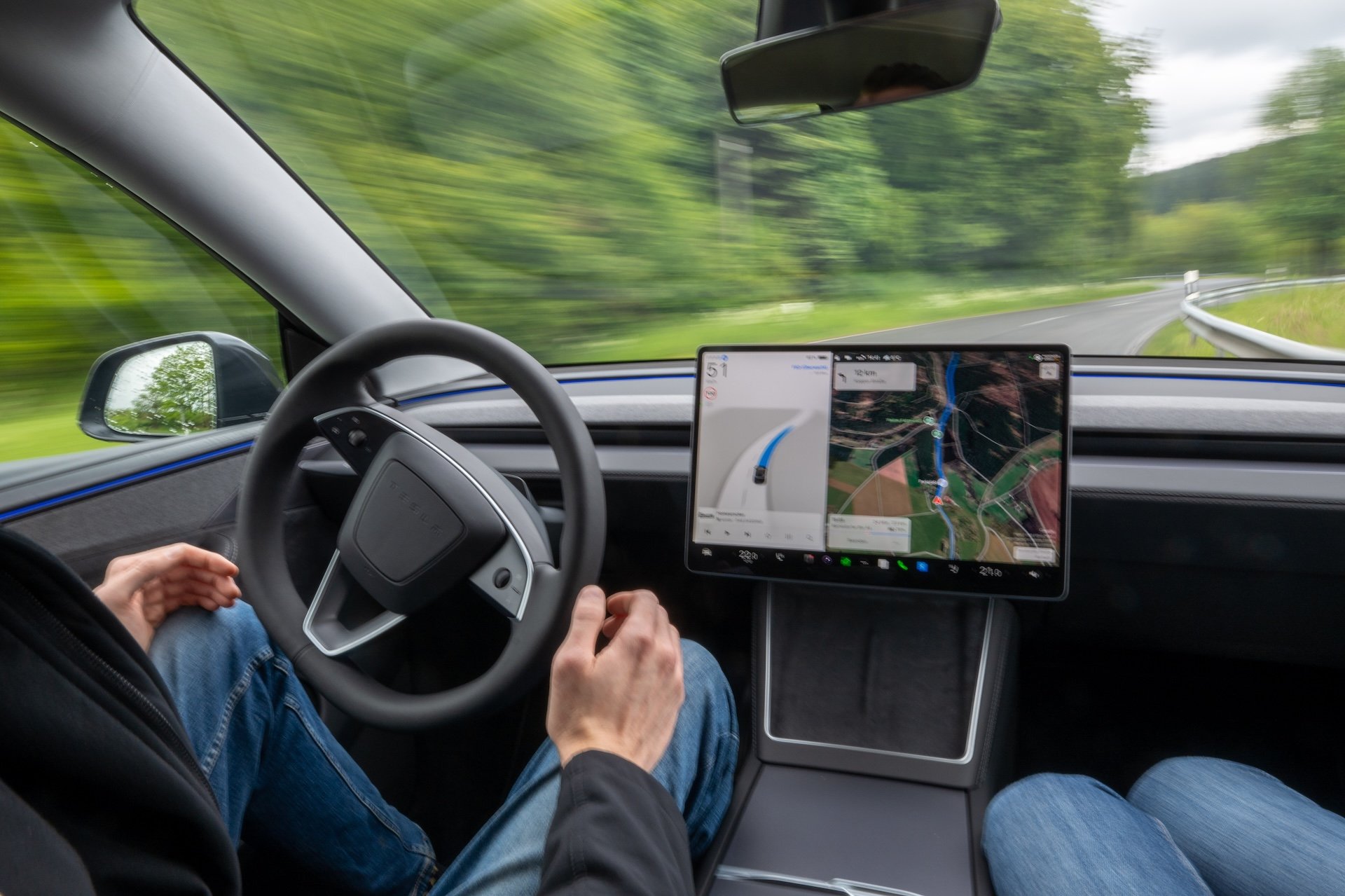
That’s why Tesla’s yoke was such a fiasco. Musk chopped the top off a conventional wheel but left the old steering ratio underneath, forcing drivers to shuffle their hands around a shape that fought them at every turn. Steer-by-wire eliminates that problem entirely.
If the ratio is variable, a small input can equal full lock at low speed and barely register on the highway. The wheel never needs to rotate far, so it doesn’t need to be round.
Peugeot claims the Hypersquare draws from its 9X8 endurance racer and puts critical functions within a finger’s reach, which matters in spirited driving. The E-T16 Concept supposedly handles three laps of the Nürburgring Nordschleife in performance mode without power limitation. Concept-car spec sheets deserve about as much trust as a campaign promise.
The tradeoff is real. Without a mechanical link, every bit of road feel your hands receive is artificial, generated by motors and calibrated by engineers guessing what “natural” should feel like. Lexus tried steer-by-wire in the RZ, and the Cybertruck uses it, but neither has convinced enthusiasts that simulated feedback can match a good hydraulic rack.
Peugeot is not treating the Hypersquare as a one-off stunt. The company has fitted variants of it to other concepts, including a more pedestrian city car called the Polygon. Executives have been making the YouTube rounds, preaching that steer-by-wire unlocks context-sensitive steering and better ergonomics.
The E-T16 wasn’t the only French provocation on display. Citroën unveiled a modern EV reboot of the 2 CV, Europe’s answer to the Volkswagen Beetle, promising a production version within two years at a starting price around 15,000 euros. That’s roughly $16,700, aimed squarely at upcoming European regulations and the millions of buyers priced out of the current EV market.
Renault, meanwhile, rolled out the E-Space Concept, a minivan revival that leans into modularity and family comfort rather than the lunatic V10 variant Gran Turismo players remember. Nostalgia is clearly the fuel running through the Paris show floor. Every major French brand reached back decades for inspiration, then bolted on electric drivetrains and futuristic styling.
Whether any of it reaches showrooms is another question entirely. The Citroën 2 CV has the strongest odds, with Citroën explicitly promising a production timeline and a price. The Peugeot E-T16 and its Hypersquare are far less certain.
Steer-by-wire still faces regulatory hurdles in some markets and deep skepticism from drivers who want to feel the road, not a software engineer’s interpretation of it. Peugeot is betting that once people try a steering device that never needs to rotate more than a few degrees, they won’t want to go back. The demo unit in Paris will be the first real test of whether anyone outside Peugeot’s design studio agrees.
Share this Story