
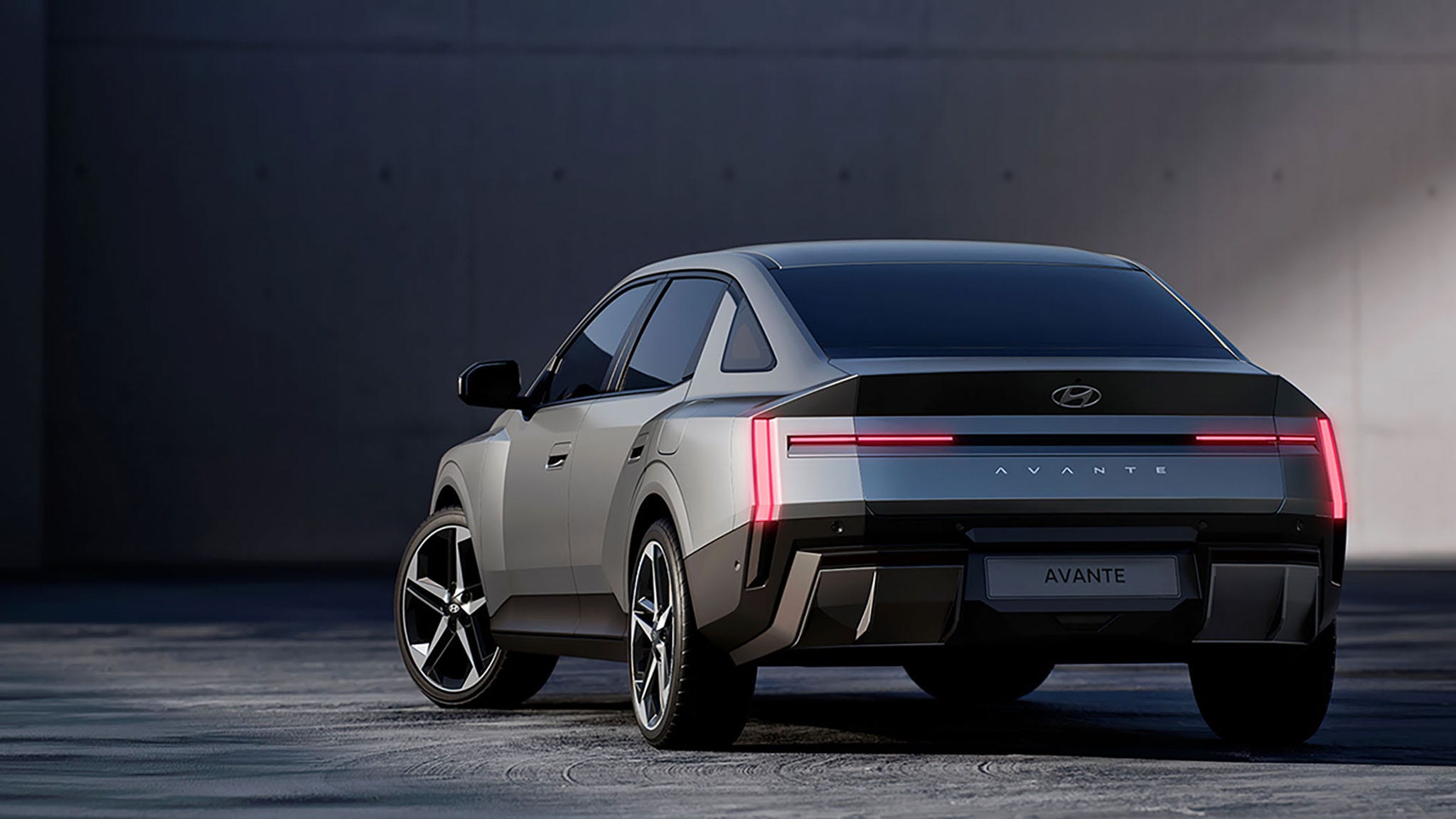


The seventh-generation Hyundai Elantra just dropped at the 2026 Busan auto show in South Korea, and it looks like nothing the compact sedan segment has seen before. Sharp, angular, and aggressively futuristic, the redesign is Hyundai’s clearest signal yet that it refuses to let the humble sedan die quietly.
Revealed under its Korean-market Avante name, the new Elantra is the car’s first full redesign since the 2021 model year. Hyundai had been spotted testing prototypes in Austria and California just days before pulling the sheet off in Busan. The camouflage hid how radical the departure really is.
The front end is barely recognizable. The current model’s wide, sweeping grille has been replaced by a tight, angular jawline. Headlights have been reduced to thin perpendicular slashes that trace the bodywork like creases in sheet metal origami. It’s a look that borrows more from concept cars than from anything currently sitting in a dealership lot.
Along the sides, the controversial Z-shaped creases of the outgoing car are gone, replaced by cleaner straight lines and more muscular fender work. Black trim along the B-pillar merges the front and rear glass into a single visual element, while the C-pillar remains body-colored and isolates a small triangular rear quarter window. Five-spoke star-shaped wheels finish the jagged theme.
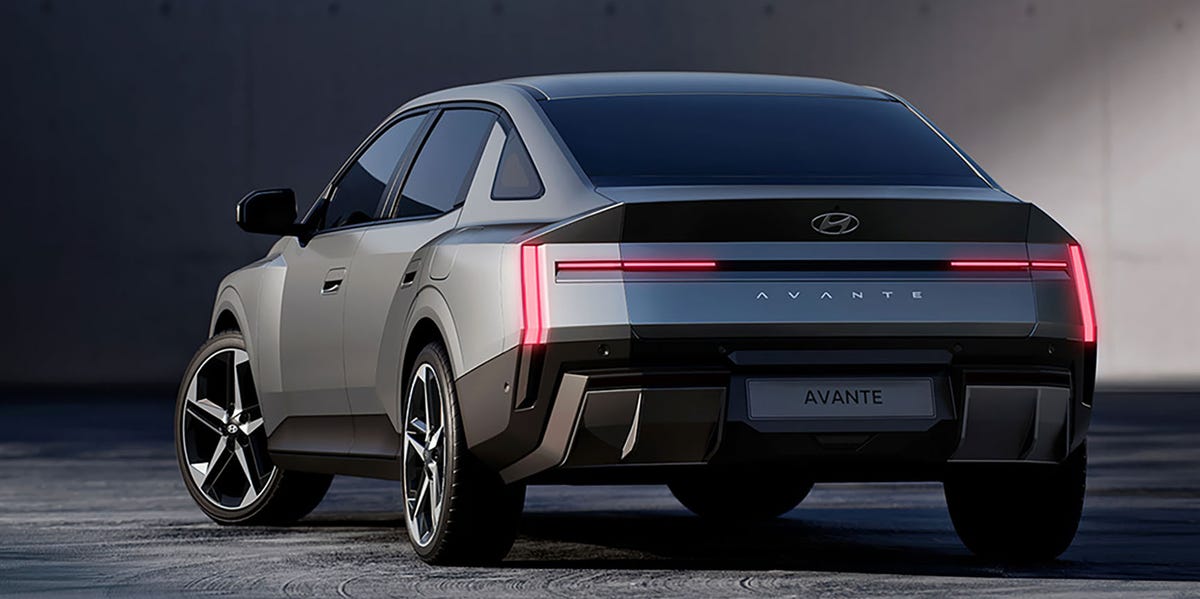
The rear takes cues from its predecessor but simplifies them, going boxier with vertical taillight elements on the fenders and horizontal light bars spanning the trunk.
Inside, the transformation is just as deliberate. Hyundai shrank the instrument cluster to a thin bar near the windshield base and gave the center touchscreen considerably more real estate. The new Pleos Connect infotainment system powers the setup, complete with an AI chatbot called Gleo. Whether anyone asked for a chatbot in their compact sedan is another question entirely.
The gear selector migrated to a stalk behind the steering wheel, freeing up the center console for storage. Buttons have been culled dramatically, though Hyundai kept physical controls for climate and media beneath the screen. That decision alone puts Hyundai ahead of several premium brands that have buried basic functions in touchscreen menus to the frustration of actual drivers.
Powertrain options are evolutionary rather than revolutionary. The gasoline model carries over the existing 147-horsepower 2.0-liter four-cylinder. The hybrid gets a new dual-motor 1.6-liter setup rated at 155 horsepower.
Neither number will quicken anyone’s pulse, but fuel economy is the game here. The hybrid’s two-motor architecture suggests Hyundai is chasing efficiency numbers that could embarrass the competition.
There’s no mention yet of an N-Line or the full-bore Elantra N performance variant. Given how well the current Elantra N has been received by enthusiasts as one of the best sport compacts money can buy, Hyundai would be foolish to abandon it. But silence at launch is not confirmation in either direction.
The Avante goes on sale in South Korea later this year. The U.S.-market Elantra is expected to arrive sometime in 2027, though Hyundai hasn’t committed to a specific date or confirmed final specs for North America.
Hyundai is making a calculated gamble here. Sedans have been retreating from the American market for years, with crossovers and SUVs devouring their sales volume. Ford and Chrysler abandoned the segment entirely.
But Hyundai, along with sibling Kia and rival Toyota, keeps investing. The new Elantra’s design screams confidence, not retreat. It’s the work of an automaker that believes a sedan can still turn heads and move metal, even in an SUV-saturated landscape. Whether American buyers agree will determine if this bold bet pays off or becomes a beautiful footnote.

Share this Story