
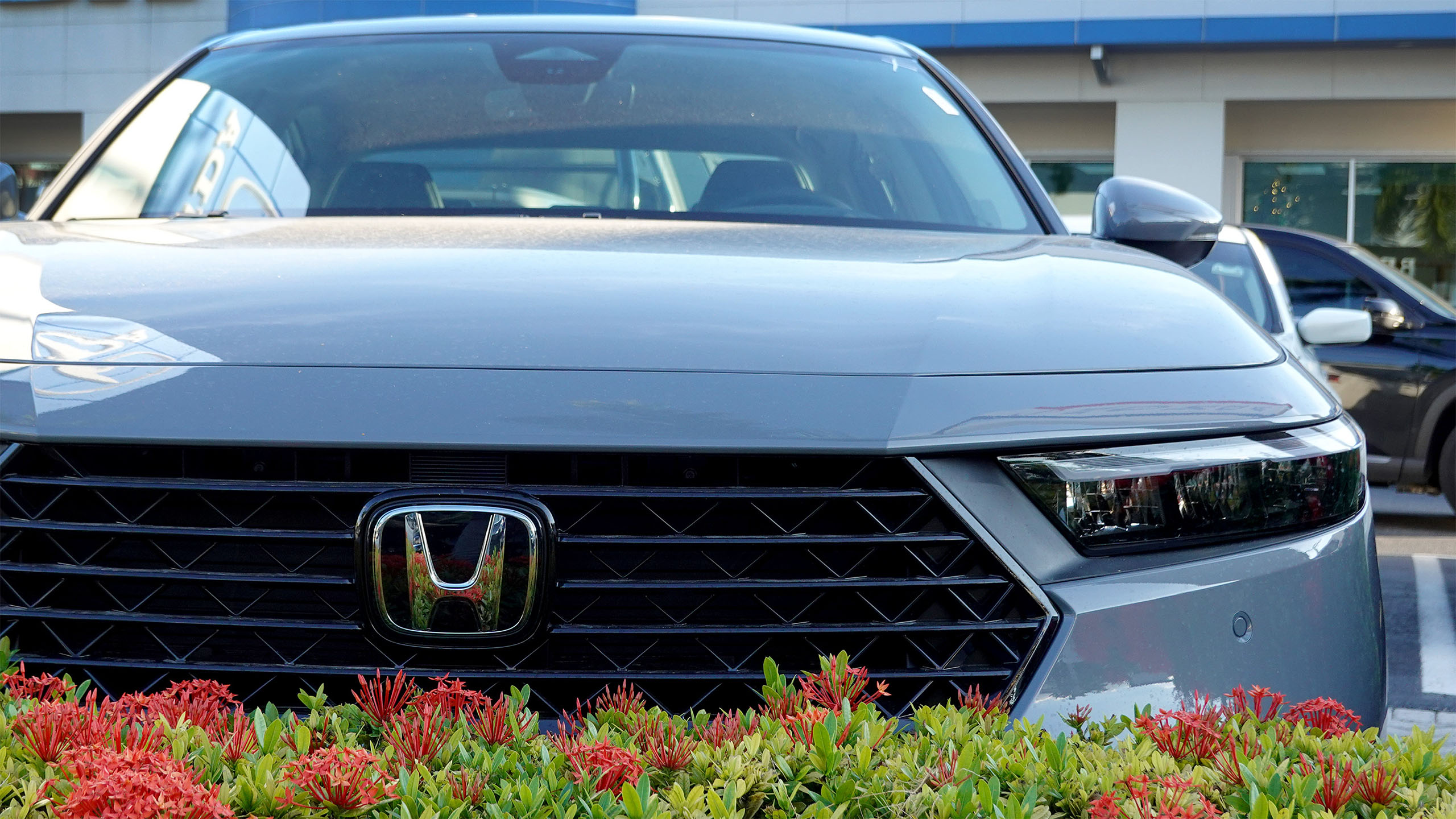


A supplier memo reviewed by Automotive News reveals Honda plans to stretch the life cycles of five models — the Accord, HR-V, Odyssey, Acura MDX, and Acura Integra — pushing redesigns to 2030 or beyond. Honda’s representatives have declined to comment. The memo tells the story well enough on its own.
This is a company staring down more than $20 billion CAD in losses from cancelled EV projects while absorbing tariff pressure that shows no sign of easing. Something had to give, and what gave was the product pipeline.
The Odyssey is the most conspicuous victim. The current minivan debuted in 2018, meaning it will be at least 12 years old before a hybrid-powered successor arrives around 2030. That’s the automotive equivalent of patching drywall instead of rebuilding the wall.
The Accord and HR-V, both redesigned for 2023, were supposed to be in the meat of their competitive windows right now. Instead, Accord sales remain sluggish even in the U.S., its strongest market. The HR-V is losing ground to rivals despite minor 2026 updates, burdened by above-average pricing that Honda apparently can’t or won’t address.
According to the supplier memo, the HR-V’s replacement won’t land until 2032 — nearly a decade from its last full redesign.
On the Acura side, the MDX got a refresh last year and will soldier on with at least one more update before a full redesign in five years. Its importance actually grows in the near term because Acura halted production of the smaller RDX until a next-generation hybrid version arrives “in the next couple of years.” That leaves the MDX carrying the SUV lineup alone.
The Integra, revived for 2023 as a five-door fastback with modest expectations, is now expected to stick around until 2032. A long-rumored hybrid variant still hasn’t materialized, and a next generation isn’t guaranteed. For a nameplate Acura resurrected with considerable fanfare, that’s a bleak trajectory.
Honda’s broader strategy depends on a next-generation hybrid system slated for 2027, one the company says will cut powertrain costs by more than 30 percent. Globally, 13 models are supposed to receive this technology over four years. In North America, the focus will be larger vehicles — Pilot, Passport, Ridgeline, Odyssey — where demand for towing capability and interior space remains strong.
The calculus is clear enough. Honda pulled back EV spending by 30 percent through the end of the decade and postponed large-scale electrification investments in Ontario by at least two years. Now it’s freezing product cycles on volume models to funnel resources toward that hybrid pivot.
Honda is not alone in this kind of retrenchment. GM has reportedly delayed next-generation electric trucks indefinitely. Ford ate a $100 million charge just from cancelling the F-150 Lightning last December. Volkswagen concedes it won’t match gas-car profit margins on EVs until its next-generation SSP platform arrives before 2030.
But Honda’s situation is distinctive because the models being frozen aren’t fringe entries. The Accord is a franchise nameplate. The HR-V competes in the industry’s hottest segment. The Odyssey is the benchmark minivan.
These are core products being asked to coast on fumes while the company regroups behind the scenes. Buyers shopping these vehicles in 2027 or 2028 will be cross-shopping them against freshly redesigned competitors from Toyota, Hyundai, and Kia. Aging sheet metal and yesterday’s tech don’t move metal at full margin, no matter how many refreshes you bolt on.
Honda is betting it can hold the line long enough for that 2027 hybrid system to arrive and reset the board. That’s a long time to hold your breath.

Share this Story