
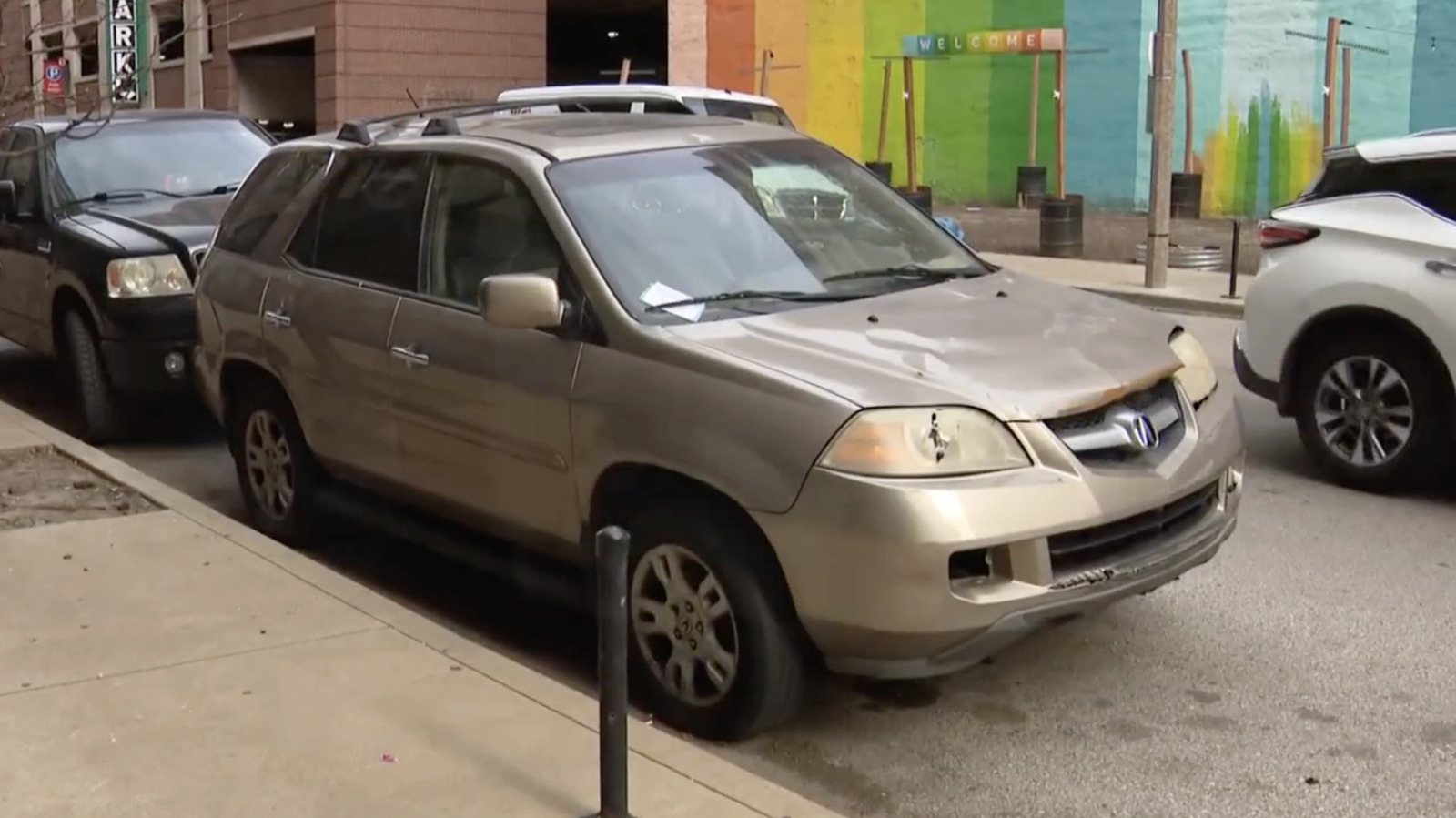


An abandoned Acura MDX sat on Locust Street in St. Louis for nearly a year and racked up $8,660 in parking tickets. That’s roughly twice what the car is worth. And nobody did a thing about it until the local news showed up.
The MDX is one of approximately 40,000 vehicles sitting on St. Louis streets in violation of city law, which defines a car as abandoned after just five continuous days in the same spot. The machinery to deal with this exists on paper. In practice, it is spectacularly broken.
City Treasurer Adam Layne blames a history of massive corruption at the city tow lot, which led to the towing program being shut down years ago. He also points to pandemic-era leniency that was never rolled back. The city wanted to give residents breathing room. That breathing room became a permanent exhale.
Sean Hadley, operations chief for the Streets Department, tells a different story. He says it’s a staffing crisis. He has five inspectors doing the work of twelve.
When Layne claims the impound lot is too full to accept more vehicles, Hadley walks reporters through a facility holding 700 cars with room for 1,200. “We haven’t been at capacity since before the tornado,” he told KSDK. So the two departments responsible for solving this problem can’t even agree on what the problem is.
It gets worse. The Streets Department has refused to sign a legally required agreement with the Treasurer’s Office governing how auction proceeds from impounded cars get split. State law mandates 60 percent to the Treasurer and 40 percent to the city’s general fund.
Streets wants its own cut, arguing it does the actual labor. The agreement sits unsigned. The cars sit untowed. The tickets keep printing.
Meanwhile, the corruption that originally cratered the tow program hasn’t exactly been purged from the system. KSDK reporting revealed that the city sold a recovered stolen car and kept the money rather than returning it to the rightful owner. The rot runs deep enough that basic accountability — tow a car, auction it, distribute the funds — cannot be executed.
Now Mayor Cara Spencer wants to blow up the whole arrangement. She’s pushing to strip parking enforcement from the Treasurer’s Office and consolidate it under the mayor’s direct authority. “I personally think that it’s quite unfortunate and ridiculous that parking enforcement is handled in a siloed office that isn’t controlled by the mayor’s office,” she told KSDK.
Layne fired back, saying the mayor doesn’t understand how the parking division works. He may be right about that. But understanding how a system works is less impressive when the system doesn’t work at all.
Forty thousand abandoned vehicles represent millions in uncollected auction revenue, thousands of lost parking spaces, and a city government that has turned bureaucratic infighting into a competitive sport.
The MDX itself finally got towed after the story went viral and the embarrassment became too loud to ignore. That’s the tell. St. Louis proved it can act when cameras are rolling. The question is whether anyone will act when they’re not.
One rusting Acura didn’t create this mess. But it did something no inspector, treasurer, or department head managed to do for a year. It forced everyone to look at a problem they’d been stepping around since the pandemic, since the corruption scandal, since the tow lot went sideways and nobody bothered to set it right.
Thirty-nine thousand nine hundred and ninety-nine vehicles remain. The departments remain at odds. The agreement remains unsigned. And somewhere in St. Louis, a parking officer is probably writing another ticket on a car that will never move.





Share this Story