
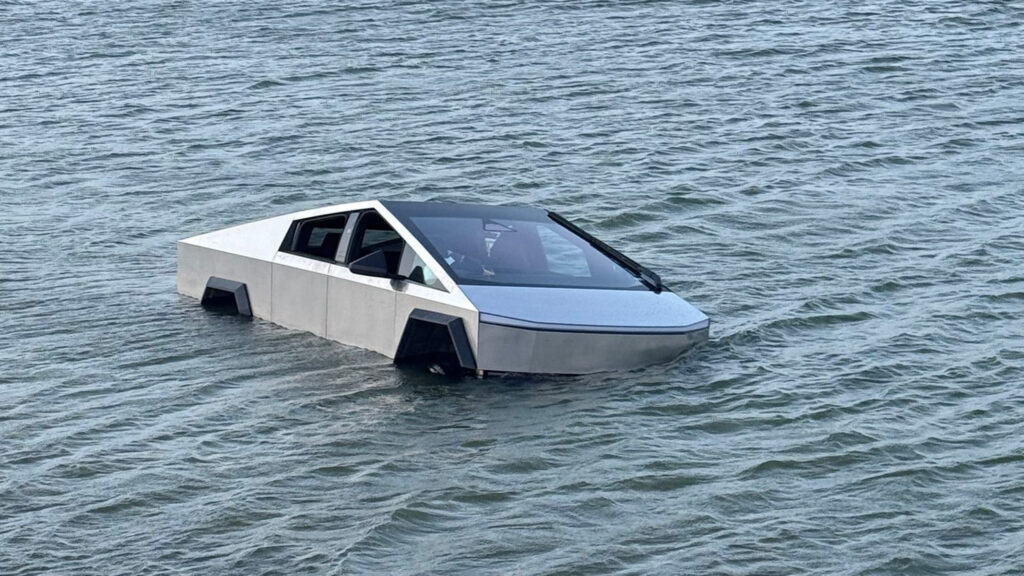


A Tesla Cybertruck sits at the bottom of Grapevine Lake in Texas. Its owner sits in the back of a police cruiser. Wade Mode, it turns out, is not a boat mode.
Grapevine Police confirmed that a Cybertruck driver intentionally drove into the lake, got the vehicle stuck, and abandoned it as it took on water. A fire department water rescue team had to haul the whole mess out. The driver was arrested on charges including operating a vehicle in a closed section of a park and water safety equipment violations.
Instagram video captured the progression from hubris to disaster in real time. The driver initially managed to slosh around in shallow water near the shoreline, which apparently felt like enough validation to push further. Deeper water followed, the truck stopped moving, and physics did what physics does.
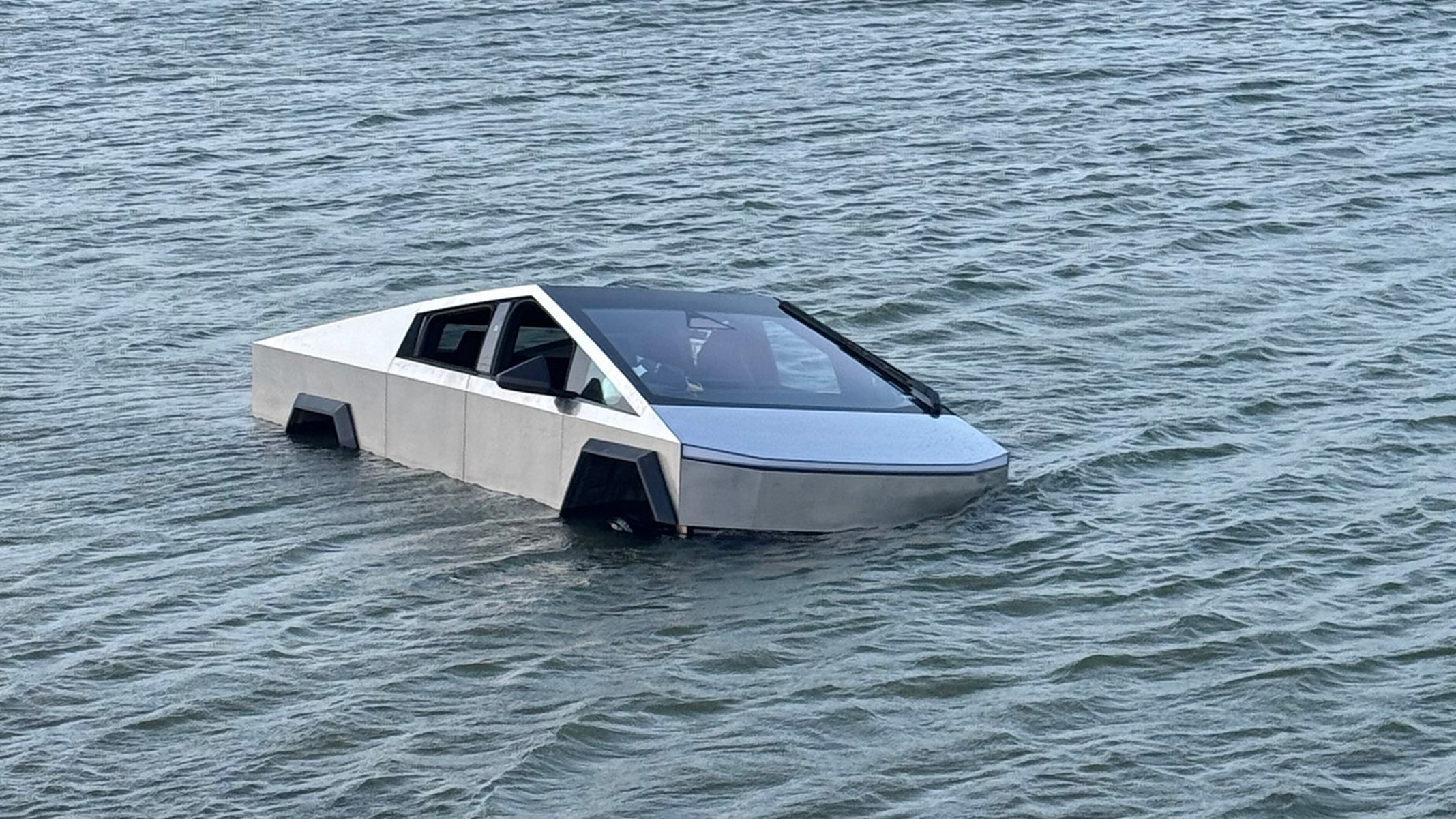
The timeline tells its own story. When the Cybertruck entered the lake, the sun was up. By the time a tow truck with a crane finally hoisted the waterlogged stainless steel slab out of the water, it was dark.
Hours of effort, multiple emergency teams, and a spectacle that will live forever on social media. That’s what one joyride cost.
Tesla’s Wade Mode is designed to pressurize the battery pack and seal vulnerable components when driving through shallow water — puddles, flooded roads, maybe a creek crossing if you’re feeling bold. The company has never marketed it as amphibious capability. That distinction matters, even if some owners choose to ignore it.
But you can trace the roots of this stunt directly to Elon Musk himself. He once told audiences the Cybertruck would “briefly serve as a boat,” a claim that sits in the same fantasy garage as the rocket-powered Roadster 2.0 and the sub-$25,000 Tesla. Neither has materialized.
The gap between what gets promised on stage and what gets delivered on the road has consequences. Sometimes those consequences involve a crane and a pair of handcuffs.
Grapevine PD wasn’t subtle in their statement. “Although a vehicle may be physically capable of entering shallow freshwater areas, doing so can create legal and safety concerns under Texas law,” they said. That’s police-speak for: your truck’s spec sheet is not a legal defense.
The charges themselves are relatively minor — park violations and water safety infractions, not felonies. But the real damage is the truck. A Cybertruck submerged in lake water deep enough to disable it is not a vehicle that gets dried off and driven home.
Freshwater soaking through electrical systems, battery connections, and interior components is its own slow poison. Insurance adjusters will have opinions about this one.
This isn’t the first time a Cybertruck owner’s ambitions outran the vehicle’s actual capabilities. Another was recently involved in a crash allegedly while racing a Lamborghini, striking at least nine cars. The Cybertruck seems to attract a particular kind of owner — one who treats the vehicle less like transportation and more like a content opportunity.
Every off-road-capable vehicle on the market comes with some version of a water fording feature. Jeep has it, Land Rover has it, Ford has it. None of their owners routinely drive into lakes, because those brands never stood on a stage and suggested their trucks could moonlight as watercraft.
Words have weight, especially when someone with 200 million followers says them about a vehicle that costs north of $80,000. Grapevine Lake just proved that again.


Share this Story