
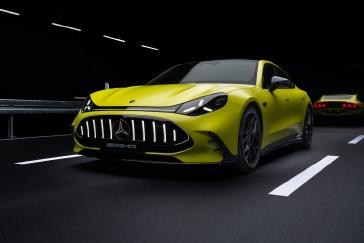


Mercedes-AMG just dropped its biggest bet in decades. The all-new GT 4-Door Coupe is fully electric, packs up to 1,153 horsepower from three axial flux motors, and hits 60 mph in two seconds flat. It also simulates V8 gear changes and exhaust notes, because apparently the future still needs to sound like the past.
Announced from Affalterbach on May 20, the GT 4-Door Coupe is the first production car built on AMG’s dedicated electric architecture, AMG.EA. It arrives at U.S. dealers later this year in GT 55 form with 805 hp, followed by the GT 63 at 1,153 hp in early 2027. The architecture is already engineered for over 1,300 hp.
AMG is not tiptoeing into electrification. It’s kicking the door down.
The axial flux motors come from YASA, the British specialist Mercedes-Benz acquired outright in 2021. Two motors sit on the rear axle, one on the front. The front motor acts as a booster, decoupling within milliseconds during cruising to save energy.
Peak torque hits 1,475 lb-ft. The sprint to 124 mph takes 6.4 seconds. Top speed is electronically limited to 186 mph with the optional performance package.
These are hypercar numbers wearing a four-door suit.
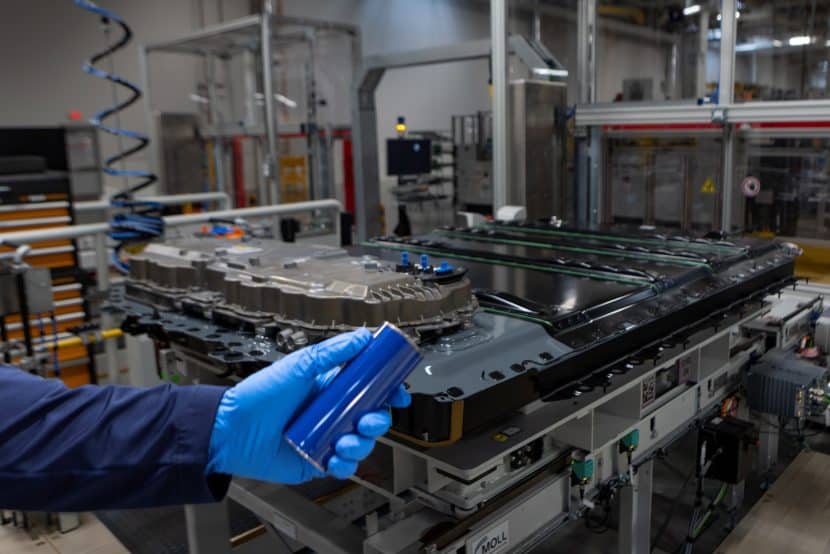
The battery is where AMG flexes its Formula 1 pedigree hardest. An 800-volt pack uses 2,660 cylindrical cells with NCMA chemistry and aluminum housings, each directly cooled by electrically non-conductive oil. Energy density exceeds 298 Wh/kg at cell level.
Charging at 600 kW means 10 to 80 percent in 11 minutes, or roughly 286 miles of WLTP range added in 10 minutes. AMG says the platform could eventually push past 435 miles of range. That charging speed alone would make it the fastest-charging production EV on the planet, assuming the infrastructure exists to deliver 600 kW consistently.
That’s a significant asterisk.
Then there’s the AMGFORCE Sport+ drive mode, which deserves scrutiny. AMG has engineered a simulated V8 experience complete with synthesized exhaust sound, haptic feedback through the chassis, and deliberate traction interruptions to mimic gear changes. The company describes it as “difficult to describe, but all the more impressive to experience.”
Translation: they know it’s controversial, and they’re leaning in anyway.
It’s a fascinating admission. AMG built a car that can obliterate any V8 it ever made, then programmed it to pretend it hasn’t. The engineering team clearly believes emotional connection still requires combustion-era theater, even when the combustion is gone.
AMG validated the underlying technology last year when a concept version circled the Nardò ring for 24,901 miles in seven days and 13 hours, setting 25 long-distance records. That endurance demonstration was designed to silence the single biggest criticism of high-performance EVs: that they overheat and lose power after a few hard laps. Repeatable, sustained output is the entire thesis of this car.
Active aerodynamics include underbody Venturi elements and a rear diffuser that adjust in real time. The available ACTIVE RIDE CONTROL suspension handles roll stabilization. An AMG RACE ENGINEER control unit lets drivers tune throttle response, traction, and handling granularly, borrowing directly from motorsport calibration philosophy.
Ola Källenius, Mercedes-Benz CEO and a former AMG hand himself, called the car proof that AMG doesn’t just meet its own bar but moves it. Michael Schiebe, who oversees AMG, used words like “revolutionary” and “breathtaking.” The executive quotes read like a victory lap before the car has turned a customer wheel.
The real test comes when 1,153 electric horsepower meets a buyer who loved the old twin-turbo V8 and isn’t sure a speaker system qualifies as a replacement. AMG is gambling that raw, repeatable, physics-defying speed will convert even the skeptics. The numbers say it should. Whether the soul follows is the only question left.

Share this Story