
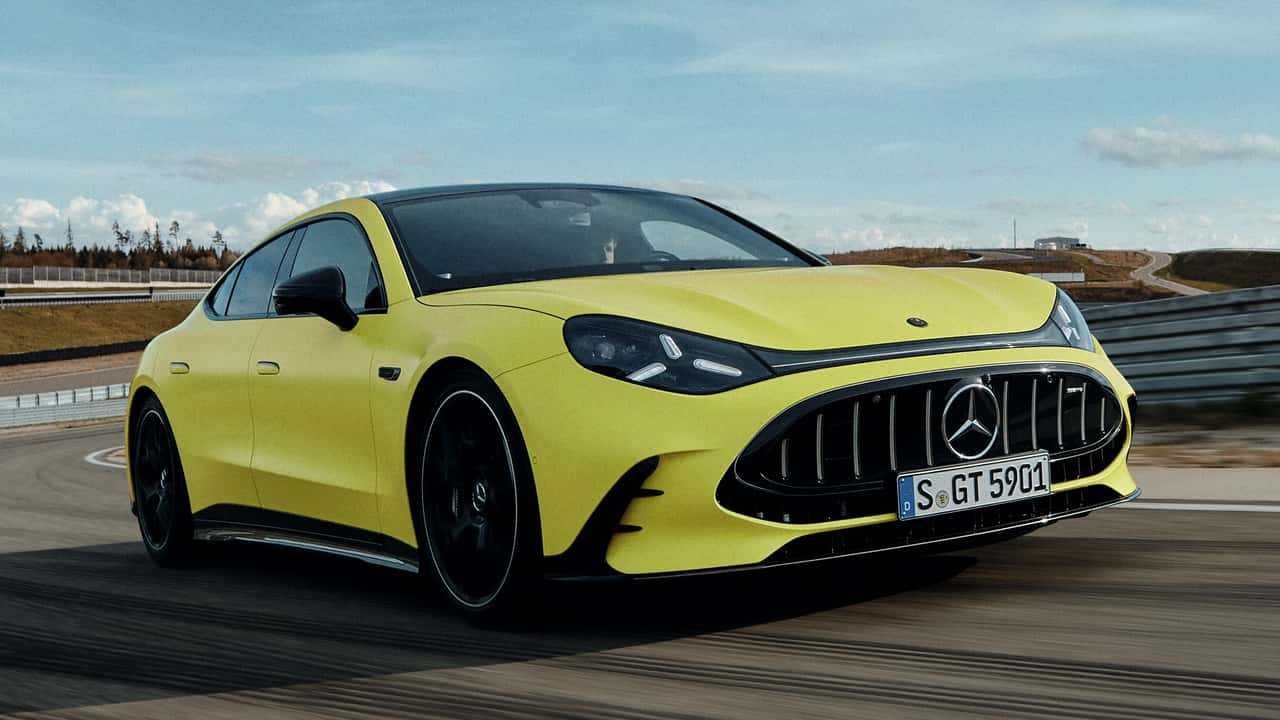


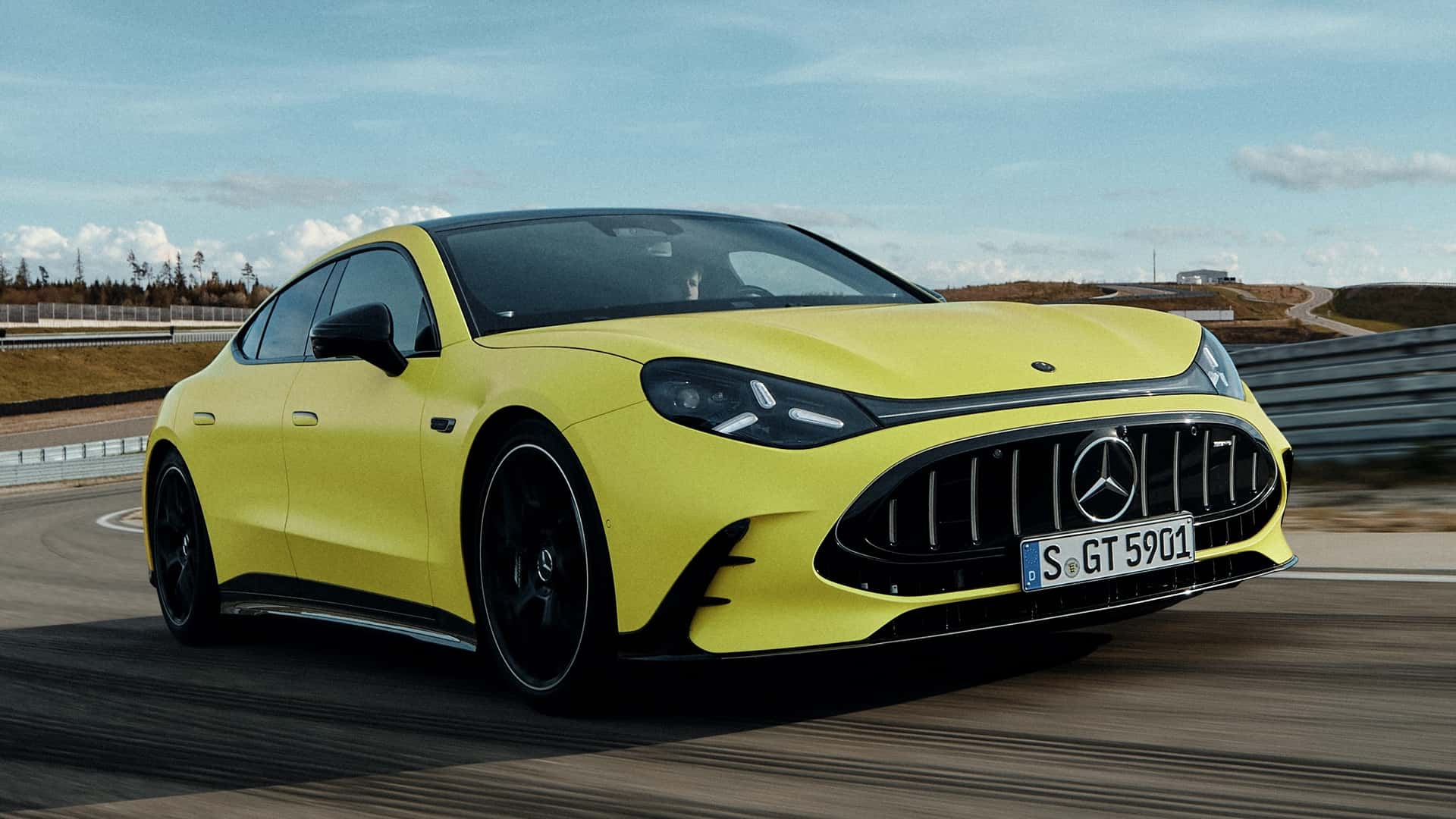
The hand-built V8 that defined Mercedes-AMG for decades is gone from the brand’s flagship sedan. The 2027 AMG GT 4-Door goes fully electric, replacing twin-turbo rumble with three axial flux motors, a 106-kilowatt-hour battery, and up to 1,153 horsepower. Mercedes just bet its performance crown on electrons.
The numbers are staggering on paper. The GT63 trim produces 1,475 pound-feet of torque and hits 60 mph in 2.0 seconds flat. The “entry” GT55 still makes 805 horsepower and 1,328 pound-feet, good for a 2.4-second sprint.
Both top out at an electronically limited 186 mph. Those are hypercar figures from a four-door sedan that Mercedes expects to price in the low six figures.
Range is quoted at 435 miles on the generous WLTP cycle, which likely translates to something north of 340 miles on the EPA test. The real headline is charging: 600-kilowatt capability that Mercedes claims can add 286 miles of range in 10 minutes. That’s the same architecture that powered the AMG GT XX concept through a 3,404-mile endurance run in 24 hours.
The design borrows heavily from that GT XX concept, with a dramatically sloped roofline and a drag coefficient of just 0.22. Active aero includes a speed-deployed rear spoiler and extending rear diffuser. It looks nothing like the outgoing car.
Whether that’s progress or regression depends on whom you ask. Early reactions online have been hostile, with commenters invoking everything from catfish to amorphous blobs.
Inside, Mercedes debuts a new infotainment layout exclusive to this model, with an angled driver display and integrated air vents. Physical controls are sparse, though rotary drive-mode dials on the center console survived the purge. A Sky Control panoramic roof embeds LEDs that project the AMG logo overhead — the kind of feature that sounds like a gimmick until you see it at night.
The rear seats exist but won’t win any legroom contests, and the fold-down center section is just a trunk pass-through with no cupholders or storage. There’s a frunk now, barely — 2.1 cubic feet, enough for a charging cable and not much else.
Mercedes couldn’t resist addressing the elephant that isn’t in the room anymore. In Sport+ mode, the car pipes a synthesized V8 soundtrack through the cabin speakers, simulating everything from idle burble to full-throttle bellow. The company calls it “surprisingly convincing.”
That’s a phrase that reveals more than it intends to. Convincing implies imitation, and imitation concedes that the original was better.
This is the tension at the heart of AMG’s pivot. The performance numbers obliterate anything the old twin-turbo 4.0-liter V8 could manage. But AMG built its identity on mechanical soul — the flat-plane crank of the SLS, the hand-assembled M177 engine with its builder’s plaque on the valve cover.
Now that plaque sits inside a frunk with a QR code linking to developer videos.
The battery cells are individually cooled and more densely packed than previous Mercedes EV architecture. Two motors drive the rear axle, one handles the front, creating a rear-biased all-wheel-drive system. AMG clearly isn’t treating this as a compliance exercise.
Deliveries are expected by late 2026. Pricing will climb over the outgoing model, which already started above $180,000 in its most potent form. Mercedes hasn’t released exact figures.
AMG is daring its most loyal customers to follow. The power is there. The speed is there. The exhaust note is a digital ghost played through premium speakers. For a brand that once let its engines do the talking, that silence says everything.


Share this Story