
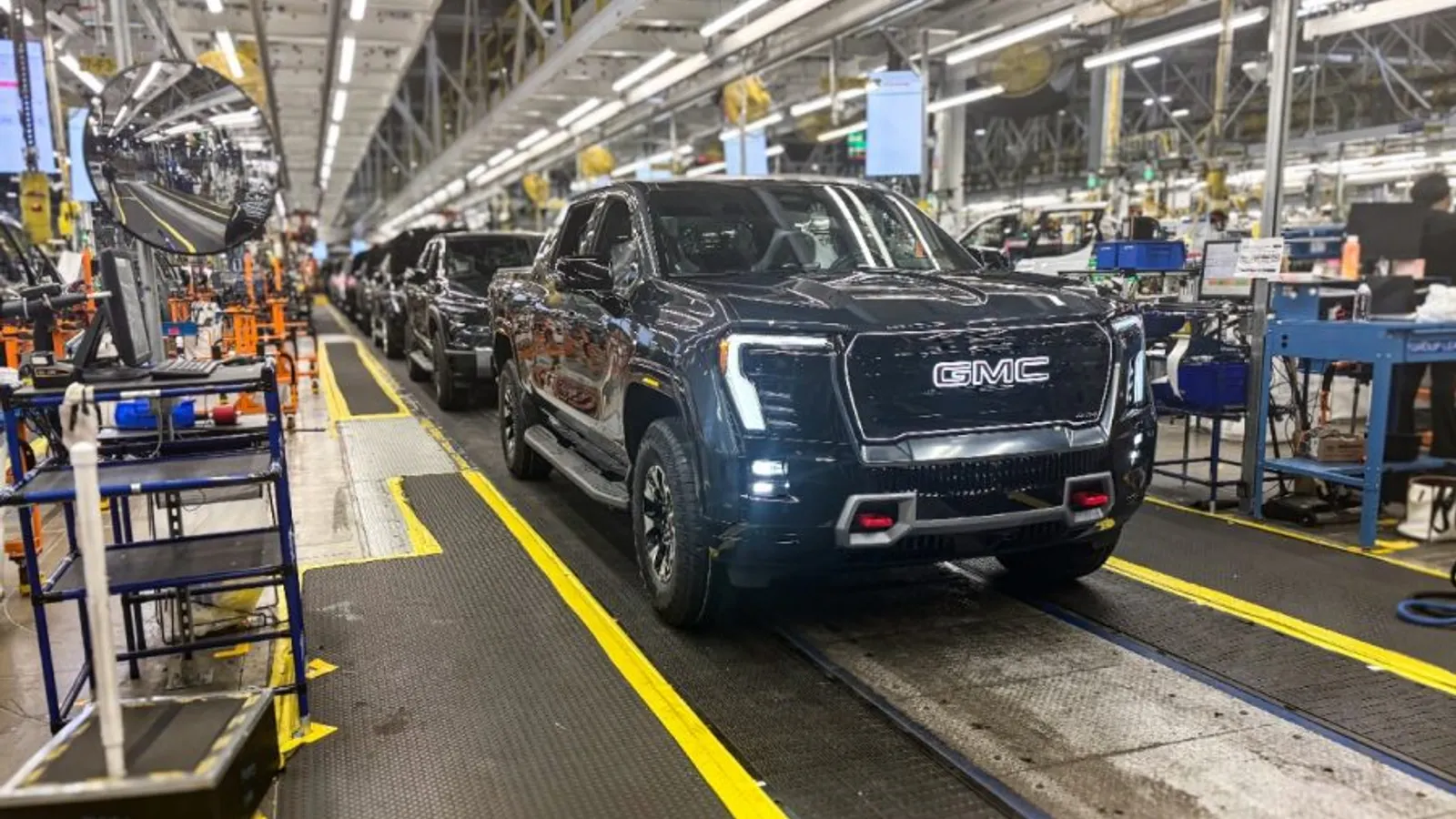


Eighty dead battery packs went into a Cirba Solutions facility in Ohio. What came out is now rolling off assembly lines inside new Cadillacs, Chevrolets and GMCs headed to paying customers.
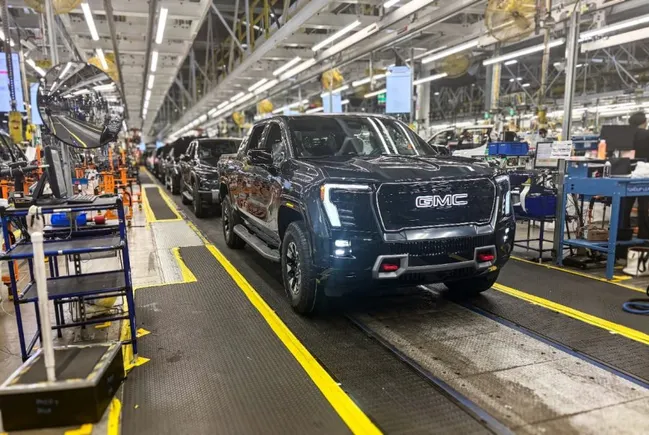
General Motors confirmed this month that a pilot program with Cirba Solutions has produced the first customer-bound EVs containing cells made with 100% recycled nickel, cobalt and manganese pulled from end-of-life GM battery packs. The vehicles were built at Factory Zero in Detroit and Spring Hill Assembly in Tennessee.
The list of models getting the recycled cells reads like GM’s premium EV roster: the Cadillac Lyriq, Vistiq and Escalade IQ, along with the Chevrolet Silverado EV Trail Boss and the GMC Sierra EV AT4.
It sounds clean and simple. It was not. GM says the project took years of engineering, testing and coordination across Cirba, Ultium Cells, LG Energy Solution and other partners just to prove the concept. The recycled material had to pass the same quality, performance and safety benchmarks as virgin cathode material, getting validated twice.
From those 80 recovered packs, Cirba extracted a “black mass” blend that yielded 12 metric tons of new cathode active material. That is a tiny volume against GM’s actual production needs. For context, the automaker signed a $19 billion long-term supply deal with LG Chem in 2024 to source cathode material for up to 5 million EVs. Twelve metric tons is a rounding error on that ledger.
But the point was never scale. Not yet. The point was proving the closed loop actually closes.
GM claims its manufacturing and refurbishment programs already reuse more than 70% of pack components. Current recovery technology can pull back about 95% of nickel, cobalt and manganese and up to 80% of lithium, depending on chemistry and conditions. Those numbers matter because they suggest the economics could eventually work, though GM conspicuously declined to say how much money a scaled-up version might save.
It also said nothing about the energy required to recover these materials, which is the quiet asterisk on every battery recycling announcement in the industry. Processing black mass is energy-intensive. Whether the carbon math pencils out depends entirely on how that energy is sourced, and GM left that question untouched.
This is not GM’s first move in the space. In 2024, Redwood Materials and GM struck a deal to recycle cathode material and production scrap from Ultium Cells plants. GM is also deploying roughly 10,000 batteries into what it calls the largest second-life battery microgrid in North America, a separate Redwood partnership that keeps cells working in stationary storage before they ever hit the shredder.
Melissa Flaherty, GM’s Director of Sustainable EV Battery Ecosystem, called the pilot a demonstration of “a pathway for using recovered battery materials in new cells.” The careful phrasing is worth absorbing. A pathway, not a pipeline. A pilot, not a production standard.
The hard question is how quickly GM can move from 12 metric tons to thousands. Mining companies are still building out lithium and nickel capacity on multiple continents. Tariff pressures and supply chain politics keep shifting the cost calculus for raw materials.
If recycled cathode material can eventually undercut mined material on price while meeting the same specs, the business case writes itself. That day is not today.
GM has proven the chemistry works. Now it has to prove the spreadsheet does too.

Share this Story