
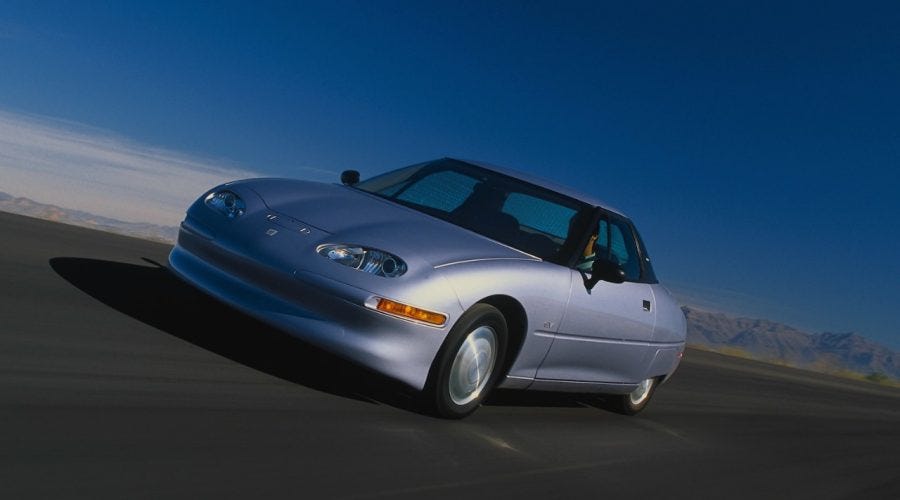


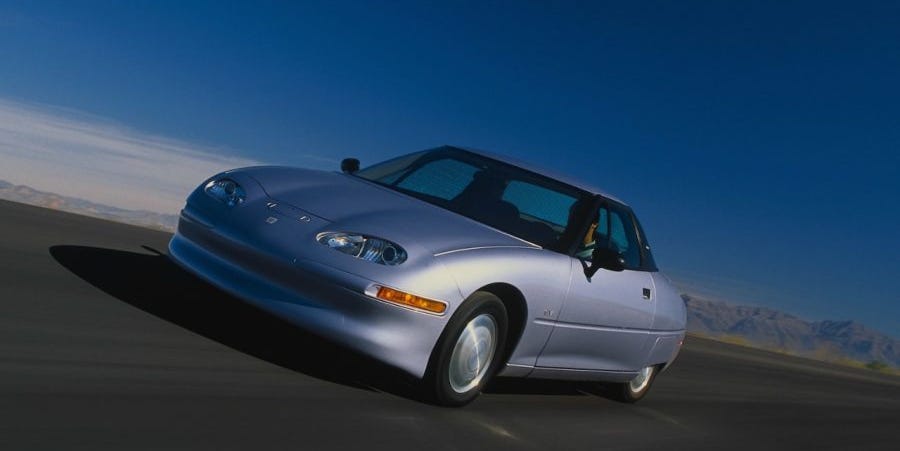
General Motors spent the early 2000s systematically crushing nearly every EV1 it ever built. Now the company is digging through its own archives and shipping parts to help bring one back from the dead.
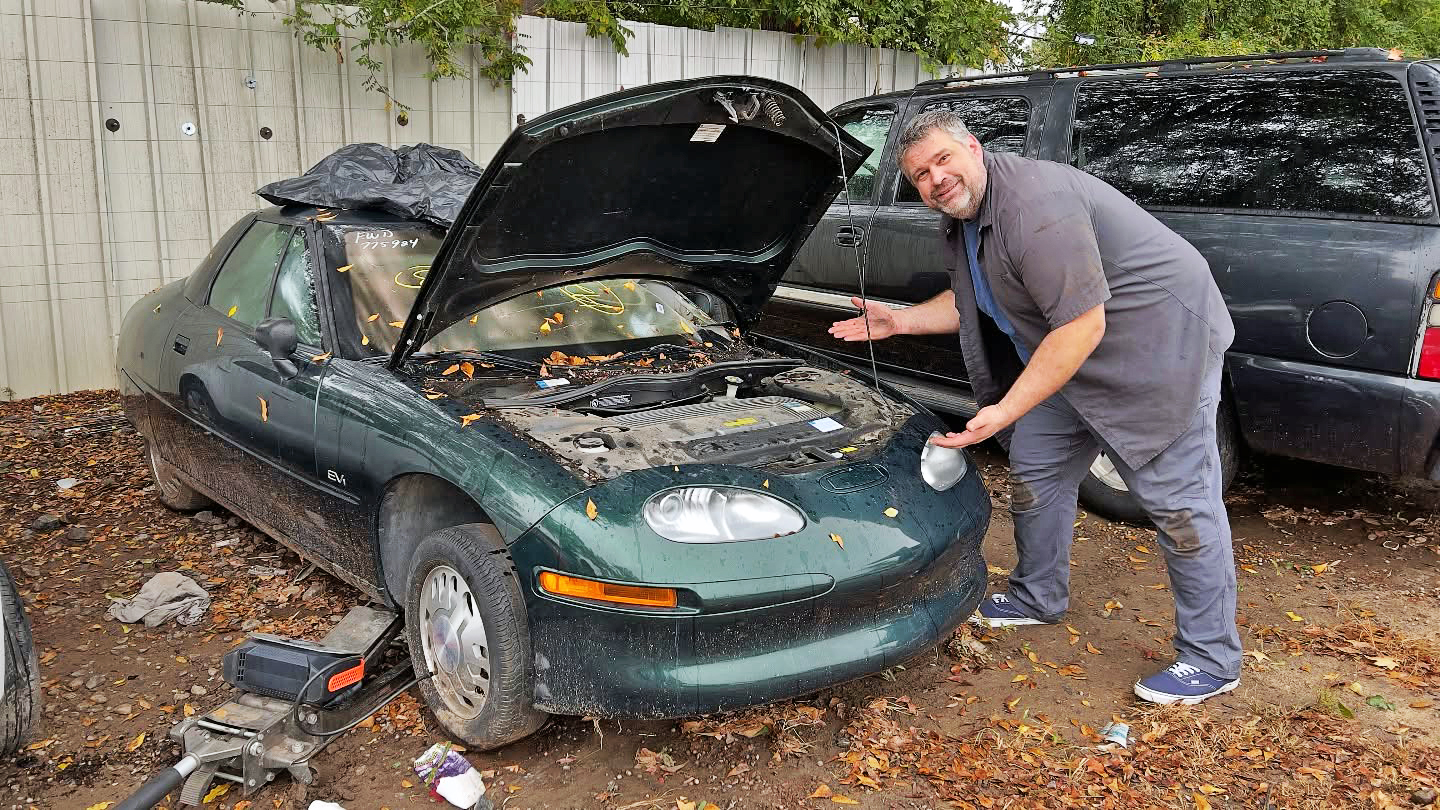
The car is chassis No. 212, a green 1997 EV1 that surfaced in a California tow yard last year with a brick through its windshield and years of neglect baked into every panel. It had sat unclaimed long enough to qualify as an abandoned vehicle under state law, which meant it could be legally titled — something GM never allowed during the EV1’s original lease-only existence. At auction, it fetched $104,000.
That price buys a non-running relic with water damage and a shattered windshield. It also buys the only privately titled EV1 known to exist on the planet.
The buyer was Billy Caruso, an Apple engineer and MIT grad who has quietly assembled a collection of roughly a dozen 1990s-era electric vehicles from his base in California. His stable includes a US Electricar Geo Prizm, multiple Solectria Forces, a Chevrolet S10 Electric, and a Toyota RAV4 EV. He daily drives a Chevy Bolt. The EV1 was always the white whale.
Caruso partnered with Jared Pink, a former Toyota Master Diagnostic Technician who runs the YouTube channel Questionable Garage. Pink had actually tried to buy the car himself at auction but got outbid. The two already knew each other from a previous electric S10 project, and they quickly agreed to collaborate on the restoration, documenting every step on camera.
Then GM called.
The automaker didn’t just express polite interest. It hosted Caruso and Pink at its Technical Center in Detroit and opened its engineering archives. GM President Mark Reuss took a personal interest, sitting for an on-camera interview in which he praised the EV1’s powertrain, aerodynamics, and driving dynamics as foundational to GM’s modern electric lineup. The company shipped a crate of unobtainium parts, including an original replacement windshield sourced from an EV1 parts car still sitting in GM’s historical vehicle inventory.
There is a rich irony here that GM surely recognizes. The company cancelled the EV1 program in 2003 and recalled leased vehicles, sending most to the crusher despite vocal protests from lessees who begged to buy their cars. The episode became the subject of the 2006 documentary “Who Killed the Electric Car?” and stained GM’s reputation for a generation.
The company spent two decades trying to live it down, first with the Volt, then the Bolt, and now with its Ultium-based lineup. Helping restore No. 212 costs GM almost nothing in material terms and buys an enormous amount of goodwill. A windshield and some old schematics are a small price for a redemption arc playing out on YouTube.
Caruso told Hagerty the GM partnership made him “double down on the importance of this project,” adding that he now feels he is “part of the story.” His long-term plan is to drive the restored EV1 on California’s Skyline Boulevard, show it nationally, and eventually house it in the California Electric Vehicle Museum. That’s a venture he’s building to preserve the history of early battery-powered cars.
The restoration is far from complete. Water intrusion, missing components, and the sheer obscurity of a car built in tiny numbers nearly three decades ago make this a painstaking job. But with GM’s engineering support and a parts pipeline that didn’t exist six months ago, the hardest obstacles have shrunk considerably.
A company that once crushed these cars in secret is now helping rebuild one in public. The EV1 was always a story about what might have been. Chassis No. 212 is slowly becoming a story about what still can be.


Share this Story