
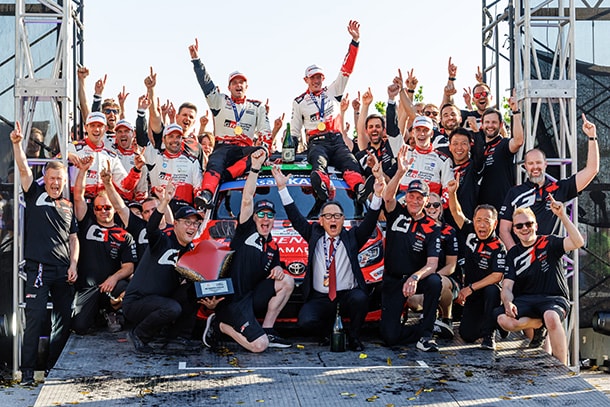


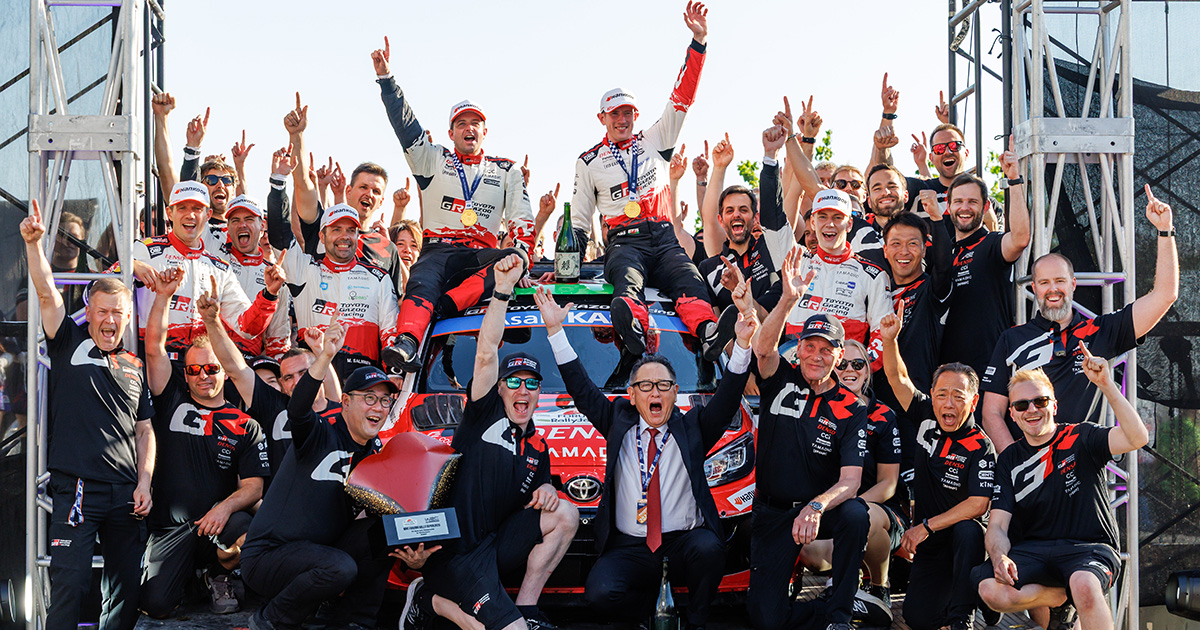
Elfyn Evans now owns Rally Japan the way some drivers own a particular corner — completely and without apology. His third victory in four editions of the event, completed Sunday in Toyota City, capped a 1-2-3-4 sweep for Toyota Gazoo Racing that left every rival manufacturer staring at taillights.
The margin was 12.8 seconds over Sébastien Ogier, with Sami Pajari third at 51.4 seconds and hometown favorite Takamoto Katsuta fourth at 1 minute 3.5 seconds. The first non-Toyota finisher, Hyundai’s Adrien Fourmaux, crossed the line two and a half minutes adrift. That gap tells you everything about the weekend.
Evans built his advantage early, exploiting his road-sweeping position on Friday’s Isegami’s Tunnel stage — the kind of narrow, technical tarmac that rewards precision over bravado. From there, he and co-driver Scott Martin simply controlled the tempo while their teammates scrapped behind them.
This was the GR Yaris Rally1’s last dance on Japanese asphalt before new regulations arrive in 2027. It went out the way it came in: dominant. The car has now strung together 50 consecutive stage wins on tarmac across its last three asphalt rallies. That is the kind of number that makes engineers at rival teams lose sleep.
The weekend wasn’t without drama inside the Toyota camp. Oliver Solberg, on his first Rally Japan in Rally1 machinery, was genuinely fighting for victory before sliding wide on a muddy corner Saturday afternoon and destroying his rear suspension. He restarted Sunday and won three of six stages plus the Power Stage, collecting maximum Sunday points. The speed is clearly there; the consistency is the project.
Ogier, who won this event in 2025, was characteristically blunt about second place. “I came here like always with the aim to win, so I can’t be fully satisfied,” the eight-time champion said. At 40-something, he still treats runner-up finishes like personal affronts.
Pajari’s third place extends a remarkable run for the young Finn — five podiums in his last six rallies. Six months ago he scored his first WRC podium at this same event. The trajectory is steep and unmistakable.
Katsuta’s weekend started poorly with tire damage Friday morning but ended with a stage win on Sunday and loud appreciation from the Japanese fans who packed the stages. He entered the rally having already taken his first WRC victories in Kenya and Croatia this season. Fourth at home stung, but the bigger picture for the 32-year-old has never looked brighter.
The manufacturers’ championship now borders on farce. Toyota leads Hyundai by 127 points at the halfway mark of the season, 370 to 243. M-Sport Ford sits at a distant 85.
The drivers’ title is tighter but still tilted heavily blue: Evans holds 151 points to Katsuta’s 131, with Solberg third on 102 despite his Japan retirement.
The calendar shift from November to late May brought 30-degree heat and green forests instead of autumn colors, a completely different character for the event. Evans handled it the same way he handled the cold — with ruthless efficiency.
Down in WRC2, Toyota development driver Yuki Yamamoto delivered his maiden category podium on home soil, finishing third behind Lancia’s Nikolay Gryazin. Team chairman Akio Toyoda, ever the enthusiast, personally celebrated the result.
Toyoda’s post-rally message carried a clear warning beneath the congratulations: “We still have a long and challenging gravel road ahead.” The Acropolis Rally in Greece awaits in late June, and tarmac dominance means nothing on the rocky mountain stages where cars get beaten to pieces.
Evans leads the championship by 20 points at the season’s midpoint. He’s won on asphalt and he’s won the political battle of road position. Now comes the gravel grind that will define whether 2026 belongs to him or whether Toyota’s perfect Japanese weekend was the high-water mark.

Share this Story