
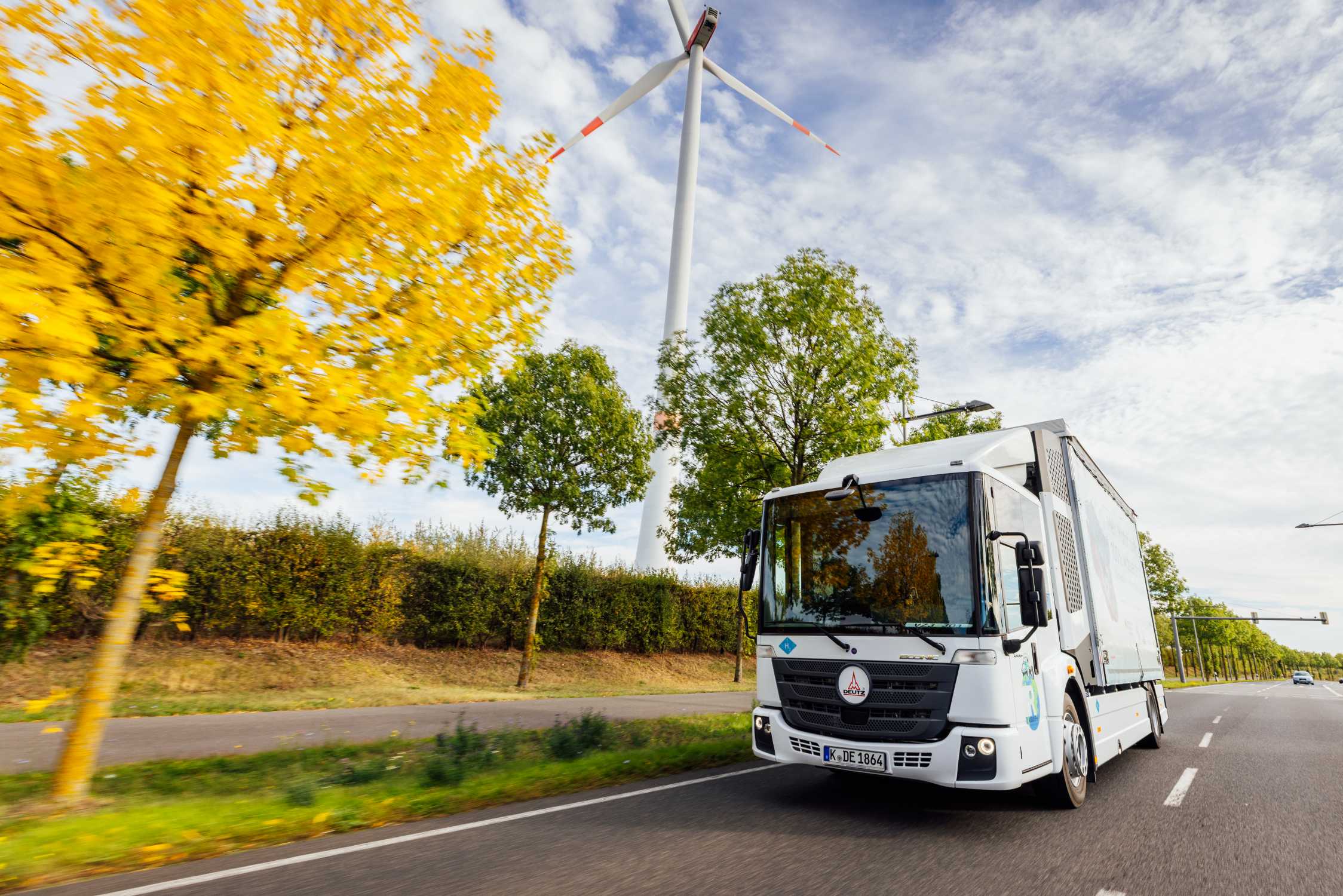


An 18-tonne truck running on hydrogen combustion, not fuel cells, is now hauling bumper and spoiler parts at BMW’s Leipzig plant. It is the first time a German automaker has put a hydrogen internal combustion engine truck into regular logistics duty.
The distinction matters. This is not the fuel-cell approach Toyota and Hyundai have been pushing for years in passenger cars. BMW’s project uses a modified piston engine, derived from conventional diesel architecture, that burns hydrogen directly and produces water vapor instead of CO2. The engine was developed by DEUTZ, a company that has been building industrial powerplants since 1864.
BMW calls it a complement to battery-electric trucks, not a replacement. The logic is straightforward: some logistics routes chew through batteries too fast, some facilities lack high-capacity charging, and some trucks run three shifts a day with no time to plug in. A hydrogen fill takes minutes. A DC fast charge on an 18-tonner takes considerably longer and demands grid capacity that many industrial sites simply do not have.
The project, called HyCET, is funded by the German Federal Ministry of Transport. BMW leads the consortium, Rudolph Logistics Group operates the truck, and TEAL MOBILITY built the hydrogen fueling station at the plant. Phase one supplies raw materials to the plastics division. Phase two will feed finished exterior parts to the assembly line on a just-in-time basis, the kind of tightly choreographed delivery schedule where downtime kills.
Dirk Wiedmann, who runs BMW’s production network and logistics, framed the effort as “technology-open” and “data-based.” That language is deliberate. It signals BMW is not betting everything on batteries for heavy transport, even as it electrifies its passenger car lineup. The company wants real numbers on reliability, operating cost, CO2 reduction, and uptime before it scales anything.
One quiet advantage of the hydrogen combustion engine over fuel cells: it tolerates dirty hydrogen. Fuel cells demand extremely pure H2, and impurities degrade the membrane and shorten stack life. A piston engine, built to the tolerances of diesel, does not care nearly as much. That resilience could matter as hydrogen supply chains scale up and purity standards remain inconsistent across regions.
The truck is running on longer transport routes and in three-shift operations near the plant. BMW wants to know if this powertrain holds up under the kind of relentless, high-load cycling that logistics demands. A test loop around Leipzig is a far cry from transcontinental freight, but it is a controlled environment where engineers can instrument everything and measure what breaks first.
The elephant in the room is hydrogen infrastructure. BMW acknowledges that “an appropriate and reliable hydrogen filling infrastructure is still required.” One fueling station at one plant is a proof of concept, not a network. Scaling this technology depends on hydrogen becoming cheap and available far beyond the factory fence.
The choice of a combustion architecture over fuel cells is telling. Combustion engines slot into existing maintenance workflows. Mechanics know pistons and injectors, not membrane electrode assemblies. If hydrogen trucking is going to scale in the next decade, the path of least resistance runs through workshops that already exist.
BMW is collecting data now. The question is whether anyone is building the fueling stations that would make the data useful beyond Leipzig.
Share this Story