
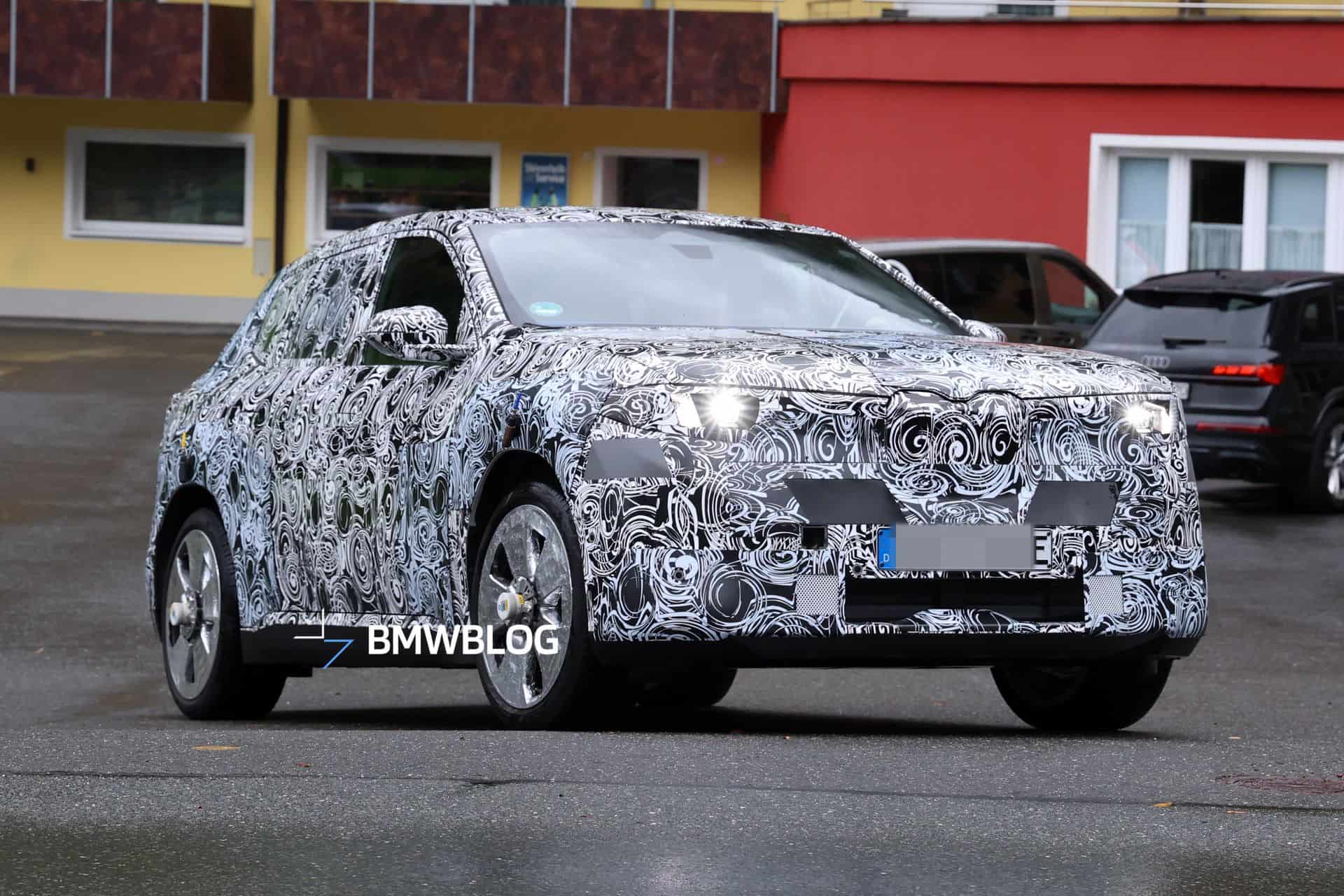


BMW’s smallest electric crossover just showed up in spy footage wearing heavy camouflage, and it’s not the mid-cycle refresh anyone expected. The next iX1, codenamed NB5, is a ground-up next-generation model that shares almost nothing with the current car.
The prototype spotted testing makes that unmistakable. A vertical kidney grille, inherited directly from the larger iX3 and iX5, protrudes from the front end in a way no amount of swirly wrap can disguise. BMW has already committed to this layout for its SUV lineup, reserving horizontal grilles for sedans. The iX1 is falling in line.
This isn’t just a skin-deep makeover. The door handles are now electrically operated, mirroring the iX3’s setup and visible even through the camo because they’re caught sticking out from the body. At the rear, the license plate has migrated lower on the tailgate, and a horizontal bulge suggests near-full-width taillights split by the BMW roundel. The family resemblance to the iX3 and iX5 is deliberate and obvious.
Inside, the overhaul continues. BMW’s new iDrive X system will bring a pillar-to-pillar windshield projection display and strip out even more physical controls. Whether the 17.9-inch touchscreen from larger models makes the cut is unclear, but the iX5’s passenger-side screen almost certainly won’t. Dashboard real estate in a compact crossover simply doesn’t allow it.
The mechanical changes run deeper still. BMW is moving the iX1 from a front-wheel-drive architecture to a rear-wheel-drive platform, a fundamental shift for the entry-level electric SUV. That switch brings sixth-generation battery technology with cylindrical cells promising 20 percent greater energy density than the current chemistry. Faster DC charging should follow, improving on the existing 130-kW ceiling.
Here’s where BMW’s strategy gets genuinely unusual. The combustion-powered X1 — gas, diesel, and plug-in hybrid variants — will get a conventional LCI facelift and stay on its front-wheel-drive platform. It picks up Neue Klasse styling cues and interior tech, but the bones remain the same. The electric iX1 gets an entirely new skeleton.
Two vehicles sharing a nameplate, diverging in architecture. BMW is running parallel development tracks for the same market segment.
Both models are expected to land in 2027. The combustion X1 facelift should arrive first, with the all-new electric iX1 following toward the end of the year. That compressed timeline explains why prototypes are already circulating despite heavy disguise.
BMW skipping the facelift cycle isn’t unprecedented. The 1 Series F40 and 2 Series Gran Coupe F44 both jumped straight to next-generation replacements. But those were conventional cars on conventional timelines.
The iX1’s leap is driven by something different: the Neue Klasse architecture is too significant a shift to retrofit onto the existing platform. Bolting new headlights onto the current car would have been a waste of engineering resources when the entire foundation is changing.
The competitive pressure is real. Compact electric crossovers from Volvo, smart, and a wave of Chinese brands are crowding a segment BMW entered relatively early. Staying on an aging front-drive platform with pouch-cell batteries while rivals push efficiency and range would have been a losing position by 2028.
So BMW is doing what BMW rarely does at this end of the lineup: spending big on its smallest electric vehicle. The NB5 gets the full Neue Klasse treatment — architecture, battery tech, design language, and cabin — rather than a warmed-over version of what already exists. Testing has a long way to go, but the direction is locked in. The next iX1 isn’t an evolution. It’s a replacement.
Share this Story