
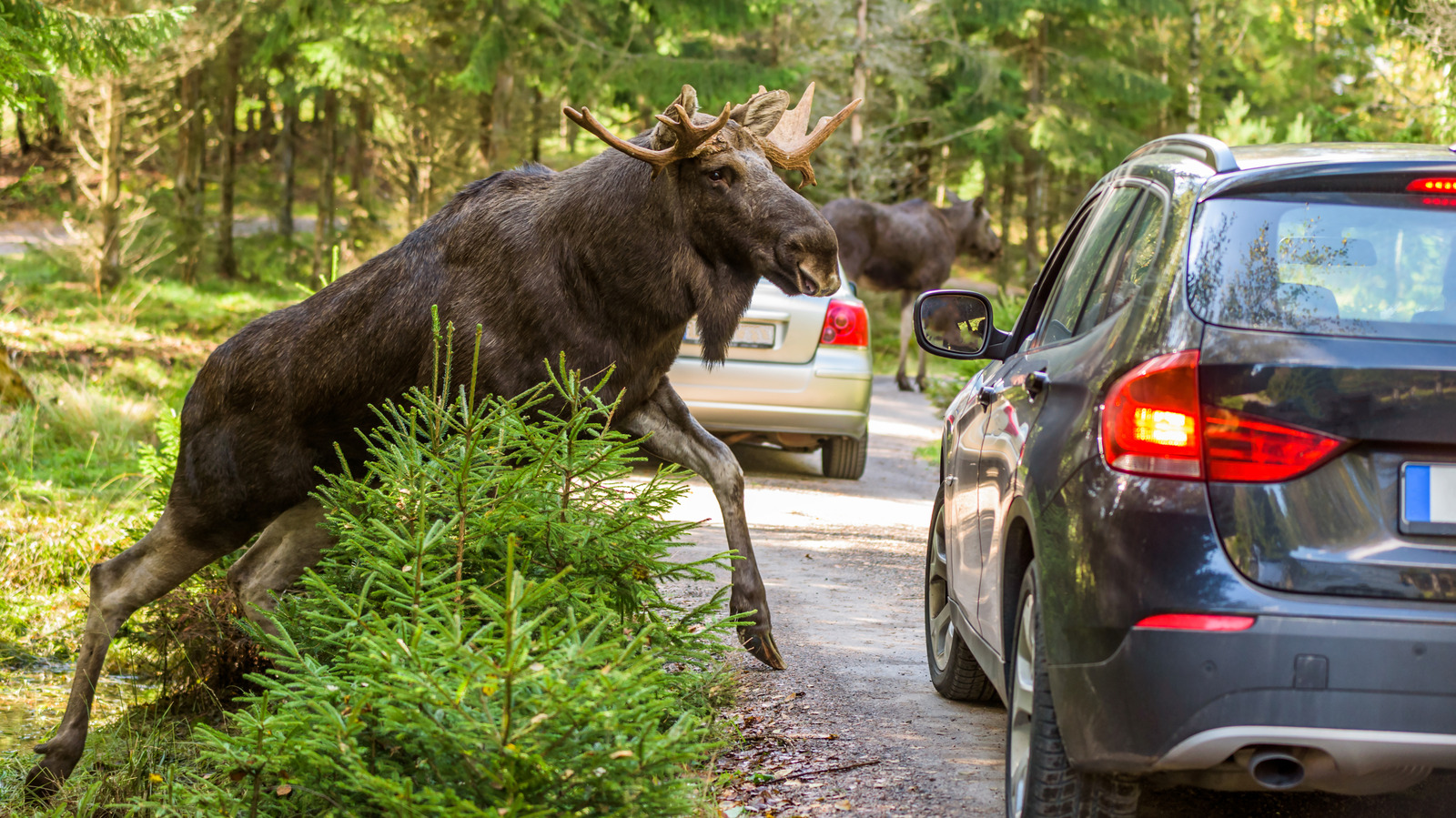


Tim Wyland was driving to work in the early morning hours when he spotted three moose standing in the road. He swerved. A fourth moose, the one he never saw, smashed into the front and driver’s side of his VW Passat, killing the animal instantly and totaling the car.
Wyland crawled out through the shattered driver’s window because the door was jammed shut. He walked away with cuts from the broken glass, remarkably lucky given that hitting a moose is 13 times deadlier than hitting a deer, according to the American Council on Science and Health.
An adult moose can weigh well over 1,000 pounds and stands tall enough that a car typically strikes its legs, sending the full mass of the animal crashing down onto the windshield or roof. Wyland’s yearling moose was smaller, which probably saved his life.
A game warden arrived at the scene in Wyoming and identified the carcass. He told Wyland he could fill out a form and legally claim the meat. Wyland did exactly that, then caught a ride home to get another vehicle.
When he came back just a few hours later, the moose was gone.
Somebody had dragged the carcass down a U.S. Forest Service road and butchered it for themselves, according to Cowboy State Daily. The dragging across gravel and over a cattle guard had ruined most of the usable meat anyway. So Wyland was left with no car, no moose, and a story that sounds like it belongs in a country song nobody would believe.
Wyoming is one of many states that legally allows drivers to keep an animal carcass after a collision. The rules vary. Some states have formal permit processes, others require law enforcement to authorize the claim on scene, and a handful prohibit harvesting roadkill entirely. The system generally works on a simple principle: you wrecked your car, you earned the meat.
That social contract apparently means nothing to whoever backed a truck down that forest road with a set of chains or a rope.
Moose meat is lean, rich, and genuinely prized in states where hunting tags are hard to come by. A yearling, properly dressed, could yield well over a hundred pounds of usable protein. That’s real value to someone in rural Wyoming, which makes the theft both understandable in motive and infuriating in practice.
There’s a practical lesson buried in here for anyone who drives through moose country. If you hit one and survive, don’t leave the carcass unattended. Get your paperwork signed, call someone with a truck and a winch, and get that animal loaded before opportunists beat you to it.
Wyoming law was on Wyland’s side. Gravity and timing were not.
The Passat, for its part, did what a modern sedan is supposed to do in an impact with a thousand-pound obstacle. It absorbed the energy, crumpled in the right places, and kept its occupant alive. Volkswagen doesn’t crash-test for moose, but the structure held where it counted. The car is scrap. Wyland is not.
As for the thief, game wardens are reportedly investigating. Possessing a road-killed animal without the proper salvage authorization is illegal in Wyoming. Stealing one that’s already been claimed by someone else adds another layer entirely.
Wyland told reporters he’s frustrated but moving on. He needs a new car. He could have used a freezer full of moose meat to offset the cost.
Instead, he got a wrecked Passat, a handful of stitches, and a hard reminder that in the modern West, the most dangerous predator on the road isn’t always the one with antlers.

Share this Story