
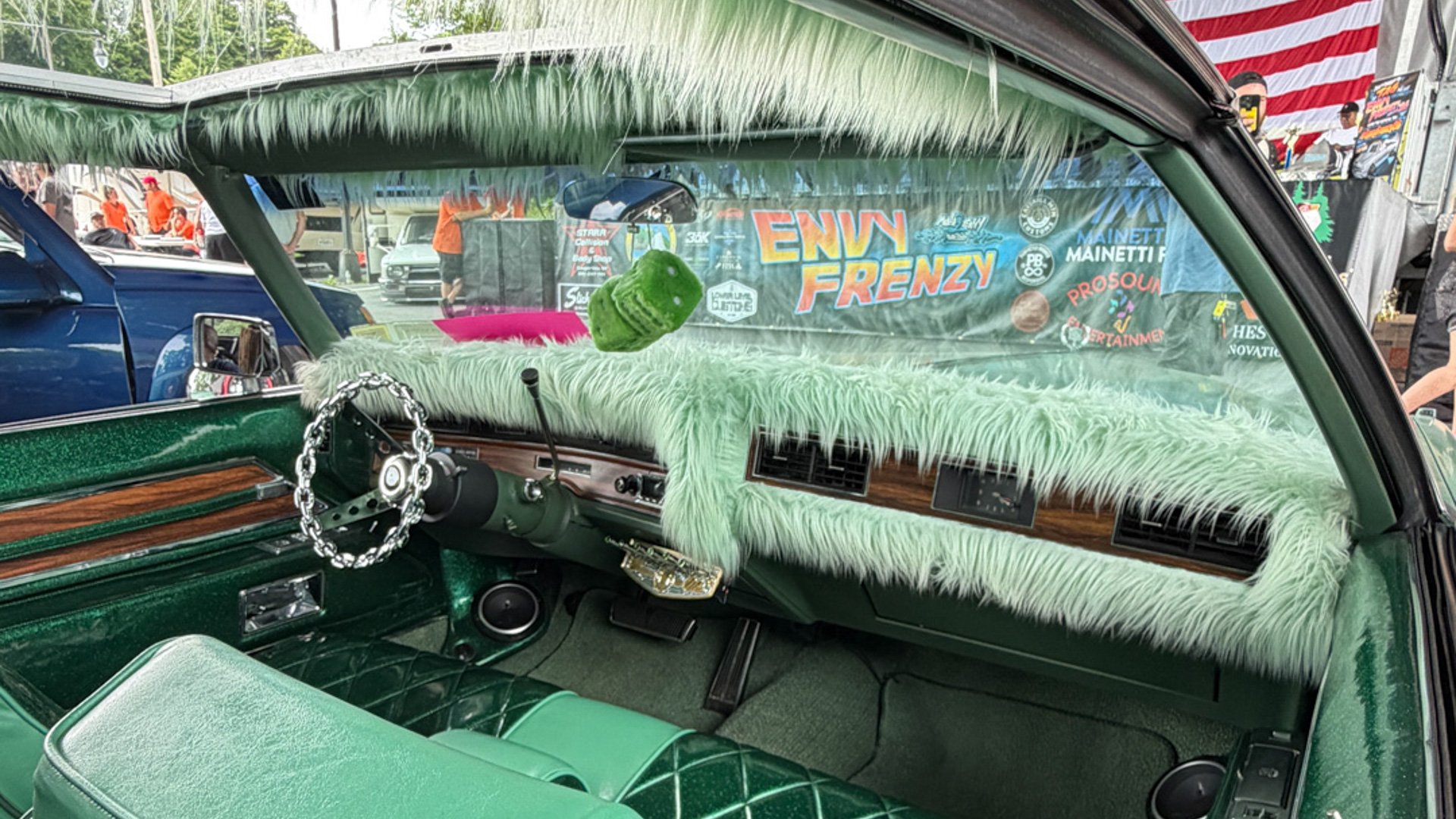


A lowrider show in Kingston, New York, last weekend did something that clean Porsches at Sunday morning coffee meetups stopped doing years ago. It surprised someone.
Andrew P. Collins, executive editor at The Drive, drove up to the Envy Frenzy show hosted by the Made 2 Envy Auto Club and came back with 48 photos and a simple thesis: car enthusiasts have gotten comfortable, and comfortable is boring.
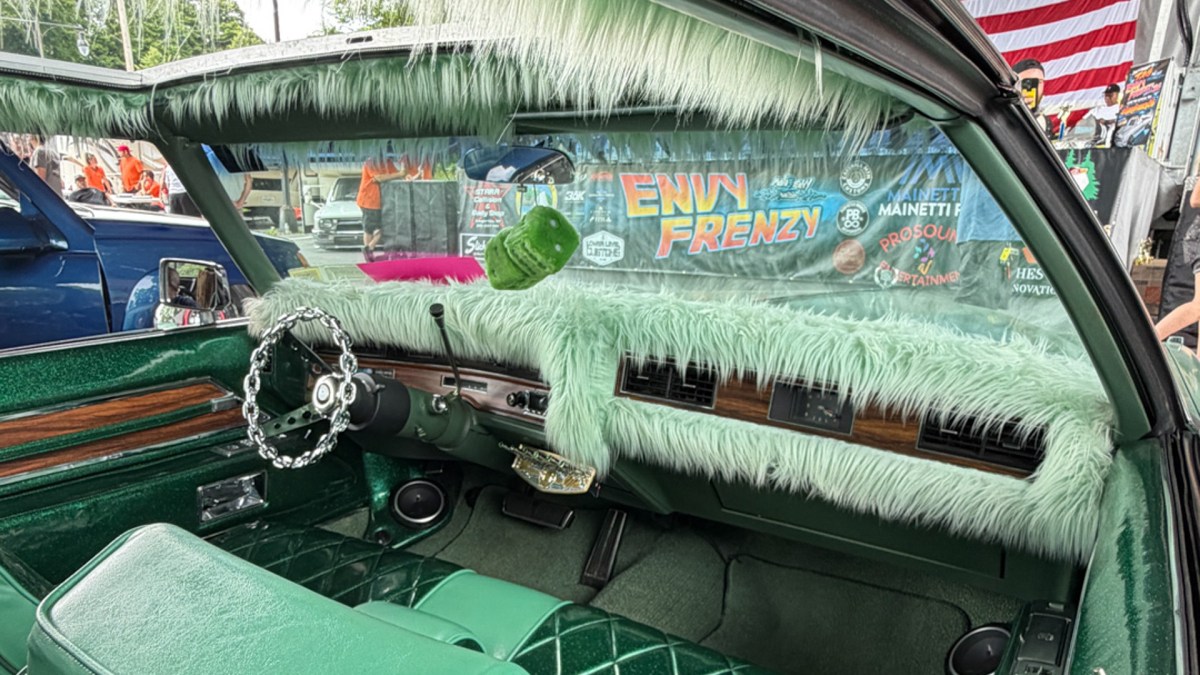
The show itself has history. Envy Frenzy ran its last event in 2012, then went dark for over a decade. Its return drew the kind of builds you almost never see in Ulster County.
Truck beds hacked apart to fit differentials. Incompatible body panels welded together like Frankenstein’s hot rod. Homemade control arms. Someone fabricated a decorative spiderweb out of rebar and used it as a wheel well liner. Chrome on every surface that could hold it, and a few that probably shouldn’t.
Collins freely admits these aren’t his kind of cars. He’s evolved into the “nice tires and regular oil changes” phase of enthusiasm, a trajectory most long-term car people will recognize in themselves. But that was the point.
He went specifically because the builds were outside his lane, and what he found was a level of raw creative energy that polished concours culture and curated Instagram feeds have largely sanded away.
The lowrider scene has always operated on its own terms. It doesn’t chase the same validation loops as the Euro-car or JDM communities. The chrome isn’t functional.
The air-suspension plumbing is decorated like jewelry. Engine bays are styled with the same obsessive detail as the exterior paint. None of it makes sense for a street car, and that’s the entire ethos. These are rolling sculptures built by people who treat a 1970s Impala the way a gallery artist treats a blank canvas.
What stood out in Collins’ account wasn’t the cars themselves, though. It was the contrast. He’d last seen lowriders up close at the Petersen Automotive Museum in Los Angeles, where the best examples sit behind ropes under gallery lighting.
The Kingston show was the opposite end of that spectrum. Limited budgets, limited time, maximum ambition. Garage-built, not sponsor-funded.
That gap between museum-quality and backyard-quality is where car culture actually lives and breathes. The Petersen builds are flawless, but they’re also finished. They exist behind glass.
The Kingston cars are still in motion, still being cut apart and rewelded by their owners, still accumulating new layers of chrome and airbrushing. A couple of Y2K-era tuner cars showed up too, done in the Hot Import Nights style that peaked around 2003 and never fully went away.
The enthusiast world has consolidated around a narrow band of acceptable taste in recent years. Bring a Trailer aesthetics. OEM-plus builds. Tasteful modifications. It all looks great on a phone screen and generates zero pulse increase in person.
Collins’ prescription is simple. Go see something you wouldn’t normally seek out. Find a lowrider meet, a mini-truck show, a donk gathering, a VW air-cooled swap meet. The communities that build cars the mainstream scene ignores are the ones still taking genuine creative risks.
The Made 2 Envy Auto Club waited 14 years to come back. Whether they’ll wait another 14 is an open question, and that alone should be reason enough to show up next time.
Share this Story