
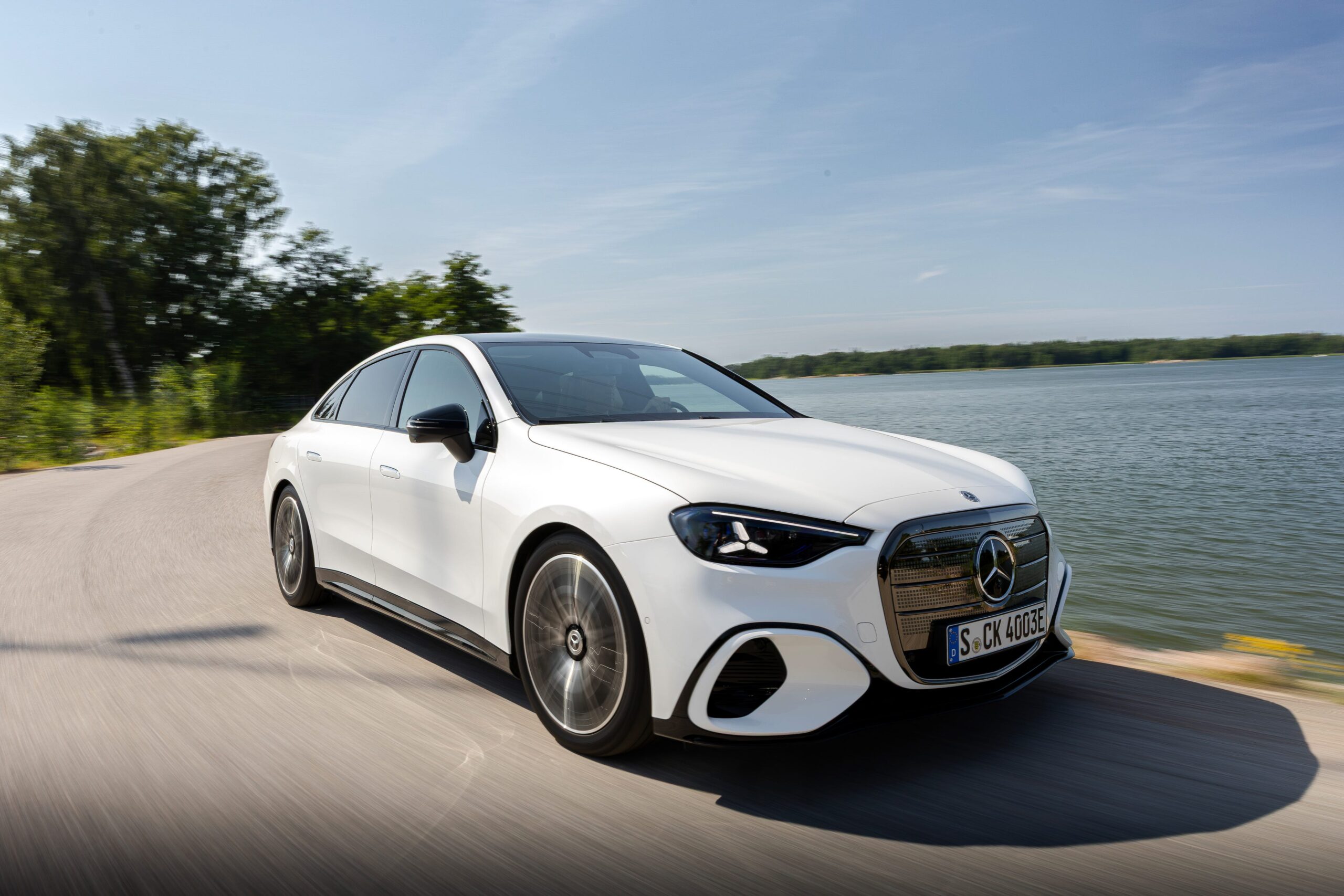


The 2027 Mercedes-Benz C400 EV makes 483 horsepower, claims a 3.9-second sprint to 60 mph, and targets roughly 400 miles of EPA range. Those numbers alone represent a full repudiation of everything the EQE sedan stood for.
Remember the EQE? The dual-motor EQE350 4Matic managed just 315 horsepower and crawled to 60 in 5.3 seconds. Mercedes built it on a dedicated EV platform, wrapped it in a jellybean body, gave it mushy brakes, and asked luxury buyers to accept less performance in exchange for, well, nobody was ever quite sure what. The C-Class EV rides on a different dedicated platform, one shared with the new GLC EV, and it feels like it was engineered by people who actually learned something.
The wheelbase stretches to 116.6 inches, roughly four inches longer than the gas-powered C-Class, giving battery packaging room without the bloated proportions of its EQ predecessors. The body is 192.2 inches long, and while the rear haunches carry faint echoes of that old EQ styling language, the front end is conventional, with a proper grille and a relatively long hood. It reads as a Mercedes sedan, not a science project.
Underneath sits a 94-kWh battery feeding an 800-volt architecture capable of charging at up to 330 kW. The front axle disconnects when not needed, and a two-speed rear gearbox handles both efficiency and hard launches. Mercedes estimates around 400 miles of EPA range, which would comfortably clear the Tesla Model 3’s all-wheel-drive variants at 309 to 346 miles. The BMW i3, with its larger 112-kWh pack, may push toward 440 miles by unofficial estimates, so this fight is far from settled.
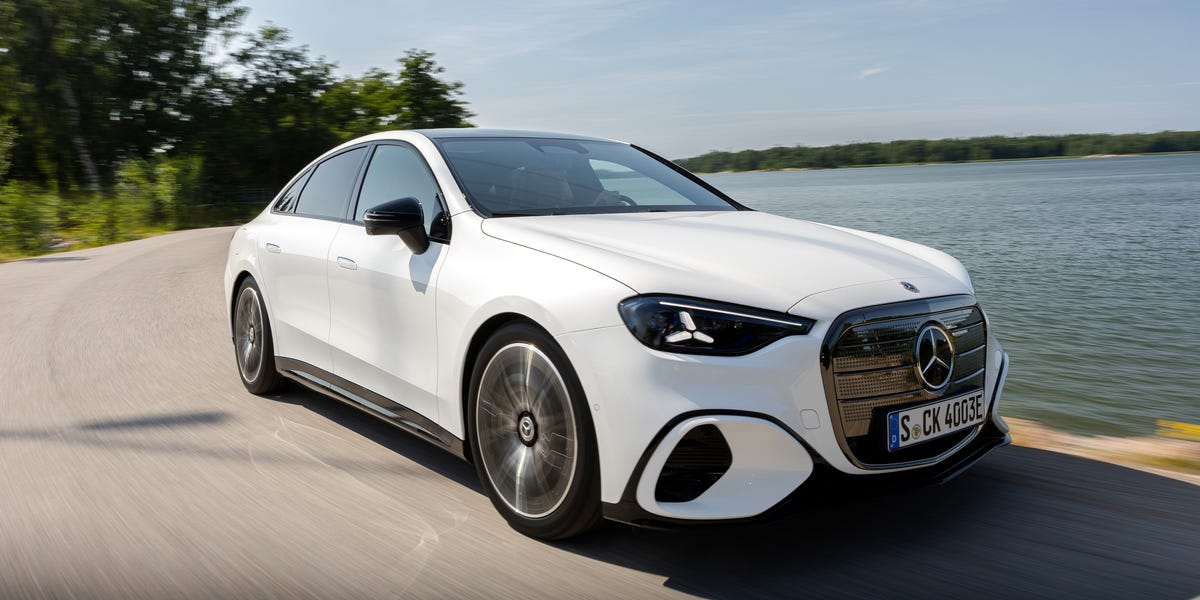
On a test route outside Helsinki, Finland, the C400 felt genuinely quick, the kind of instant torque delivery that makes passing maneuvers almost absurdly brief. Finnish speed cameras cut the fun short. The brake pedal, a sore point on earlier EQ models, now behaves normally, with slightly springy action but no bizarre modulation surprises.
Regenerative braking offers four levels via the steering-wheel paddles, including an “intelligent” mode that adjusts based on navigation and traffic data. That mode’s unpredictability made it the least appealing option during the drive.
The interior is where Mercedes draws the sharpest line against Tesla and its imitators. Brushed metal, matte wood, contrast stitching, and wide, concave seats give the cabin the kind of material richness that justifies a luxury badge. The dashboard is screen-heavy, running from vent to vent with a digital gauge cluster and central touchscreen, plus optional Superscreen and Hyperscreen configurations.
The climate controls are tucked into a narrow band at the base of the center display, and the touch targets are small enough to annoy. A fully vegan interior is available for those who want it.
Test cars featured the optional Agility and Comfort package with air springs, adaptive dampers, and rear-axle steering. Mercedes engineers claim 20 percent better damping of body motions and 11 percent less body roll compared to the GLC EV. A few laps on a short course in Finland supported the agility claims, though Finnish roads are far too polished to judge ride quality for American conditions.
Pricing is the open question. Mercedes has not disclosed a number, and Car and Driver estimates a base around $55,000. The car does not arrive in U.S. showrooms until the first half of 2027, which means it enters a market that could look very different by then. Tariffs, incentives, and consumer sentiment are all moving targets.
The single-motor C300 variant is coming later, presumably at a lower price point. For now, the C400 4Matic is the only hand Mercedes is showing, and it is a far stronger one than anything the EQ lineup ever played.

Share this Story