
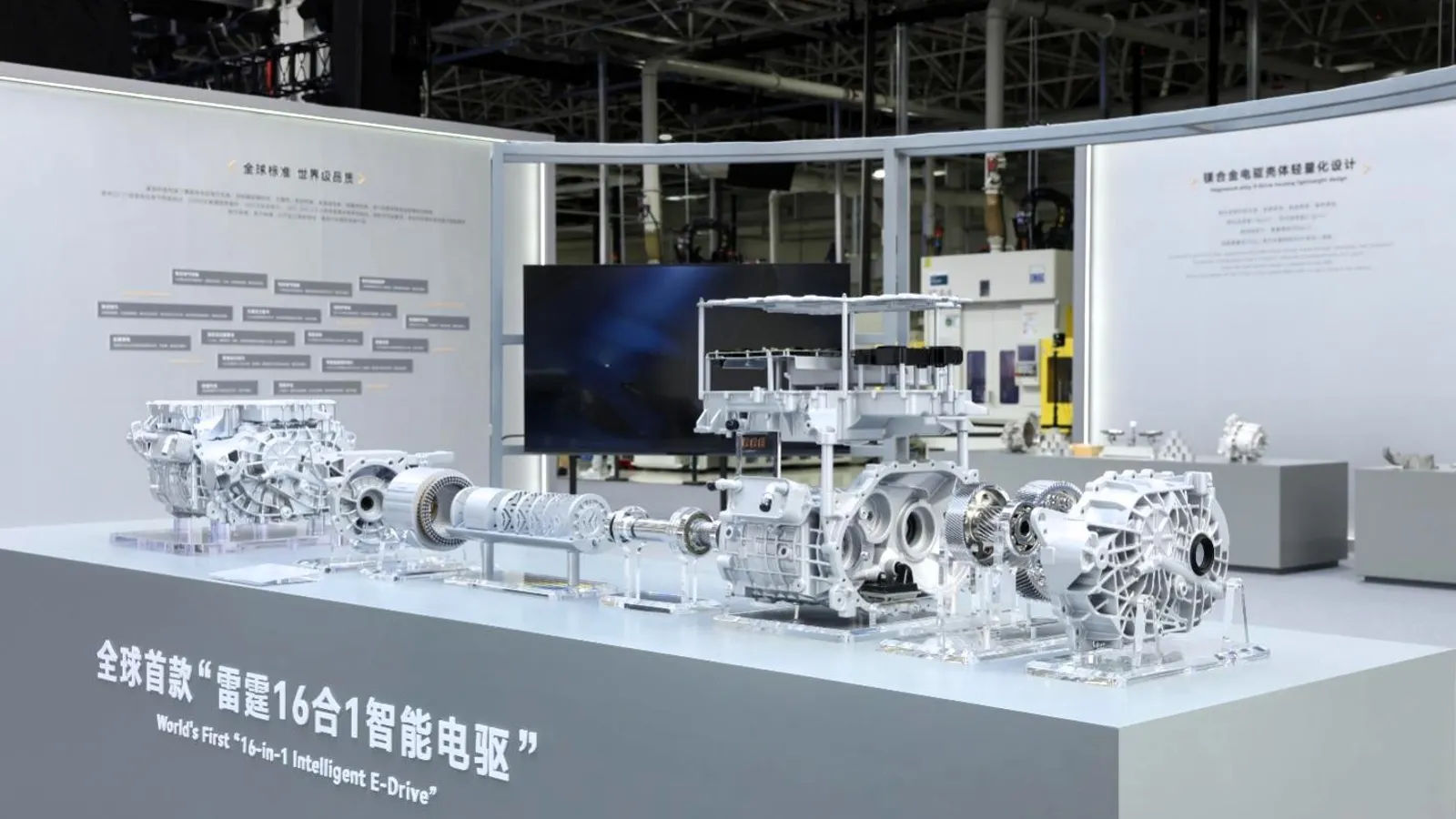


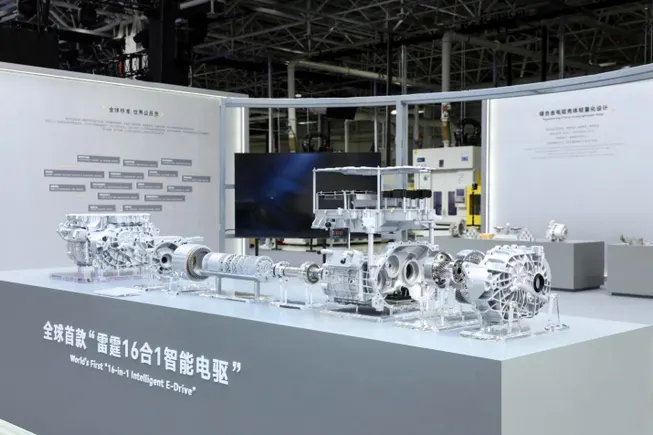
A complete electric drive system that weighs 165 pounds. That’s less than the motor alone in most performance EVs. Geely Auto Group just put its 16-in-1 Intelligent E-Drive into production, and the numbers attached to it are designed to make every competitor in the EV space uncomfortable.
The unit integrates 16 key electric drive components — motor, inverter, and the full suite of 800-volt architecture hardware — into a single compact package weighing just 75 kilograms. It debuts in the Geely TT, with first deliveries beginning next month in China.
Deployed in pairs for all-wheel drive, the system produces a combined 425 kW and pushes the TT to 62 mph in 3.8 seconds. Those are respectable performance numbers, but they’re not the real story. The real story is efficiency.
Geely claims a test TT averaged 7.6 miles per kWh around Qinghai Lake and achieved 93.8% comprehensive efficiency on the CLTC cycle. Most production EVs on the road today struggle to crack 4 miles per kWh in real-world driving. Even accounting for the favorable conditions of a controlled test and a generous Chinese test cycle, 7.6 is a figure that demands scrutiny — and respect.
The company credits AI-assisted torque management and a new cooling system that drops peak motor temperatures by roughly 15 degrees Celsius. To prove the thermal management works under stress, Geely ran a dual-motor TT through a 28.6-mile continuous tandem drift on a wet surface. That’s not a typo — nearly 29 miles of sustained sliding, which is as much a torture test for cooling and torque consistency as it is a marketing stunt.
Li Chuanhai, vice president of Geely Auto Group, framed the technology in typically corporate language about “safer, smarter and more efficient new energy vehicles for global users.” The real message is blunter. Geely is building its own powertrain technology in-house, vertically integrating at a pace that mirrors what BYD has done for years, and it intends to export it.
That global ambition runs headlong into political reality. The U.S. Department of Commerce recently banned Polestar — a Geely brand officially headquartered in Sweden — from selling new vehicles in America starting with the 2027 model year under the Connected Vehicles Rule. Volvo, another Geely subsidiary, got a pass. The distinction illustrates how tangled the relationship between Chinese ownership and Western market access has become.
Geely sold 3.02 million vehicles in 2025. More than half were new energy vehicles — full electrics and plug-in hybrids. The portfolio stretching from Geely and Zeekr to Lynk & Co., Lotus, Volvo, and Polestar gives the group enormous breadth. But breadth without competitive powertrain technology is just a list of nameplates.
That’s what makes the 16-in-1 drive unit significant beyond its spec sheet. Cramming an entire 800-volt drive system into a 75-kilogram box reduces manufacturing complexity, lowers vehicle weight, and frees packaging space. It’s the kind of engineering that lets you build a lighter car with a smaller battery that still goes farther. Every kilogram saved in the drivetrain is a kilogram you don’t have to carry in cells.
The Western legacy automakers spent the last decade writing checks to battery suppliers and assembling powertrains from off-the-shelf components. Geely just demonstrated it can build the whole thing itself, make it smaller, make it lighter, and make it work at 93.8% efficiency. Whether Western regulators let Geely’s products through the door is one question. Whether Western automakers can match what’s behind that door is another one entirely.
Share this Story