
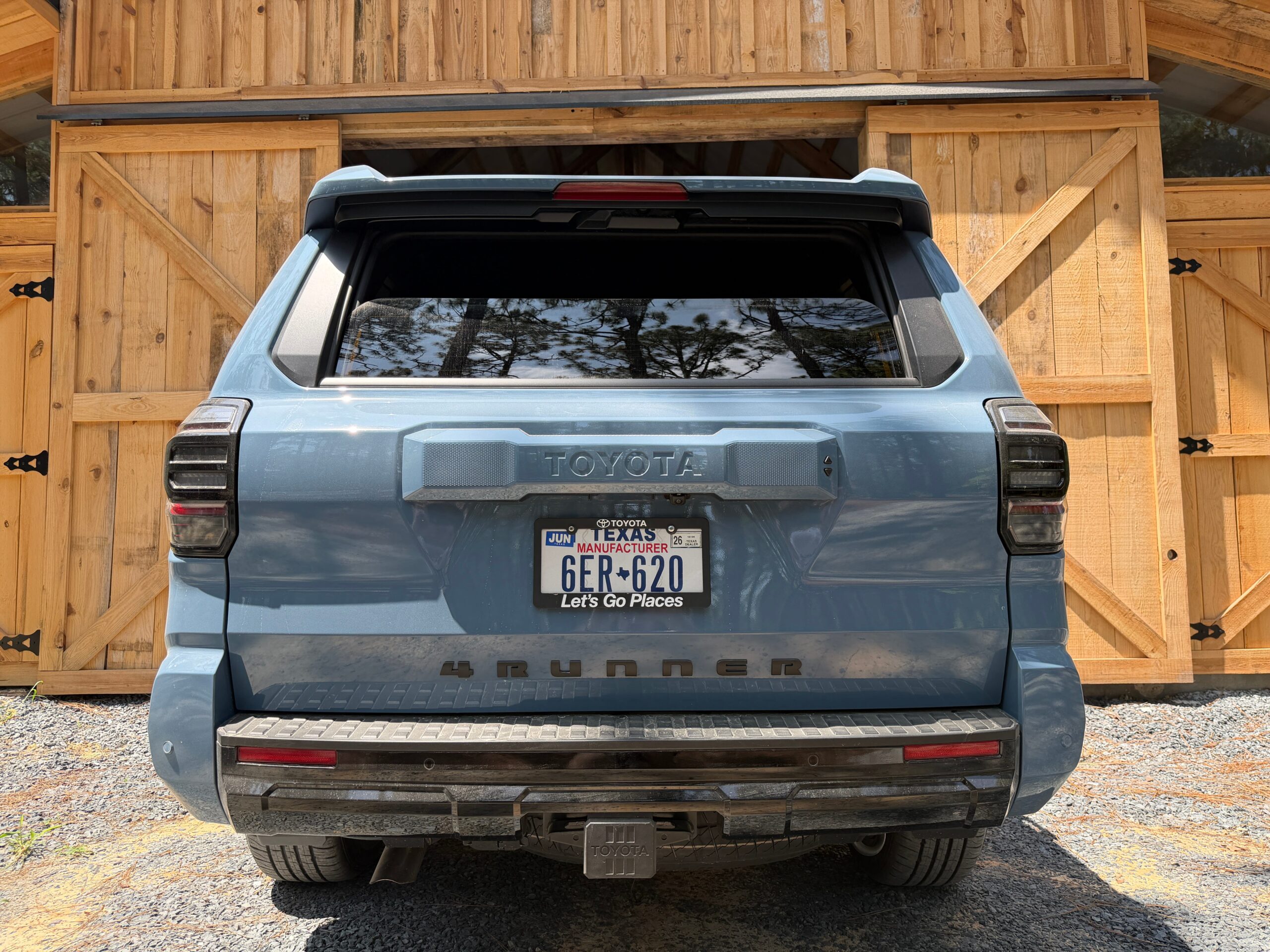


Toyota sells a version of the 4Runner that doesn’t even have four-wheel drive. The base SR5 is rear-drive only. But strip every option from the truck, and one thing remains untouchable: the power rear window.
It sounds absurd. A roll-down pane of glass in the liftgate is the hill Toyota will die on? Apparently so. When the sixth-generation 4Runner was being developed, Toyota’s truck marketing team didn’t even entertain the idea of deleting it. “Few models are as closely identified with a single feature as the 4Runner is with its power rear window,” said Brock Cartlidge, Toyota’s senior manager for vehicle marketing.
Forty-plus years and millions of trucks later, that little window has become the 4Runner’s soul. More than the badge, more than the body-on-frame architecture, more than any trail rating.
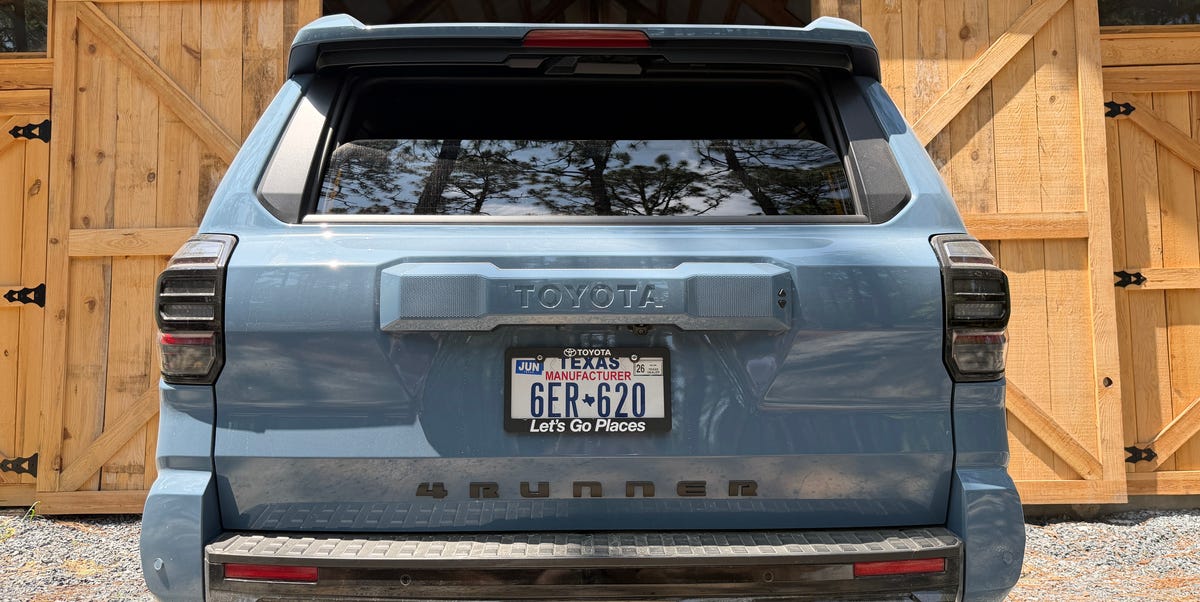
The engineering isn’t trivial. The rear glass has to be mostly flat to slide down into the liftgate, which dictates the entire shape of the truck’s posterior. That window needs a defroster, a wiper, and proper sealing against the elements.
The power liftgate automatically disables when the glass is lowered. That’s a quiet acknowledgment from Toyota’s engineers that letting owners swing the whole hatch open with the window stowed is asking for trouble.
Look at what happened to the Sequoia. Toyota’s full-size SUV ditched its power rear window in the 2023 redesign for a sleek, curved rear end. The glass now flips upward like a Jeep Wrangler hardtop. The Sequoia lost something it can’t get back, and the 4Runner’s designers were clearly paying attention.
Ford learned similar lessons decades ago with the full-size Bronco. Its power rear window used a loaded spring and scissor-lift mechanism so violent that replacing the motor was like disarming an ordnance. Toyota, through sheer repetition and refinement across four decades, has the engineering dialed.
The owner’s manual actually warns against driving with the rear glass down because exhaust gases can drift into the cabin. Nobody cares. Dogs hang their heads out, surfboards poke through, and every window comes down until the 4Runner becomes a greenhouse on wheels open to whatever the road delivers.
That image, more than any rock-crawling hero shot, is the truck’s true marketing.
What makes this interesting now is that competitors are catching on. Rivian designed the R2 with a power rear window. It’s electric, it’s a different animal entirely, but Rivian understands that if you want to occupy the same emotional space as the 4Runner, you need to roll down five windows, not four.
Toyota has allowed the 4Runner to change in nearly every other way. It swapped its naturally aspirated V-6 for a turbocharged four-cylinder. It added a hybrid powertrain, evolved the platform, and modernized the interior.
But the rear window stays because Toyota knows the difference between what a truck does and what a truck means.
The 4Runner’s lore is built on capability and durability, sure. But its identity lives in a flat pane of glass that slides into the tailgate. It’s the kind of feature that doesn’t show up on a spec sheet and can’t be quantified by a towing number.
You either feel it or you don’t. After four decades, Toyota still feels it enough to engineer the entire rear end of a vehicle around it. That’s either sentimentality or genius, and with the 4Runner’s sales numbers, it’s hard to argue it isn’t both.
Share this Story