
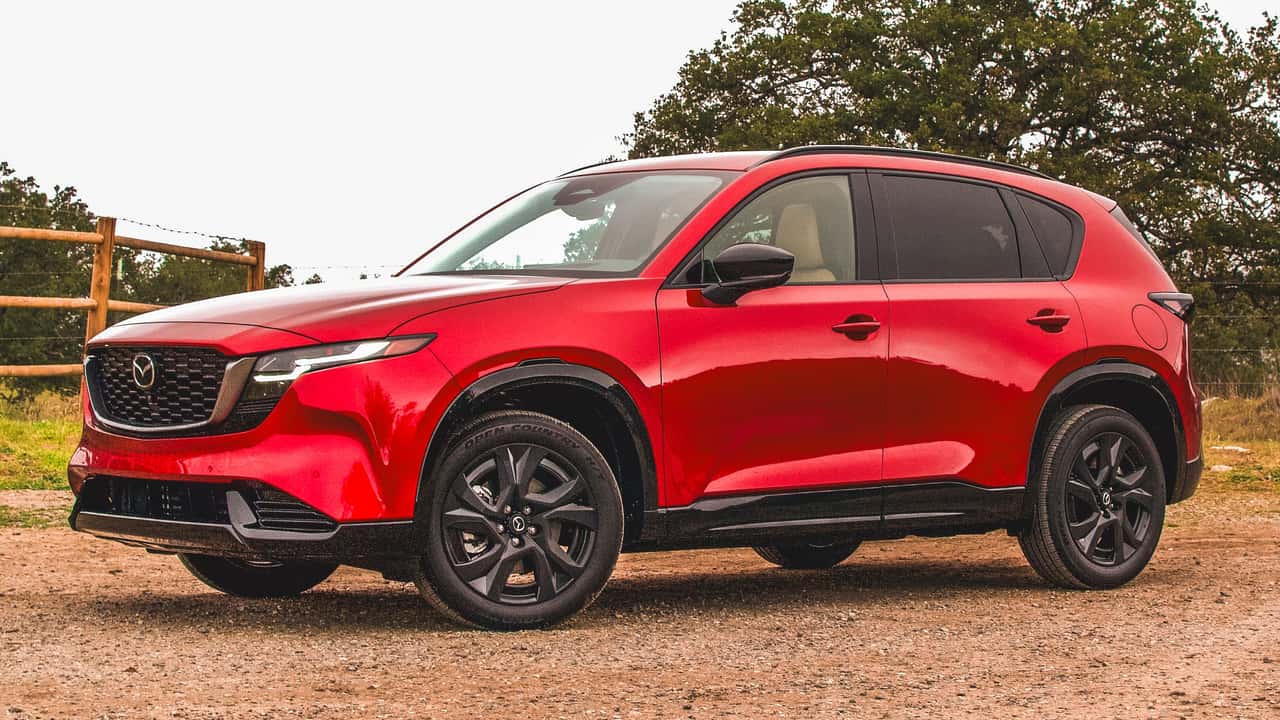


Koichiro Yamaguchi has driven a lot of hybrids. As project manager for the next-generation Mazda CX-5, it’s his job. And according to him, not a single one passed muster.
“I have tried so many different hybrid systems from other brands, but none of them satisfied me,” Yamaguchi told Australia’s Drive magazine through a translator. His chief complaint: delayed throttle response, that rubbery, disconnected feeling between your right foot and actual forward motion that plagues so many electrified powertrains.
It’s a bold claim from a company that still doesn’t sell a single hybrid in its lineup.
Mazda’s answer is the Skyactiv-Z, an all-new 2.5-liter inline-four gasoline engine paired with an in-house electric motor, arriving late 2027 in the third-generation CX-5. The company promises both the fuel economy customers expect and what Yamaguchi calls “fun-to-drive driving performance.” The electric motor will specifically compensate for the gasoline engine’s weakness at low rpm, filling in the torque gap that makes conventional engines feel sluggish off the line.
That 2027 date is the sticking point. Toyota has been selling hybrids for a quarter century. Hyundai and Kia are printing money with their hybrid SUVs. Ford can’t build Maverick Hybrids fast enough. Mazda, meanwhile, is still promising.
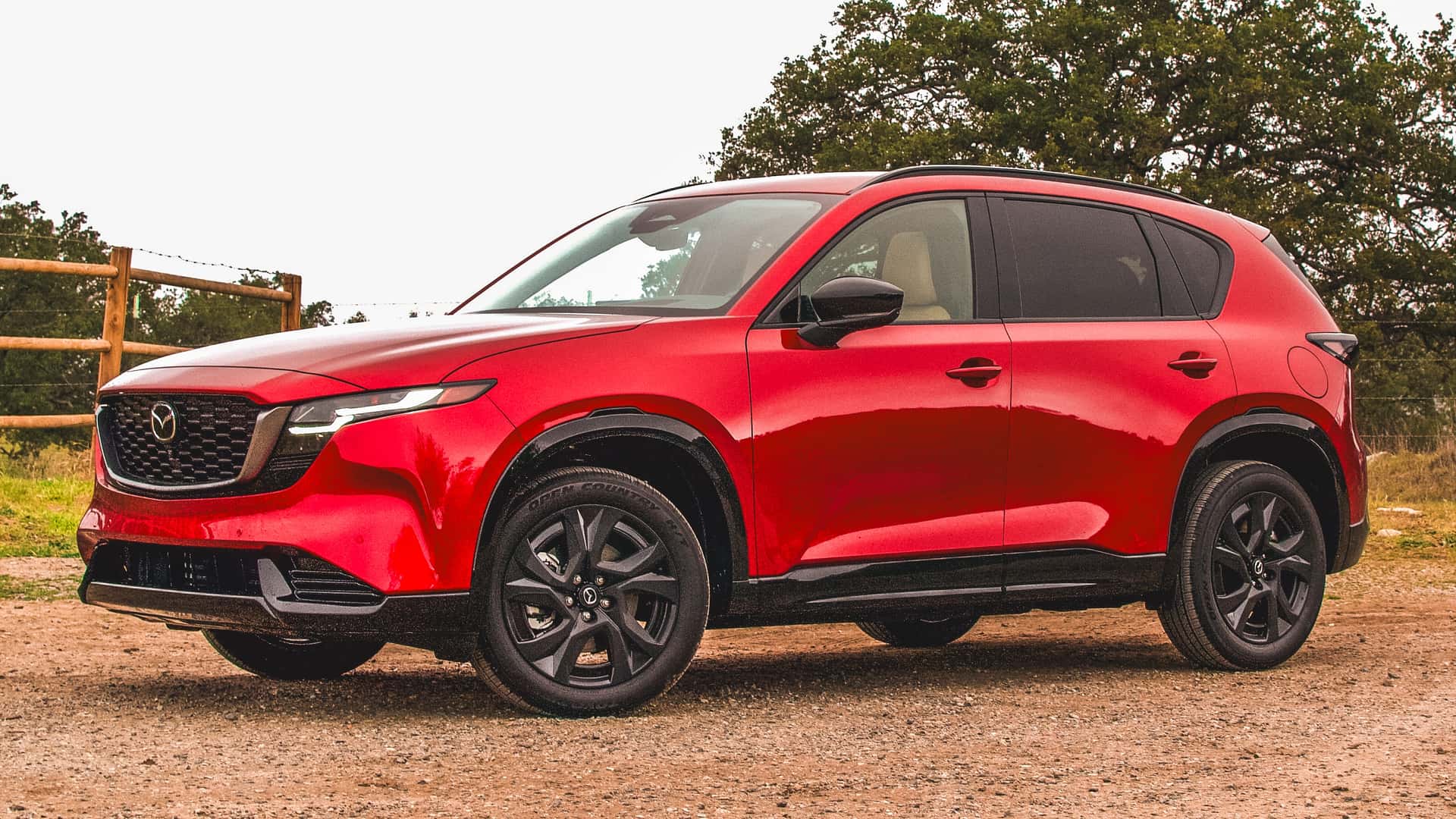
The Skyactiv-Z engine is being engineered to meet both Euro 7 and EPA Tier 4 emissions standards, launching first in Europe and the United States. Mazda says it will deliver higher thermal efficiency and a wider operating range than the Skyactiv-G and Skyactiv-X engines it replaces. That matters because Mazda has admitted that simply updating its current engines to meet stricter regulations would have slashed output by up to 30 percent.
The new architecture is designed to dodge that penalty entirely.
Yamaguchi isn’t wrong about the throttle problem. Anyone who has driven a mainstream hybrid knows the sensation — you press the accelerator and the powertrain holds a brief committee meeting before deciding how to divide labor between motor and engine. Toyota’s system, refined as it is, still rubber-bands. Hyundai’s is better but not immune.
It’s a real engineering challenge: coordinating two power sources through software fast enough to feel natural under your foot. Whether Mazda can actually solve it from a standing start while Toyota has been iterating for decades is the real question. Confidence is not a powertrain.
The technology won’t stay confined to the CX-5. Mazda plans to spread the Skyactiv-Z across its lineup, and lessons from its development will feed into the company’s larger inline-six engines that power its rear-drive-based SUVs like the CX-70 and CX-90. Those bigger vehicles currently rely on a Skyactiv-G 3.3 turbo and a plug-in hybrid system sourced partly from outside suppliers. An in-house solution would give Mazda more control over calibration — and, theoretically, over that throttle response Yamaguchi is so fixated on.
Mazda has always punched above its weight on driving dynamics. The current CX-5, ancient as its platform is, still handles better than most competitors. The company’s engineers genuinely care about how a car feels, and that philosophy has earned fierce loyalty from a relatively small customer base.
But the hybrid market doesn’t wait for perfectionists. Every month Mazda delays is another month competitors sell hundreds of thousands of electrified crossovers, collect real-world data, and refine their calibrations. By late 2027, Toyota will likely be on yet another generation of hybrid controls.
Mazda’s bet is that arriving late with something genuinely better will matter more than arriving first with something adequate. It’s a familiar Mazda gamble. Sometimes it produces the Miata. Sometimes it produces the CX-50 Hybrid, which borrows Toyota’s system because Mazda’s own wasn’t ready.
The clock is ticking. The throttle, apparently, is not responding fast enough.


Share this Story