
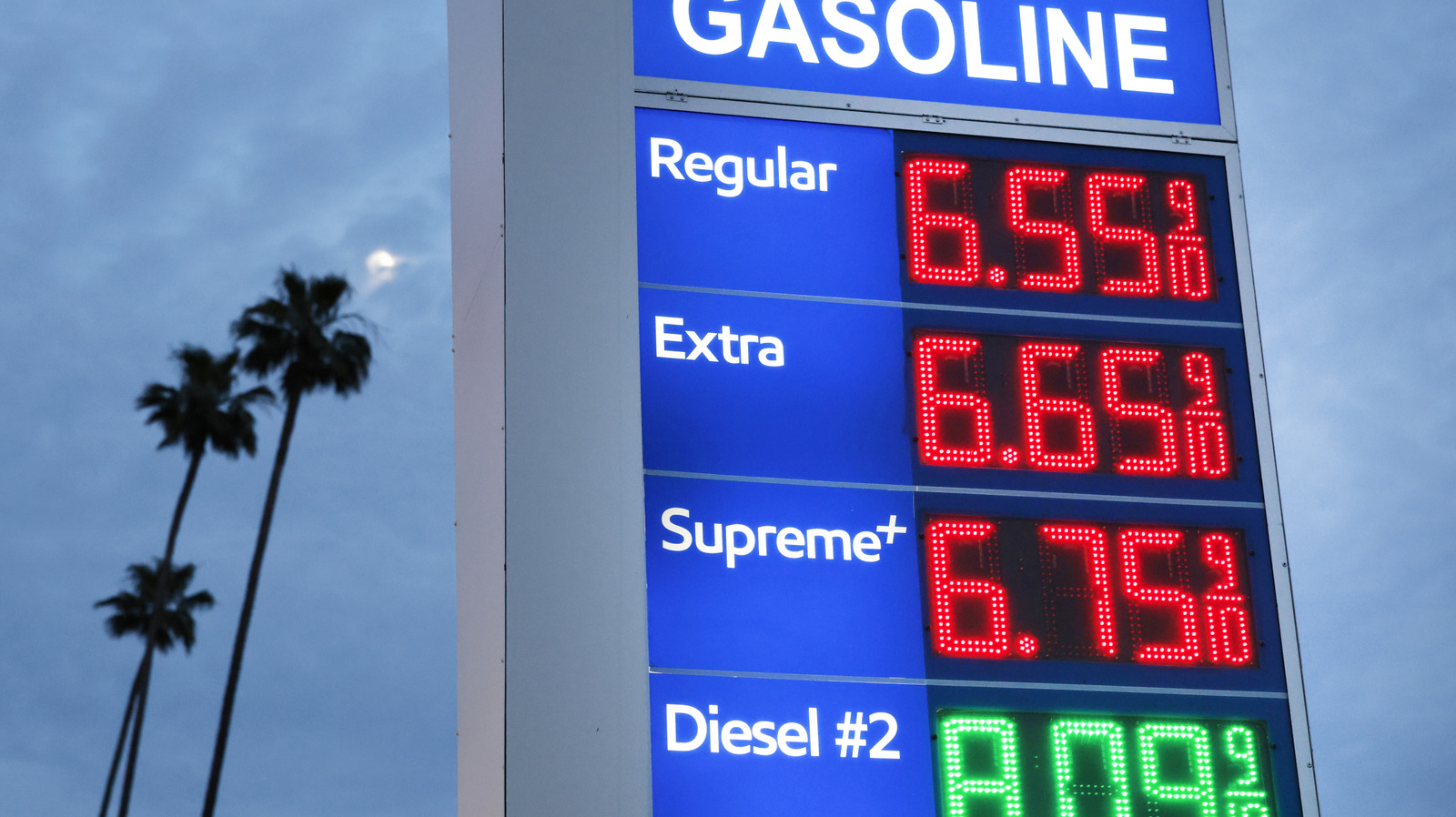


Gasoline prices are climbing hard enough to make SUV owners wince at the pump, and the question nobody in Detroit wants to hear is surfacing again. What happens when the vehicle that dominates 60 percent of new registrations starts bleeding its owners dry?
The average fuel economy of cars on American roads hit a record 27.2 miles per gallon in 2024, with California leading at 33.5 mpg. Those numbers sound encouraging until you remember they’ve been dragged upward despite the industry’s best efforts, not because of them. The SUV boom that now defines the American market was built on a regulatory loophole dating back to 1983, when AMC classified the Jeep Cherokee XJ as a light truck to dodge tighter passenger car standards.
Every automaker since has been shoving through that same door, widening it with lobbyist muscle and consumer conditioning. CAFE standards treat trucks and SUVs more gently than cars. Build bigger, sell bigger, profit bigger.
The formula has worked for four decades. But formulas break when fuel prices double.
With conflict in the Middle East pushing energy costs to punishing levels, American buyers are staring at a familiar crossroads. The last time gas got truly expensive, hybrids surged and small cars briefly mattered again. Then prices dropped, memories faded, and the Chevrolet Suburban reclaimed its throne.
This cycle has repeated so many times it practically has its own Wikipedia page. The generational pattern is predictable too. Boomers fled station wagons for minivans, Gen X abandoned minivans for SUVs, and each shift was driven less by engineering logic than by the desperate need to not drive what your parents drove.
If the pattern holds, something has to follow the SUV. The smart money says it needs to be lower, lighter, and cheaper to run.
Station wagons are the answer hiding in plain sight. They offer comparable cargo volume to midsize crossovers, lower load floors for easier loading, a dramatically lower center of gravity, and reduced aerodynamic drag that translates directly into fuel savings. A Volvo V60 carries roughly the same gear as a compact SUV while delivering a driving experience that doesn’t feel like piloting a refrigerator through a parking garage.
The counterargument from automakers is the one they’ve rehearsed for years: wagons don’t sell. But that claim deserves scrutiny. Wagons don’t sell because manufacturers killed them, starved them of marketing dollars, and redirected every development budget toward the SUVs that exploit CAFE loopholes most effectively.
You can’t declare a product dead when you’re the one holding the pillow.
The real barrier isn’t consumer demand. It’s profit margin. SUVs command higher transaction prices on platforms that cost roughly the same to build as their sedan counterparts.
A $55,000 three-row crossover is a money machine. A $40,000 wagon is less exciting to a CFO, even if it’s a better vehicle for the person writing the check.
Rising fuel costs have a way of rearranging those priorities. When filling a 26-gallon tank starts requiring a second mortgage, the psychological appeal of sitting high and commanding the road loses its luster fast. Pedestrian safety data makes the case even harder to ignore, because lower front ends kill fewer people, full stop.
Nobody is predicting Detroit will pivot overnight. The tooling is set, the factories are humming, and the dealer lots are stacked with Explorers and Highlanders. But the cracks in the SUV monoculture are real, and they widen every time the price per gallon ticks up another dime.
The industry built this tower on a loophole and a marketing budget. Gravity, eventually, finds everything.
Share this Story