
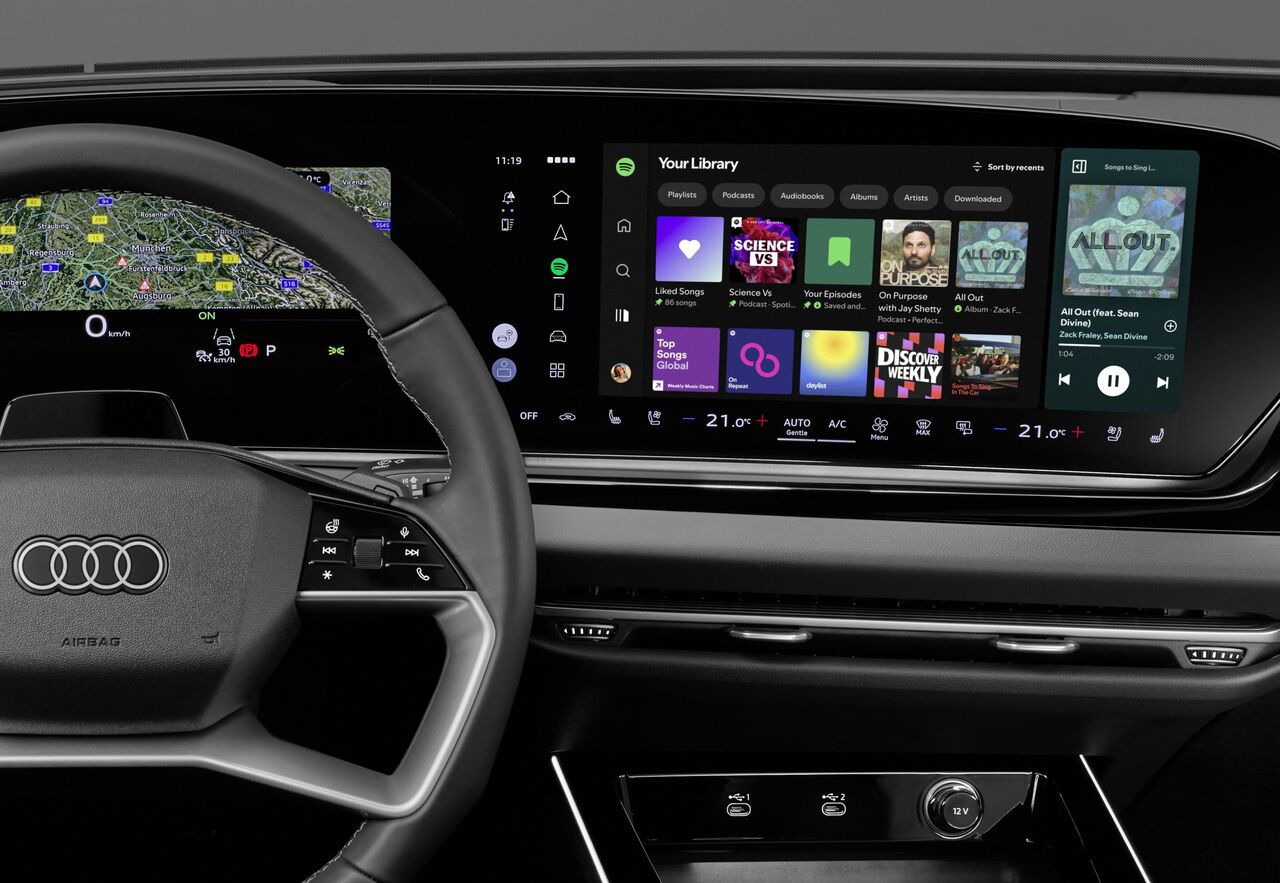


Spotify has 777 million users. Starting October 21, 2026, a chunk of them can ditch their phones entirely when they climb into an Audi.
Audi announced it is the first automaker in the world to integrate Spotify’s fully native app into its vehicles. Not a template-based knockoff. Not a mirrored phone screen. The real thing, running directly on the car’s infotainment system through Android Automotive OS, with no smartphone tethering required.
The distinction between “native” and “template-based” matters more than it sounds. Template apps use generic layouts dictated by the car’s operating system. They look like car software pretending to be Spotify. The native version Audi is rolling out carries the full Spotify interface, adapted for the vehicle’s screens but recognizable to anyone who uses the app on a phone or tablet.
That means music videos, real-time lyrics, Spotify Jam for shared listening sessions, and Spotify DJ are all built in. Features shift automatically depending on whether the car is moving or parked. Drive mode strips out videos and lyrics from the center MMI display and disables sign-in functions.
Park the car, and everything opens up. On models equipped with a front passenger display, lyrics and video remain accessible to the person in the right seat even while the car is rolling.
The collaboration involved Audi, its parent group’s software arm Cariad, and Spotify’s own engineering teams. It took tight integration work with Android Automotive OS to make the app feel like a proper vehicle-native experience rather than a phone app jammed onto a dashboard screen. Voice control through “Hey Audi” and Spotify DJ stays active while driving.
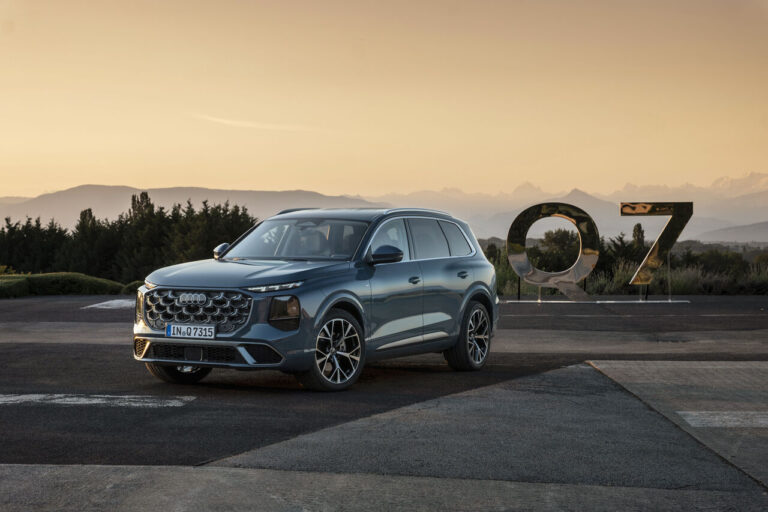
Eligible vehicles span both of Audi’s current architectures. On the electric side, the A6 e-tron and Q6 e-tron qualify. On the combustion side, the 2026 model year A5, Q5, and A6 get access. The Q7 and Q9 SUVs will follow at their respective market launches. The app is free to download from the Audi Application Store, though users still need their own Spotify account and subscription.
Audi is launching across 47 markets simultaneously, covering Europe, North and South America, Asia, Africa, and Australia. That is an unusually wide initial rollout for an in-car app debut.
The race to own the in-car entertainment experience has been quietly heating up. Google built Android Automotive OS specifically to run natively in vehicles without phone dependency. Volvo, Polestar, and GM were early adopters of the platform. But getting Spotify to build a full native app, not just a functional port, is a different trophy entirely. Audi grabbed it first.
This also signals where Audi’s digital strategy is heading. The Audi Application Store is being positioned as a pipeline for third-party apps that can take advantage of the car’s hardware, including multiple screens and integrated controls. Spotify is the flagship example, but the infrastructure is designed to support more.
For drivers who have spent years fumbling with Bluetooth connections, dealing with Apple CarPlay dropouts, or watching Spotify’s limited car mode struggle on a center screen, this is the version that was always supposed to exist. Whether competitors can close the gap quickly depends on their own relationships with Spotify and their commitment to Android Automotive OS.
Audi says this is just the beginning of what native app integration can deliver. Spotify, for its part, now has a live proof of concept sitting in dealership lots across six continents.



Share this Story