
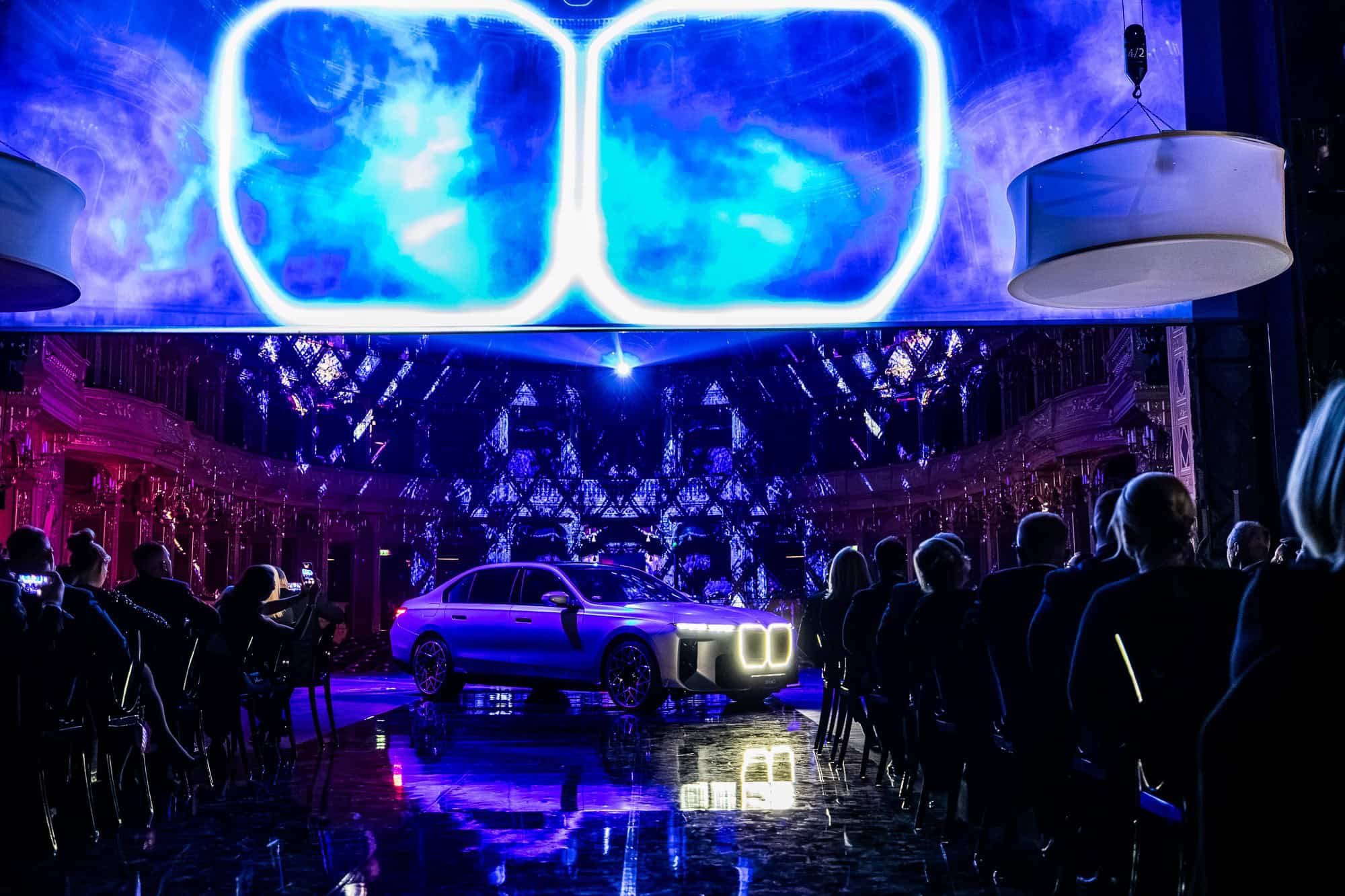


BMW unveiled the facelifted 7 Series inside the Hungarian State Opera House last week, hosting 120 handpicked guests in a 19th-century theater to debut a car that wants desperately to be seen as high culture on wheels. The automaker also rolled out its Concept Speedtop, the V8-powered shooting brake limited to 70 units worldwide. All 70 are already spoken for.
The pairing of those two vehicles on the same stage tells you everything about where BMW’s head is right now.
On one side, you have the 7 Series, a sedan available with combustion engines, plug-in hybrids, and full electric powertrains, offering more than 500 exterior paint shades and roughly 700 interior equipment combinations. It is Munich’s answer to any luxury question a buyer might ask. The Individual Manufaktur program goes further, letting deep-pocketed customers commission a one-off build.
On the other side sits the Speedtop, a car almost nobody will ever see in traffic. Two-tone paintwork, a long hood tapering into a slim rear end, and a graceful interpretation of the kidney grille that looks nothing like the tall, illuminated slab dominating the 7 Series’ face. Classic grand tourer proportions versus high-tech luxury lounge. The contrast is sharp enough to cut.
This is not BMW’s first opera appearance in Budapest. Back in November 2022, the i7 posed on the same stage for a photo shoot, playing off the tension between a modern electric sedan and the ornate architecture surrounding it. Nearly four years later, the company returned with a heavily revised version of that car and a sold-out collector piece.
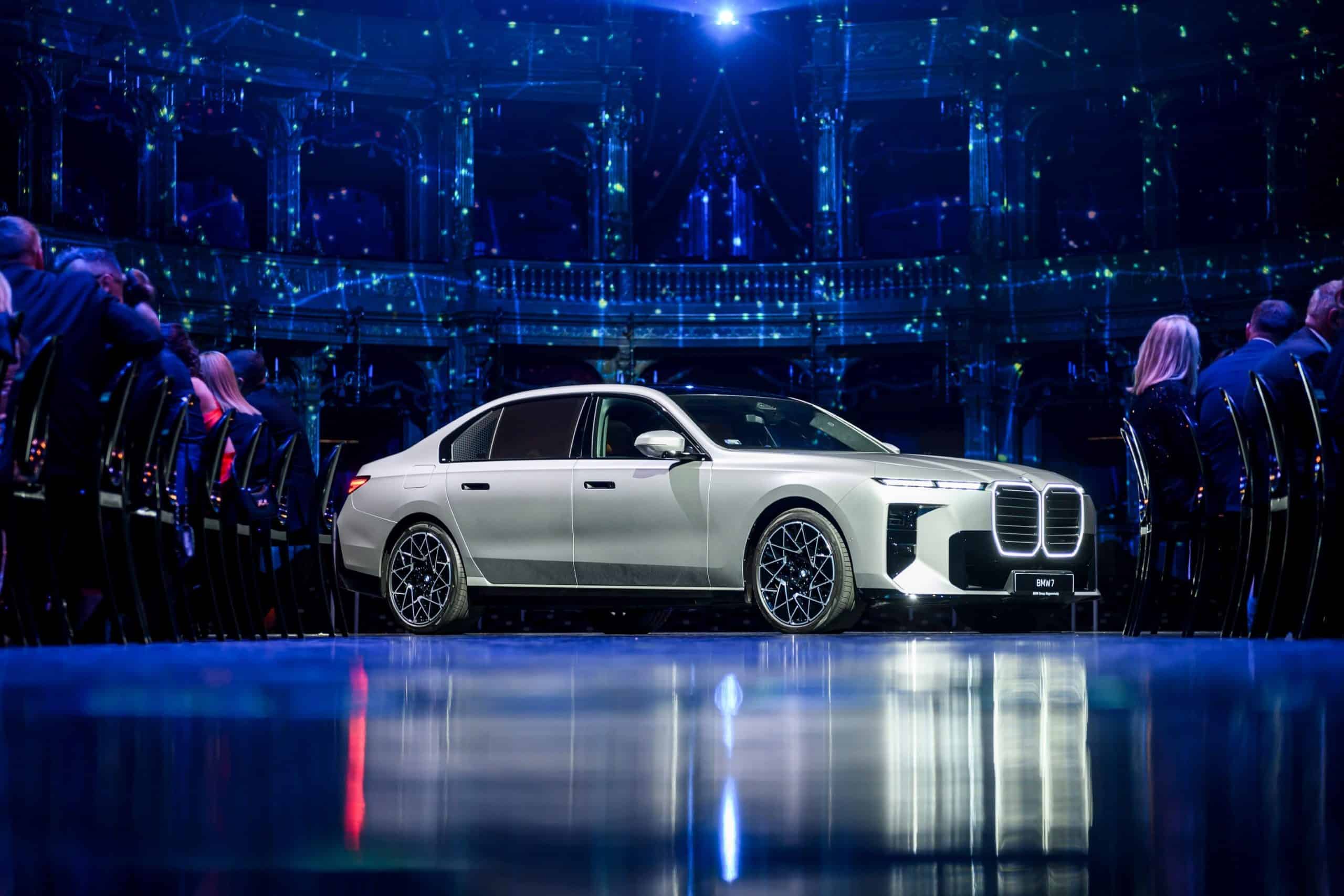
Opera singer Kinga Kriszta performed alongside pianist Klára Jean during the event, with a bespoke audiovisual show wrapping around both cars. BMW also used the occasion to support a UNICEF children’s program, layering philanthropy onto the spectacle.
But the real story on that stage was the design gulf between the two vehicles sharing it. The 7 Series leans hard into BMW’s current direction: oversized grilles, split headlights, and a visual language that polarizes more than it persuades. The Speedtop proves the same badge can produce something restrained, proportionally elegant, and genuinely desirable. Its flowing lines don’t need to shout.
The problem, of course, is that BMW can build the 7 Series in whatever volume the market demands. The Speedtop exists in a sealed bubble of 70 cars. One has to sell. The other just has to be coveted.
Those are fundamentally different design briefs, and the production realities behind a mass-market sedan and a hand-built shooting brake are not comparable. Still, standing them side by side invites the comparison. And the Speedtop wins it without breaking a sweat.
Its cleaner surfaces and better proportions make you wonder what BMW’s volume cars might look like if the design team operated with a lighter hand. The facelifted 7 Series borrows cues from the Neue Klasse platform, suggesting the flagship is being groomed for a future that leans more digital, more electric, more stripped-back inside even as the exterior grows bolder. Whether that evolution brings the sedan’s styling closer to the Speedtop’s elegance or pushes further into its current direction remains an open question.
For now, BMW seems content staging both philosophies on the same opera stage and letting the audience decide which one deserves the standing ovation. The 70 buyers who already locked in their Speedtops have clearly made their choice.
Share this Story