
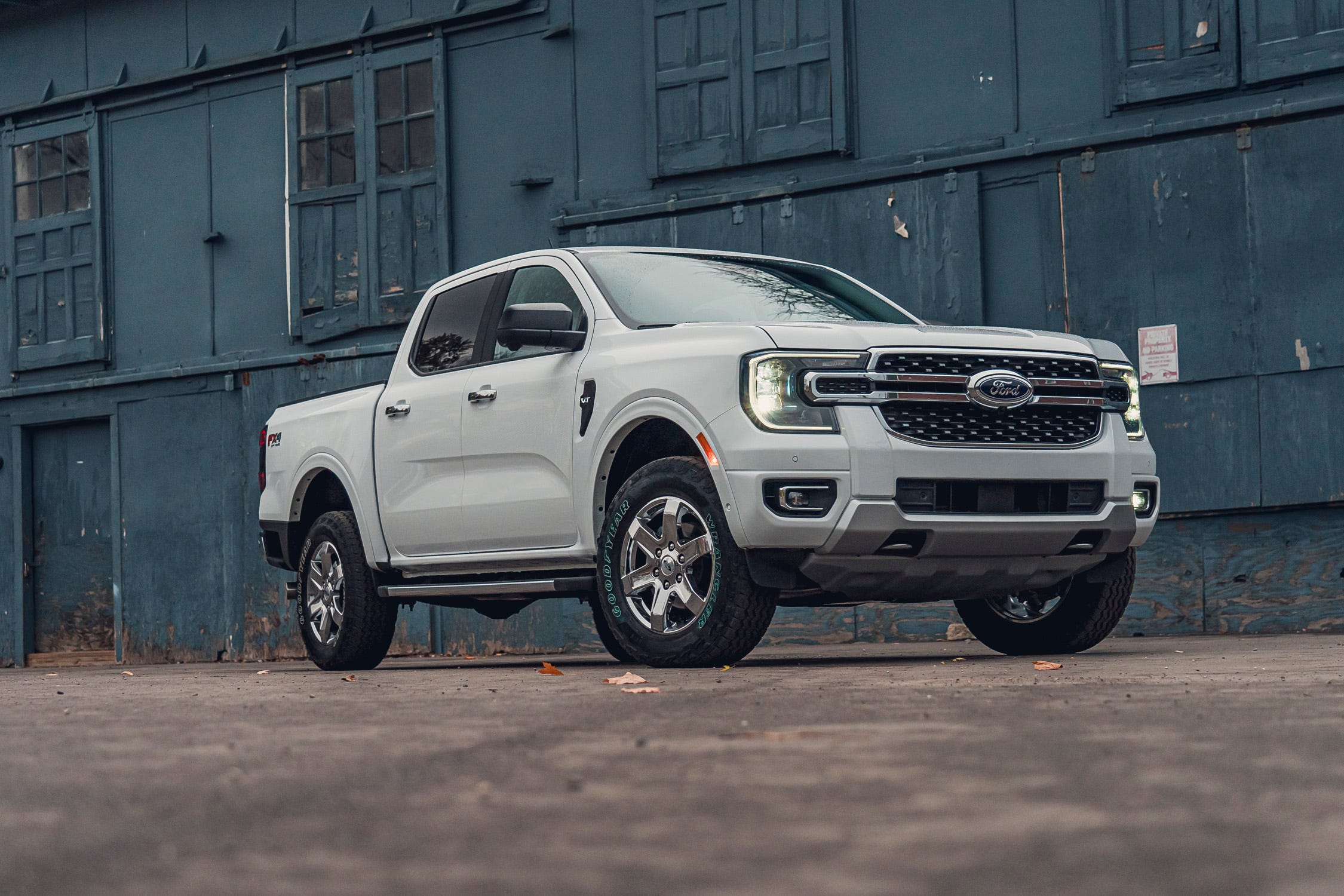


Ford is stuffing a twin-turbo 3.0-liter V-6 into the 2027 Ranger, replacing the aging 2.7-liter option with an engine borrowed from the Bronco Raptor’s parts bin. An order guide surfaced by Autoevolution confirms the swap, which follows the same playbook Ford used when it spread the detuned 3.0-liter across the 2027 Bronco lineup earlier this year.
The pattern is clear. Ford builds a halo powertrain for a Raptor model, then waters it down and cascades it through the rest of the family. It happened with the Bronco, and now it’s happening with the Ranger.
Expected output is 380 horsepower and 440 pound-feet of torque, matching the Bronco’s detuned spec. That’s a jump of 65 horses and 40 pound-feet over the outgoing 2.7-liter V-6. In the mid-size truck segment where every rival is clawing for an edge, that gap matters.
The base XL trim keeps the turbocharged 2.3-liter four-cylinder, which makes 270 horsepower and still comes standard with rear-wheel drive. The new 3.0-liter will only be available with four-wheel drive and continues to pair with Ford’s 10-speed automatic. XLT and Lariat trims can be had with either engine.
What Ford is really doing here is consolidating its engine lineup. The 2.7-liter EcoBoost has been kicking around since 2015, and it’s done good work across multiple platforms, but Ford clearly sees the 3.0-liter as the go-forward unit. Killing off the 2.7 in both the Bronco and Ranger within the same model year suggests Ford wants to simplify its manufacturing footprint while handing customers a real performance upgrade.
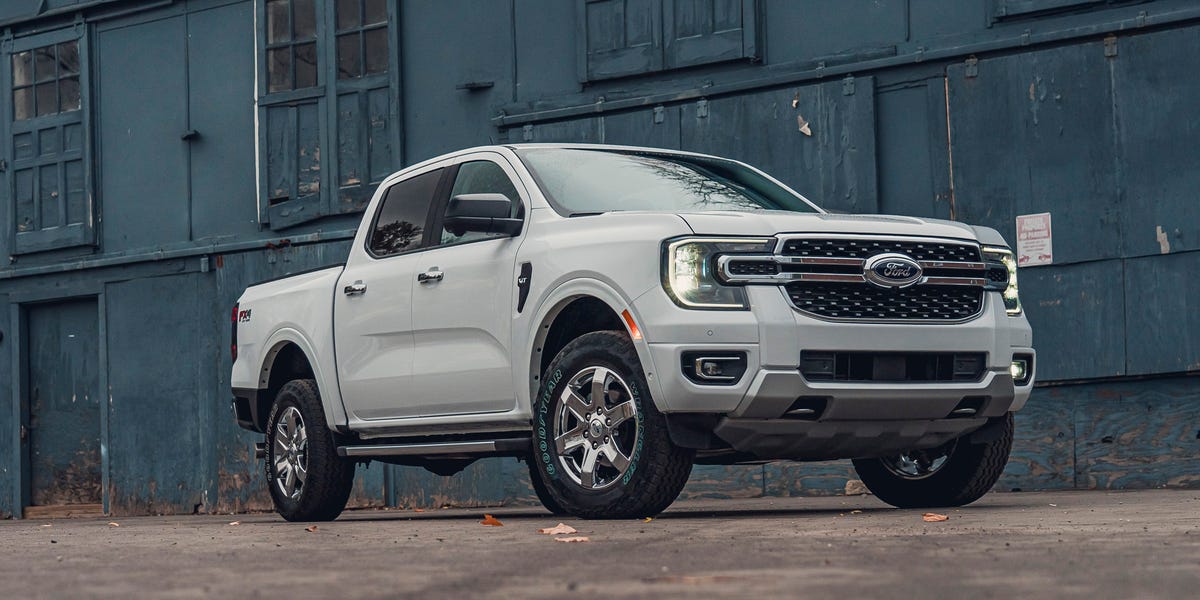
The order guide also reveals a handful of smaller updates. The XL gets a larger 12.0-inch touchscreen, up from 10.1 inches, and adds dual-zone climate control as standard equipment. New wheel designs appear across the lineup, Velocity Blue paint gives way to Neptune Blue, and Carbonized Gray is dead, replaced inside by a new color called Space Gray.
Pricing remains unconfirmed. The current Ranger XL starts at $35,445, and the 2.7-liter V-6 upgrade runs $7,545 on the XLT and $5,795 on the Lariat. Ford hasn’t said whether the new, larger engine will command a premium over the old one.
Given that the 3.0-liter is a more complex twin-turbo setup versus the 2.7’s single-turbo architecture, some price increase would be logical. But Ford also has to keep the Ranger competitive against the Tacoma and Colorado, neither of which offers a V-6 with this kind of output in their non-performance trims.
The mid-size truck war has been grinding along for years without a clear knockout punch from anyone. Toyota refreshed the Tacoma. Chevy reworked the Colorado. Ford’s counter has been incremental, and the Ranger has struggled to match its rivals in sales volume despite strong reviews.
Dropping a 380-hp twin-turbo V-6 into a mid-size truck that isn’t a Raptor is one way to change the math. Ford hasn’t officially confirmed any of this, but order guides don’t lie. Expect a formal announcement in the coming weeks, likely with a production start in early 2027.
The real question is whether this is a bridge to something else entirely, or whether Ford sees the combustion-powered Ranger as a product worth investing in for another full cycle.
Share this Story