
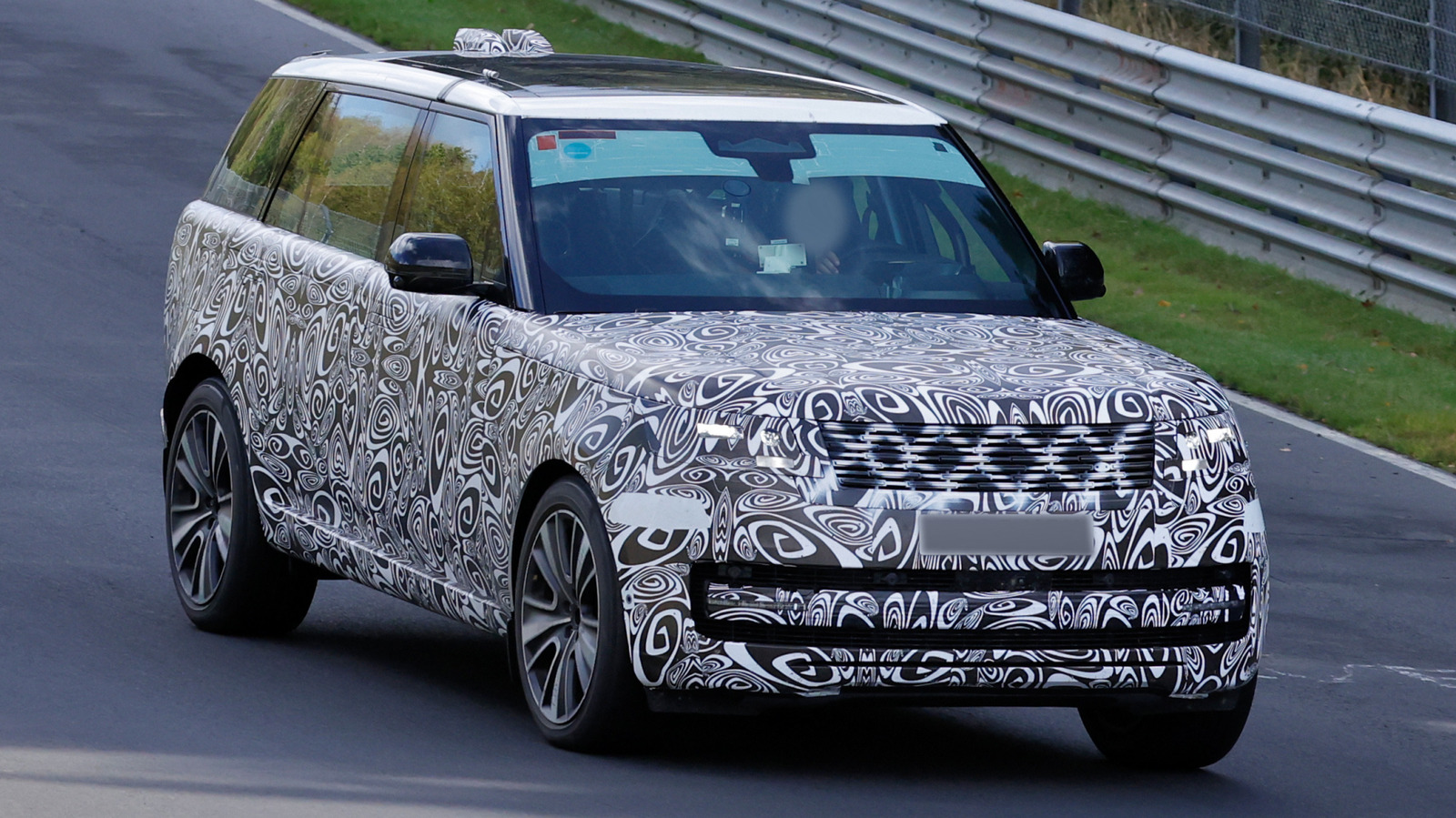


A fifth-generation Range Rover prototype just lapped the Nürburgring wearing almost no camouflage, and the changes it reveals are so minor they border on philosophical. Five years into its life cycle, the full-sized Range Rover is getting a mid-cycle refresh that amounts to tweaking the mesh pattern on the grille.
That’s not an exaggeration. The spy shots captured at the Ring show a test mule stripped of the black cladding that typically hides design updates on prototypes. What’s underneath? A grille with slightly smaller horizontal slats packed more tightly together.
The headlight shape appears unchanged, though updated daytime running light signatures could sneak in. The bumper looks identical to the current truck.
Walk around the sides and rear, and good luck spotting anything new. The doors remain untouched, which makes sense since retooling door panels is one of the most expensive changes an automaker can make mid-cycle. The vertical taillights and that black horizontal stripe housing the turn signals carry over without alteration.
Land Rover isn’t messing with what works under the hood either. The BMW-sourced twin-turbo 4.4-liter V8, good for up to 607 horsepower with its mild-hybrid assist, stays as the flagship powertrain. Below it, JLR’s own Ingenium turbo 3.0-liter inline-six continues in various states of tune, from the 355-hp P360 to the 550-hp plug-in hybrid P550e. The twin-turbo diesel inline-six is expected to remain as well.
The interior is where the real change might land. This particular prototype was gutted with a roll cage and OMP racing buckets, so it offered no clues about the production cabin. Previous reports suggest a curved infotainment display could replace the current screen arrangement, bringing the Range Rover in line with the design language sweeping across the luxury segment.
There’s a strategy at play here that goes beyond laziness or cost-cutting. The current Range Rover was designed with such deliberate restraint that it still looks contemporary half a decade later. Gerry McGovern’s design team stripped away the fussiness that cluttered previous generations, and the resulting simplicity has aged better than anyone had a right to expect.
When your starting point is that clean, there’s very little to fix. It also helps that the Range Rover sells in a rarefied segment where customers value continuity over novelty. Nobody spending north of $100,000 on a luxury SUV wants it to look dated six months after purchase because the brand dropped a dramatic facelift.
Subtle evolution protects resale values and keeps the ownership experience feeling current longer. The timing lines up for a 2027 model year reveal, likely sometime in the first half of next year. When it arrives, dealer lots will have a truck that’s nearly indistinguishable from the one already sitting there.
For Range Rover, that’s apparently the whole point. Whether this feather-light approach holds up as competition from the new Bentley Bentayga and refreshed BMW X7 intensifies is a different question. Playing it safe works until the market decides safe looks stale, and Land Rover is betting that moment hasn’t arrived yet.
Share this Story